
5 Best-Kept Secrets to Losing Weight After 60 That Doctors Rarely Tell You
Nobody warned you that losing weight after 60 would feel like playing a completely different game with completely different rules. You eat the same way you always did. You walk just as much. But the scale barely moves — or worse, it creeps upward despite your best efforts. You are not imagining it.
The body after 60 genuinely behaves differently, and the strategies that worked in your 30s and 40s simply do not produce the same results anymore. The good news? The 5 best-kept secrets to losing weight after 60 are not about eating less or pushing harder. They are about working smarter — understanding the specific biological changes happening in your body and targeting them with precision. This guide explains exactly what those changes are and what actually works at this stage of life.
For more simple and realistic weight-loss strategies, read our detailed post How to Lose Weight Without Exercise.
Why Losing Weight After 60 Feels So Much Harder
Before revealing the 5 best-kept secrets to losing weight after 60, it is important to understand why the rules change so dramatically after this age. This is not about willpower or discipline — it is pure biology.

Your Metabolism Slows Down Significantly
Between the ages of 20 and 80, your basal metabolic rate — the calories your body burns just to stay alive — decreases by approximately 20–25%. A large portion of this decline accelerates after 60 due to hormonal shifts and muscle loss.
However, a landmark 2021 study published in Science found something surprising: metabolism actually stays relatively stable between ages 20 and 60, then drops more sharply after that. This means the metabolic slowdown hits hardest precisely when most people are already dealing with other age-related challenges.
Muscle Mass Disappears Faster
After 60, the body loses muscle mass at an accelerating rate — a condition called sarcopenia. Without intervention, adults over 60 lose 1–2% of their muscle mass every year. This matters enormously for weight management because muscle is metabolically active tissue. Every pound of muscle burns approximately 6–10 calories per day at rest. Losing 10 pounds of muscle — which is entirely possible over a decade of inactivity — means burning 60–100 fewer calories daily without eating any differently.
Hormonal Changes Work Against You
- Estrogen drops in women after menopause, shifting fat storage from the hips and thighs to the abdomen — visceral fat that is harder to lose and metabolically more dangerous.
- Testosterone declines in men after 60, reducing the natural tendency to build and maintain muscle.
- Growth hormone decreases significantly, reducing the body’s ability to burn fat and build lean tissue.e
- Insulin sensitivity worsens with age, meaning carbohydrates are processed less efficiently and more likely to be stored as f.at
Understanding these changes is the foundation of the 5 best-kept secrets to losing weight after 60. You are not fighting laziness — you are fighting biology. And you can win, but only if you know what you are actually fighting.
The 5 Best-Kept Secrets to Losing Weight After 60
Secret 1: Prioritize Protein Like Your Weight Loss Depends on It (Because It Does)
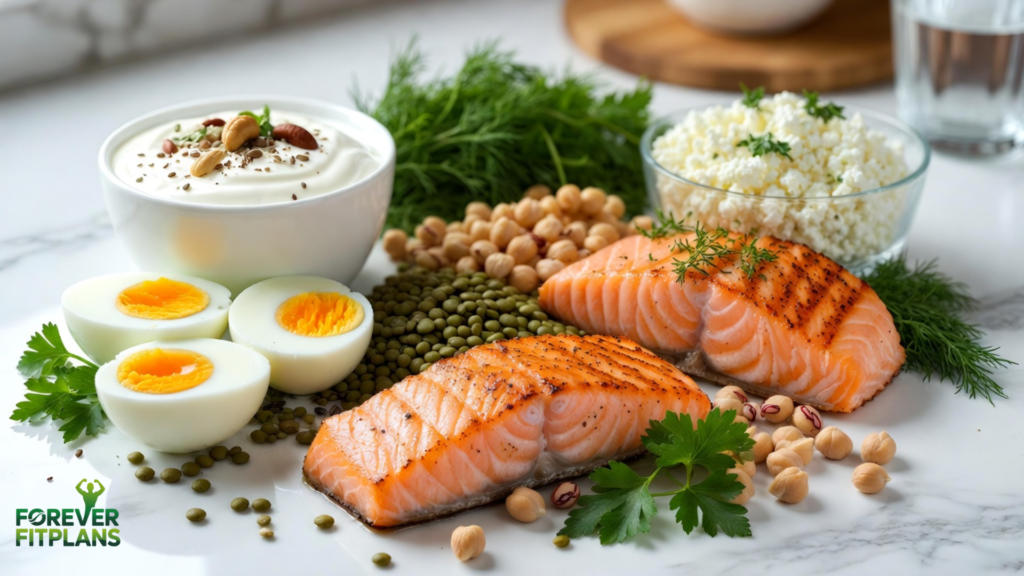
Most people over 60 are significantly under-eating protein — and this single deficiency may be the biggest reason weight loss stalls at this age.
Here is why protein becomes even more critical after 60:
It fights sarcopenia directly. Muscle loss accelerates dramatically after 60, and adequate protein intake is the primary nutritional defense against it. When you preserve muscle mass, you preserve your metabolism. When your metabolism stays higher, weight loss becomes dramatically easier.
It has the highest satiety value of any macronutrient. Protein suppresses ghrelin (the hunger hormone) and increases fullness hormones more powerfully than carbohydrates or fat. For older adults dealing with appetite changes, getting adequate protein means feeling satisfied without overeating.
It has a high thermic effect. Your body burns 25–30% of protein calories just digesting it. Eat 200 calories of protein — you only net 140–150. This metabolic advantage is especially valuable when overall calorie burn is lower due to age.
The research is compelling: A study in the American Journal of Clinical Nutrition found that older adults who consumed 1.2–1.6g of protein per kilogram of body weight daily maintained significantly more muscle mass and lost more fat than those eating the standard recommended amount of 0.8g/kg.
Practical protein targets for over 60:
| Body Weight | Minimum Protein Daily | Optimal for Weight Loss |
| 120 lbs (54 kg) | 65g | 80–95g |
| 140 lbs (64 kg) | 77g | 95–110g |
| 160 lbs (73 kg) | 88g | 110–125g |
| 180 lbs (82 kg) | 98g | 120–140g |
| 200 lbs (91 kg) | 109g | 135–155g |
Best protein sources for older adults:
- Eggs (6g each, highly bioavailable, inexpensive)
- Greek yogurt plain (15–20g per cup)
- Salmon and fatty fish (22–25g per 100g, plus omega-3s for inflammation)
- Chicken breast (31g per 100g)
- Cottage cheese (14g per half cup)
- Lentils and chickpeas (16–18g per cup, plus fiber)
- Lean beef (26g per 100g, plus creatine, which supports muscle function)
Important note for over 60: Protein absorption efficiency decreases with age. Older adults actually need more dietary protein than younger people to achieve the same muscle protein synthesis. Spreading protein across all three meals (25–35g per meal) is significantly more effective than eating most of it at one meal.
Secret 2: Resistance Training Is Non-Negotiable — Even If You Have Never Lifted a Weight in Your Life
This is the most powerful and most overlooked of the 5 best-kept secrets to losing weight after 60. And it surprises most people because conventional wisdom says cardio is the weight-loss exercise. For people over 60, resistance training matters more.

Here is the critical reasoning: cardio burns calories during the activity. Resistance training builds muscle, which burns calories 24 hours a day, seven days a week — even while you sleep.
Since the central weight loss challenge after 60 is declining metabolism due to muscle loss, the solution is rebuilding and preserving muscle through resistance training. This is not optional — it is the most direct intervention available.
The evidence is overwhelming: A meta-analysis published in Sports Medicine found that resistance training in adults over 60 increased muscle mass, reduced body fat percentage, improved insulin sensitivity, and raised resting metabolic rate — all without any dietary changes.
Another study found that older adults who performed resistance training three times per week for six months lost an average of 3.5 pounds of fat while gaining 3 pounds of muscle — a body composition transformation that improved metabolic health dramatically, even though the scale barely changed.
Beginner-friendly resistance exercises for over 60:
- Chair squats — stand up from a chair and sit back down, repeat 10–15 times. Works the largest muscle groups in the body
- Wall push-ups — standing push-ups against a wall; build chest, shoulder, and arm strength with low joint stress
- Resistance band rows — seated or standing, excellent for back and posture
- Step-ups — step onto the bottom stair and back down, alternating legs
- Glute bridges — lying on your back, lift your hips; strengthens glutes and lower back
- Dumbbell bicep curls — even light weights (5–10 lbs) produce meaningful muscle stimulus in deconditioned older adults
How often: Two to three sessions per week with at least one rest day between sessions. Results become visible within four to six weeks and continue improving for months.
Critical safety note: If you have osteoporosis, joint replacement, or cardiovascular conditions, get clearance from your doctor before starting. A certified personal trainer experienced with older adults can create a safe, effective program tailored to your specific limitations.
Secret 3: Fix Your Sleep — It Is Controlling Your Weight More Than Your Diet
Most people over 60 experience significant changes in sleep quality — and these changes are directly sabotaging weight loss efforts in ways that are rarely discussed.

This is one of the most surprising of the 5 best-kept secrets to losing weight after 60 because the connection between sleep and weight is so underappreciated.
How poor sleep causes weight gain after 60:
- Ghrelin surges — one bad night raises the hunger hormone by up to 24%, making you significantly hungrier the next day
- Leptin crashes — the fullness hormone drops, meaning you feel less satisfied after eating
- Cortisol rises — chronic sleep deprivation raises cortisol, which signals the body to store fat and break down muscle — the exact opposite of what you want.
- Insulin resistance worsens — even one night of poor sleep reduces insulin sensitivity by up to 25%, making carbohydrates more likely to be stored as fat.
- Willpower decreases — sleep-deprived people consistently choose higher-calorie, higher-carbohydrate food.s
A study published in the Annals of Internal Medicine found that sleep-restricted participants lost 55% less fat and 60% more muscle compared to well-rested participants eating the same calorie deficit. Same diet, drastically different results — based entirely on sleep quality.
Common sleep challenges after 60 and solutions:
| Sleep Problem | Likely Cause | Solution |
| Difficulty falling asleep | Cortisol dysregulation | Consistent bedtime, no screens 60 min before bed |
| Waking at 4 amam | Blood sugar drop or cortisol | Eat a small protein snack before bed |
| Frequent urination overnight | Fluid timing or medication | Stop fluids 2 hours before bed, discuss medication timing with the doctor |
| Restless legs | Magnesium deficiency | Magnesium glycinate 300–400mg before bed |
| Sleep apnea | Airway obstruction, weight | Get tested; CPAP therapy significantly improves metabolic health |
| Light sleep, not refreshing | Alcohol before bed | Eliminate evening alcohol — it fragments sleep architecture severely |
Practical sleep optimization for over 60:
- Go to bed and wake at the same time every day, including weekends
- Keep bedroom cool (65°F/18°C is optimal)
- Use blackout curtains — even small light exposure disrupts melatonin
- Avoid caffeine after noon — caffeine sensitivity increases with age
- Consider low-dose melatonin (0.5–1mg) if falling asleep is difficult — higher doses are generally less effective and more disruptive
Secret 4: Manage Inflammation — The Hidden Weight Loss Blocker Nobody Talks About
Chronic low-grade inflammation is one of the least-discussed reasons weight loss becomes so difficult after 60, and addressing it is one of the most powerful of the 5 best-kept secrets to losing weight after 60.
What is chronic inflammation, and why does it increase with age?
Inflammation is your immune system’s response to threats. Acute inflammation (from a wound or infection) is healthy and necessary. But chronic low-grade inflammation — sometimes called “inflammaging” — is a persistent, low-level immune activation that increases with age and directly interferes with fat metabolism.
Chronic inflammation:
- Interferes with insulin signaling, promoting fat storage
- Disrupts leptin signaling, making the brain less responsive to fullness signals
- Elevates cortisol chronically, promoting visceral fat accumulation
- Impairs mitochondrial function, reducing cellular energy metabolism
- Makes physical activity feel harder and recovery slower, creating a barrier to exercise
Anti-inflammatory dietary strategies for weight loss after 60:
Increase omega-3 fatty acids: Omega-3s are the most potent dietary anti-inflammatories available. Fatty fish (salmon, mackerel, sardines) two to three times per week, or taking a high-quality fish oil supplement (2–3g EPA + DHA daily), measurably reduces inflammatory markers within four to six weeks.
Eat more colorful vegetables and berries: The pigments that give vegetables and fruits their colors — anthocyanins in blueberries, lycopene in tomatoes, sulforaphane in broccoli — are powerful anti-inflammatory compounds. Aim for at least five different colored vegetables and fruits daily.
Use olive oil as your primary cooking fat: Extra virgin olive oil contains oleocanthal, a compound with anti-inflammatory properties similar to ibuprofen. Multiple studies show that Mediterranean diet adherence (high in olive oil) significantly reduces inflammatory markers and supports weight management in older adults.
Reduce the most inflammatory foods:
- Refined vegetable oils (soybean, corn, canola in processed foods)
- Ultra-processed foods and fast food
- Added sugar — raises inflammatory markers within hours of consumption
- Excess alcohol — more than one drink per day significantly increases systemic inflammation after 60
- Refined grains — white bread, white rice, commercial baked goods
Anti-inflammatory spices to add daily:
- Turmeric (with black pepper for absorption) — curcumin reduces inflammatory cytokines
- Ginger — comparable anti-inflammatory effect to mild NSAIDs in some studies
- Cinnamon — reduces inflammatory markers and improves insulin sensitivity
- Garlic — allicin has measurable anti-inflammatory and metabolic benefits
Secret 5: Recalibrate Your Calorie Expectations — And Stop Eating for a Younger Body
The fifth of the 5 best-kept secrets to losing weight after 60 is perhaps the most practical and the most psychologically challenging: your calorie needs have genuinely decreased, and eating as you did at 40 is now a recipe for slow, steady weight gain.
This is not a judgment — it is mathematics.
The calorie reality after 60:
A moderately active 65-year-old woman typically needs approximately 1,600–1,800 calories per day to maintain weight. The same woman at 40 needed approximately 2,000–2,200 calories. That is a 300–400 calorie daily difference — or 2,100–2,800 calories per week — from age alone.
If eating habits have not adjusted to match reduced calorie needs, gradual weight gain is inevitable, regardless of how “healthy” the food choices are.
Practical calorie recalibration strategies:
- Audit portion sizes honestly — not what you think a portion is, but what it actually is when measured. Most people significantly underestimate how much they eat.
- Focus on nutrient density — with fewer total calories available, every calorie needs to deliver maximum nutritional value. Prioritize protein, fiber-rich vegetables, healthy fats, and whole grains over empty calories
- Reduce carbohydrates slightly — not eliminate, but reduce. After 60, insulin sensitivity declines, making carbohydrates less efficiently processed. Replacing some refined carbohydrates with protein and healthy fat maintains satiety with fewer total calories
- Use the plate method — half plate non-starchy vegetables, quarter plate protein, quarter plate quality carbohydrates. This automatically controls calorie intake without counting
Realistic calorie targets for weight loss after 60:
| Activity Level | Women 60+ (Weight Loss) | Men 60+ (Weight Loss) |
| Sedentary | 1,400–1,600 cal/day | 1,700–1,900 cal/day |
| Lightly active | 1,500–1,700 cal/day | 1,800–2,000 cal/day |
| Moderately active | 1,600–1,800 cal/day | 1,900–2,100 cal/day |
| Very active | 1,800–2,000 cal/day | 2,100–2,300 cal/day |
Important: Do not go below 1,200 calories (women) or 1,500 calories (men) without medical supervision. Severe restriction after 60 accelerates muscle loss, nutrient deficiency, and metabolic adaptation — making long-term weight management harder, not easier.
Bonus: What to Stop Doing If You Are Over 60 and Trying to Lose Weight
Beyond the 5 best-kept secrets to losing weight after 60, these common mistakes specifically undermine weight loss in this age group:

- Doing only cardio — cardio alone without resistance training accelerates muscle loss and worsens the metabolic decline that makes weight loss harder
- Skipping meals — especially breakfast. Skipping meals after 60 increases muscle breakdown and leads to poorer food choices later in the day
- Following generic calorie calculators — online TDEE calculators often overestimate calorie needs for older adults; actual needs are typically lower than calculated
- Ignoring hydration — thirst sensation decreases significantly with age, leading to chronic mild dehydration that impairs metabolism and is often confused with hunger
- Expecting the same results as younger years — comparing progress to your 35-year-old self is demoralizing and unrealistic. One pound of fat loss per week after 60 is excellent progress
A Sample Week Using the 5 Best-Kept Secrets
| Day | Protein Focus | Resistance Training | Sleep Priority | Anti-Inflammatory Food | Calorie Awareness |
| Monday | Greek yogurt breakfast + salmon dinner | Chair squats + wall push-ups (20 min) | Bed by 10 pm, no screens | Turmeric in eggs, blueberries | Plate methodfor all meals |
| Tuesday | Eggs + cottage cheese snack | Rest day | Consistent wake time | Olive oil + spinach salad | Water before every meal |
| Wednesday | Chicken + lentil lunch | Resistance bands + step-ups (25 min) | Magnesium before bed | Fatty fish for dinner | Measure dinner portions |
| Thursday | Tuna + Greek yogurt | Rest day | No caffeine after noon | Ginger in tea, berries | Audit snack calories |
| Friday | Lean beef + chickpea bowl | Glute bridges + bicep curls (20 min) | Blackout curtains | Broccoli + olive oil | Front-load calories |
| Saturday | Eggs + smoked salmon | Light walk + stretching | Consistent bedtime | Anti-inflammatory smoothie | Protein-first eating |
| Sunday | Cottage cheese + lentil soup | Rest and recovery | 7–8 hours target | Colorful vegetable bowl | Mindful eating practice |
Final Thoughts
The 5 best-kept secrets to losing weight after 60 are not secrets because they are hidden — they are secrets because the standard weight loss advice rarely accounts for the specific biological reality of being over 60. Generic advice to “eat less and move more” ignores the hormonal shifts, muscle loss, inflammation, sleep changes, and metabolic recalibration that define this life stage.
What actually works is targeted, specific, and age-appropriate: eating significantly more protein than conventional wisdom suggests, building and preserving muscle through resistance training, optimizing sleep quality, actively reducing chronic inflammation, and honestly recalibrating calorie intake to match a changed metabolism.
The 5 best-kept secrets to losing weight after 60 are not a quick fix — they are a sustainable framework that works with your body rather than against it. The results will come more slowly than they did at 40, but they will come. And the health benefits extend far beyond the number on the scale — more energy, better mobility, stronger bones, sharper cognition, and a dramatically lower risk of the chronic diseases that steal quality of life in later years.
Start with one secret this week. Add another the following week. Build the framework one habit at a time.
Pick the one secret from this list that resonates most with you right now and take one action on it today. Your body after 60 is not broken — it just needs a different approach.
If you want more expert insights on weight management after 60, this detailed article from HealthPartners explains helpful diet and lifestyle strategies.
Frequently Asked Questions
Is it really possible to lose weight after 60?
Absolutely — but it requires a different approach than earlier in life. The biological changes after 60 (muscle loss, hormonal shifts, slower metabolism, reduced insulin sensitivity) mean that standard weight loss advice often does not work. The strategies in this guide are specifically designed for the post-60 body and have strong research support. Realistic expectations are one to two pounds per month with consistent effort — slower than younger years, but entirely achievable and sustainable.
What is the fastest way to lose weight after 60?
The fastest results come from combining increased protein intake (to preserve muscle and boost metabolism), resistance training two to three times per week (to rebuild metabolically active muscle tissue), and eliminating liquid calories and ultra-processed foods (to reduce calorie intake without hunger). These three changes together can produce meaningful results within the first four to six weeks.
Why is belly fat so hard to lose after 60?
Belly fat after 60 — particularly visceral fat around the organs — is driven by hormonal changes (declining estrogen in women, testosterone in men), increased cortisol from poor sleep and stress, and worsening insulin sensitivity. It responds to the specific strategies in this guide: resistance training, anti-inflammatory eating, improved sleep, and adequate protein. It is harder to lose than subcutaneous fat,t but not impossible with the right approach.
How much protein should a 60-year-old eat to lose weight?
Research suggests 1.2–1.6g of protein per kilogram of body weight daily for older adults trying to lose weight while preserving muscle. For a 160-pound (73kg) person, that is approximately 88–117g of protein per day. This is significantly higher than standard recommendations (0.8g/kg) and reflects the reduced protein absorption efficiency and increased muscle breakdown risk that comes with age.
Is walking enough exercise to lose weight after 60?
Walking is excellent for cardiovascular health, mood, joint mobility, and overall well-being — and it should absolutely be part of your routine. However, walking alone is generally not sufficient for meaningful weight loss after 60 because it does not address the muscle loss and metabolic decline that are the primary drivers of weight gain at this age. Resistance training two to three times per week, combined with regular walking, produces significantly better results than walking alone.
Does menopause make it impossible to lose weight?
Menopause makes weight loss harder — particularly around the abdomen — but it does not make it impossible. The hormonal shifts of menopause (declining estrogen, rising cortisol sensitivity) respond well to the strategies in this guide: resistance training helps counter estrogen-related muscle loss, anti-inflammatory eating addresses metabolic changes, and protein prioritization fights the body composition shifts that menopause triggers.
What supplements help with weight loss after 60?
Several supplements have meaningful evidence for supporting weight loss in older adults: magnesium glycinate (improves sleep quality and insulin sensitivity, often deficient in older adults), vitamin D (supports muscle function and metabolism; most adults over 60 are deficient), omega-3 fish oil (reduces inflammation, improves insulin sensitivity), creatine monohydrate (supports muscle building from resistance training in older adults — one of the most evidence-backed supplements for this age group), and protein powder (convenient way to meet elevated protein needs). Always consult your doctor before starting supplements, especially if on medications.

Dr. Daniel Carter is a certified health & wellness writer and fitness lifestyle researcher with over 8 years of experience in nutrition, weight management, sleep health, and preventive care. He is passionate about helping people live healthier, stronger, and more balanced lives through science-backed fitness strategies and easy-to-follow wellness tips.
Through FitForever Plan, Dr. Carter shares practical health advice, workout guidance, and nutrition insights designed to support long-term fitness, sustainable weight loss, and overall well-being. His mission is to make healthy living simple, achievable, and enjoyable for everyone.