Chair Exercise for Weight Loss: The Complete Beginner-Friendly Guide
Chair exercise for weight loss is one of the most underrated and overlooked fitness strategies out there — and if you’ve been dismissing it as something only for elderly people or those recovering from injury, it’s time to reconsider. Whether you’re dealing with joint pain, limited mobility, a desk job that keeps you seated most of the day, or you’re simply a beginner who finds traditional workouts intimidating, chair exercises can genuinely help you burn calories, build strength, and start moving toward a healthier weight.
The best part? You don’t need a gym membership, fancy equipment, or even a lot of space. All you need is a sturdy chair and the willingness to show up consistently.
This guide covers everything — why chair exercises work for weight loss, the best moves to include, how to build a real routine, and what to realistically expect from your efforts. Let’s get into it.
Why Chair Exercise Actually Works for Weight Loss
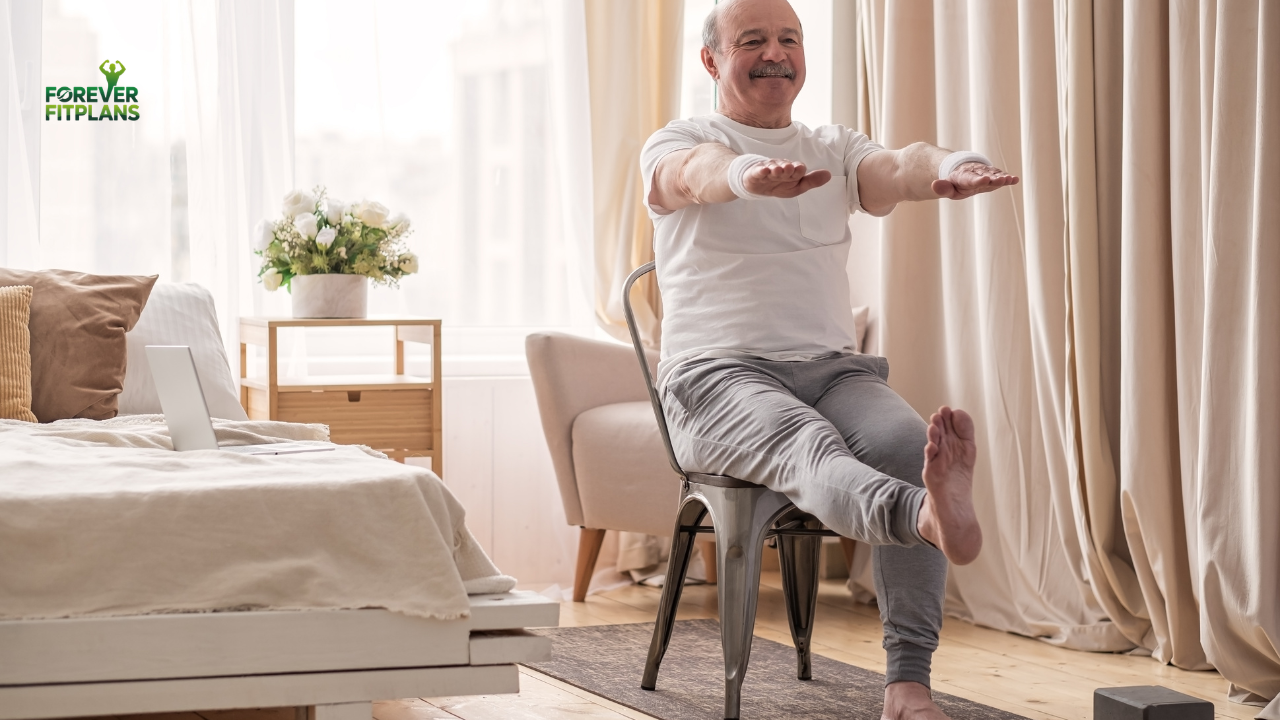
A lot of people assume that if you’re sitting down, you’re not really working out. That assumption is wrong. Chair-based exercises can elevate your heart rate, engage large muscle groups, improve circulation, and burn a meaningful number of calories — all while significantly reducing the stress placed on your joints compared to standing or high-impact workouts.
The key to weight loss is creating a calorie deficit — burning more energy than you consume. Chair exercises contribute to this by increasing your daily energy expenditure. They also help build lean muscle tissue, which raises your resting metabolic rate over time. That means your body burns more calories even when you’re not exercising, which compounds your results week after week.
For people with conditions like arthritis, knee pain, back problems, obesity, or balance issues, chair exercise removes the barriers that make traditional workouts difficult or even dangerous. It meets you where you are physically, which means you’re far more likely to actually do it consistently — and consistency is the single biggest driver of long-term weight loss success.
Even for people without physical limitations, chair-based routines offer a practical way to add more movement to a day that’s already full of sitting. Chair workouts done at your desk during breaks or in front of the TV in the evening add up more than most people realize.
The Best Chair Exercises for Weight Loss
Seated Jumping Jacks
This is a fantastic cardiovascular move that mimics the action of regular jumping jacks without any impact on your joints. Sit tall at the edge of your chair with your feet together and arms at your sides. As you open your legs out to the sides, simultaneously raise your arms overhead. Return to the starting position and repeat at a brisk pace.
Do this for 30 to 45 seconds at a time, and you’ll feel your heart rate climb quickly. It’s a great warm-up move and a reliable calorie burner when done in intervals.
Seated High Knees
Sit upright with your feet flat on the floor. Alternate lifting each knee toward your chest as high as you comfortably can, pumping your opposite arm at the same time as if you’re running. The faster you go, the more cardiovascular benefit you get.
This move engages your core, hip flexors, and lower abdominals while giving your heart a genuine workout. Aim for 20 to 30 repetitions on each side.
Chair Squats
Stand in front of your chair with your feet shoulder-width apart. Slowly lower yourself as if you’re about to sit down — but stop just before your body makes contact with the seat, hold for a second, then stand back up. This is a chair squat, and it’s one of the most effective lower-body strengthening exercises you can do.
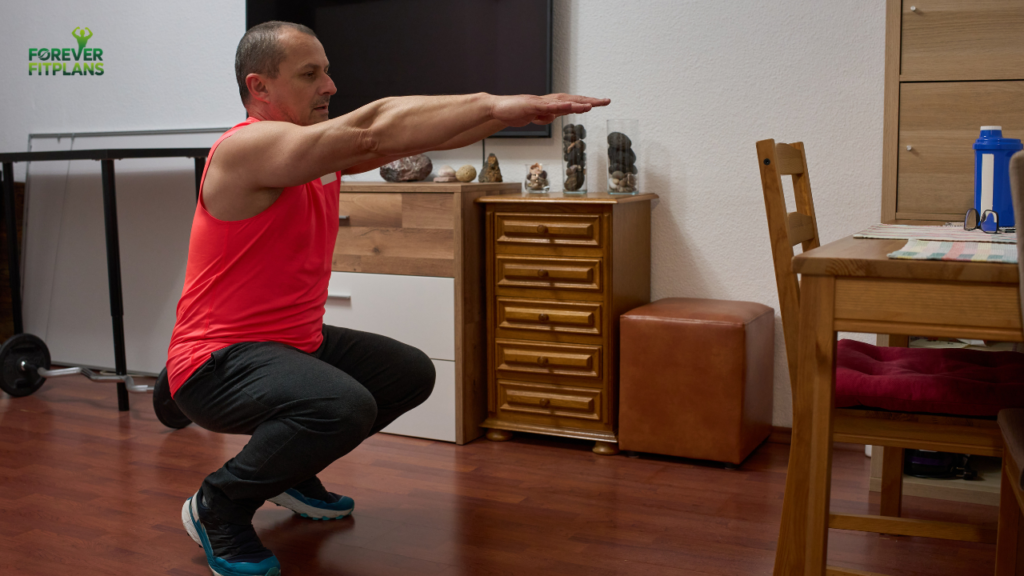
Chair squats work your glutes, quads, and hamstrings — three of the largest muscle groups in your body. Building these muscles is particularly valuable for weight loss because more muscle means a higher metabolism. Aim for 3 sets of 10 to 15 repetitions.
Seated Leg Raises
Sit tall in your chair, grip the sides lightly for stability, and extend one leg straight out in front of you, holding it parallel to the floor for 2 to 3 seconds before lowering it. Alternate legs. For added intensity, raise both legs at the same time and hold.
This exercise targets your lower abdominals, hip flexors, and quads. It’s deceptively challenging when done properly and is excellent for toning the midsection over time.
Seated Torso Twists
Sit at the edge of your chair with your feet flat on the floor. Hold your arms out in front of you or cross them over your chest. Rotate your upper body to the right as far as comfortable, hold for a moment, then rotate to the left. Keep your hips and lower body as still as possible.
This move targets your obliques — the muscles on the sides of your waist — and helps improve spinal mobility. It’s a great core exercise that burns more calories than it looks like it should.
Arm Circles and Overhead Press
Don’t neglect the upper body. Sitting tall with your arms extended out to the sides, make small circles forward for 20 seconds, then reverse. Follow this with an overhead press motion — push your arms straight up toward the ceiling and lower them back to shoulder height, repeating 15 times.
These moves engage your shoulders, triceps, and upper back, all of which contribute to overall muscle development and calorie burning.
Seated Bicycle Crunches
Place your hands lightly behind your head with your elbows wide. Lift your right knee while rotating your left elbow toward it, then switch sides in a smooth, controlled pedaling motion. This is the seated version of the classic bicycle crunch, and it’s highly effective for working the entire core.
Do 3 sets of 20 reps on each side, and you’ll feel this one the next morning.
Building a Real Chair Exercise Routine
Knowing individual exercises is one thing — putting them together into a consistent routine is where real results come from. Here’s a simple structure you can follow:
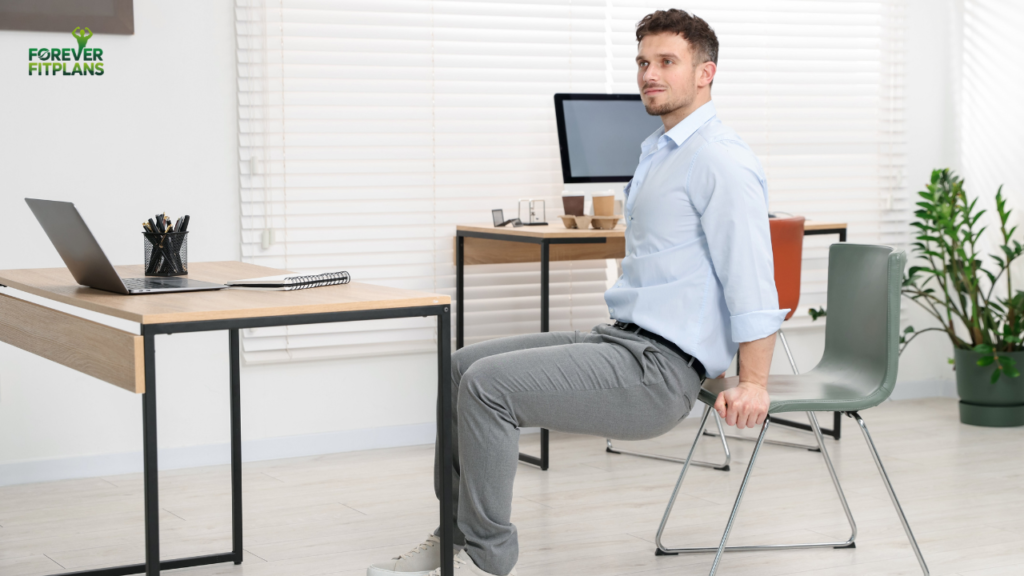
Warm-Up (5 minutes) Seated marching in place, gentle arm swings, seated torso twists.
Main Circuit (20 to 25 minutes) Rotate through seated jumping jacks (45 seconds), rest (15 seconds), seated high knees (45 seconds), rest (15 seconds), chair squats (12 reps), rest (20 seconds), seated leg raises (15 reps each leg), rest (20 seconds), seated bicycle crunches (20 reps each side), rest (20 seconds). Repeat this circuit 3 times.
Cool Down (5 minutes) Gentle seated stretching — reach your arms overhead, stretch side to side, extend each leg, and flex the foot to stretch the calf and hamstring.
This full session takes about 30 to 35 minutes and can be done daily or 5 days per week. Rest days are still important — your muscles repair and grow stronger during recovery, so don’t skip them entirely.
As you get stronger and fitter, increase intensity by adding light dumbbells, increasing your repetitions, reducing rest periods, or adding another circuit round.
How Many Calories Can Chair Exercises Burn?
This depends on your body weight, the intensity of the exercises, and the duration of your session. On average, a 30-minute moderate-intensity chair workout can burn anywhere from 120 to 250 calories for most people. That might not sound dramatic, but consider this:— done 5 days per week, that’s 600 to 1,250 calories burned per week from exercise alone.
Pair that with even modest dietary adjustments — reducing sugary drinks, eating slightly smaller portions, adding more vegetables — and you create a meaningful calorie deficit that supports steady, sustainable weight loss over time.
Most health professionals recommend aiming for a deficit of 500 calories per day to lose approximately one pound per week. Chair exercise gets you a significant portion of the way there, especially when combined with being generally more active throughout your day.
Tips to Get the Most Out of Chair Exercise
Sit at the edge of your chair. Slouching back into the chair reduces muscle engagement. Sitting tall at the edge forces your core to work harder and makes almost every exercise more effective.
Focus on form over speed. Moving with control and proper posture burns more calories and reduces injury risk compared to rushing through movements sloppily.
Add resistance gradually. Once bodyweight exercises feel easy, add light dumbbells or resistance bands to increase the challenge without changing the chair-based format.
Pair with daily walking when possible. Even a 15 to 20-minute walk added to your chair routine significantly boosts your total calorie burn and cardiovascular fitness.
Track your sessions. Writing down what you did or using a simple fitness app keeps you accountable and lets you see your progress over time, which is genuinely motivating.
Final Thoughts
Chair exercise for weight loss isn’t a compromise — it’s a legitimate, effective, and highly accessible approach to getting fit that works for a wide range of people. Whether you’re managing a health condition, recovering from an injury, returning to exercise after a long break, or simply looking for a way to move more during a busy day, chair-based workouts deliver real results when done consistently.
The moves are low-impact but genuinely challenging. The routine is adaptable to any fitness level. And the barrier to entry is almost zero — if you have a chair, you can start today.
Weight loss doesn’t happen overnight, but it does happen with consistent effort, sensible eating, and the kind of sustainable exercise routine that you’ll actually stick with. Chair exercises check all of those boxes. Start where you are, show up regularly, and give your body the movement it deserves — seated or standing, every rep counts.
FAQs
Can chair exercises really help you lose weight?
Yes. Chair exercises burn calories, build muscle, and raise your metabolism over time. When combined with a balanced diet, they can absolutely contribute to meaningful, sustained weight loss.
How long should a chair exercise session be for weight loss?
Aim for at least 25 to 35 minutes per session. Shorter sessions are still beneficial, especially if you’re just starting — even 15 minutes is better than nothing and can be built upon over time.
How many days a week should I do chair exercises?
Five days per week is a solid target, with two rest or light activity days. Consistency over several weeks and months is what drives results.
Are chair exercises good for seniors trying to lose weight?
Absolutely. Chair exercises are particularly well-suited for older adults because they reduce fall risk, protect joints, and can be scaled to match any fitness level while still delivering cardiovascular and strength benefits.
Can I build muscle with chair exercises?
Yes, particularly in the core, legs, and upper body. Adding resistance bands or light dumbbells to chair exercises accelerates muscle building and boosts the calorie-burning effect of your sessions.
Do I need any equipment for chair exercises?
No equipment is needed to get started. A sturdy, non-wheeled chair is all that’s required. As you progress, optional additions like resistance bands or light hand weights can increase intensity.

Dr. Daniel Carter is a certified health & wellness writer and fitness lifestyle researcher with over 8 years of experience in nutrition, weight management, sleep health, and preventive care. He is passionate about helping people live healthier, stronger, and more balanced lives through science-backed fitness strategies and easy-to-follow wellness tips.
Through FitForever Plan, Dr. Carter shares practical health advice, workout guidance, and nutrition insights designed to support long-term fitness, sustainable weight loss, and overall well-being. His mission is to make healthy living simple, achievable, and enjoyable for everyone.