
Is Honey Good for Weight Loss? 8 Surprising Truths That Will Completely Change Your Mind
You have probably heard conflicting things about honey and weight loss. Some people swear by a spoonful of honey in warm water every morning. Others say honey is just sugar and will make you gain weight. So what is the truth? Is honey good for weight loss or is it just another health myth that sounds great but delivers nothing? The honest answer is nuanced — and genuinely surprising. Is honey good for weight loss when used correctly, in the right amount, at the right time? Yes — and the science explains exactly why. Honey is not a magic fat-burning food, but it has several unique properties that make it meaningfully different from regular table sugar — and genuinely useful as part of a smart weight loss strategy. This guide covers every angle clearly, practically, and honestly.
If your goal is to reduce body fat without losing muscle mass, read our detailed post How to Lose Fat Without Losing Muscle.
What Makes Honey Different From Regular Sugar
Before answering is honey good for weight loss definitively, you need to understand what makes honey chemically and metabolically different from the white sugar most people are trying to eliminate.
Most people assume honey and sugar are essentially the same thing — both sweet, both caloric, both to be avoided. This assumption is wrong in several important ways.
Honey vs Sugar: The Nutritional Comparison
| Carbohydrates | 17.3g | 12.6g | 12.4g |
| Fructose | 8.6g | 6.3g | 6.3g |
| Glucose | 7.5g | 6.3g | 6.3g |
| Glycemic Index | 55–65 | 65–80 | 65 |
| Antioxidants | High | None | None |
| Vitamins/Minerals | Trace amounts | None | Minimal |
| Enzymes | Present | None | None |
| Antimicrobial compounds | Yes | No | No |
| Water content | 17–20% | 0% | 0% |
Key differences that matter for weight loss:
1. Lower glycemic index: Honey has a glycemic index of 55–65 — meaningfully lower than white sugar at 65–80. A lower GI means blood sugar rises more slowly and gently after consuming honey compared to sugar. This produces a smaller, more stable insulin response — less insulin means less fat storage signaling and more stable energy levels without the crash that drives sugary snack cravings.
2. Higher sweetness intensity: Honey is approximately 25–50% sweeter than sugar gram for gram. This means you need less honey to achieve the same level of sweetness, resulting in fewer calories consumed to satisfy a sweet craving.
3. Bioactive compounds: Honey contains over 200 bioactive substances including flavonoids, phenolic acids, enzymes, and trace minerals. These compounds have measurable effects on metabolism, inflammation, and gut health — all relevant to weight management.
4. Water content: Honey’s 17–20% water content adds volume without calories — diluting the caloric density compared to sugar.
Is Honey Good for Weight Loss: The Scientific Evidence
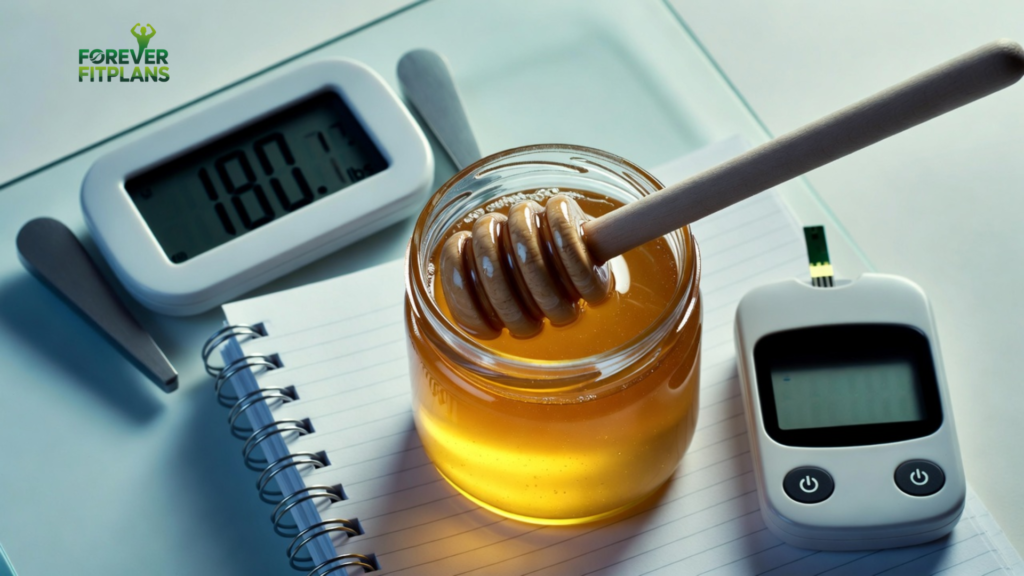
What Research Actually Shows
The research on honey is good for weight loss is more positive than most people expect.
Study 1 — Honey vs Sugar for Body Weight: A controlled study published in the Journal of the American College of Nutrition compared the effects of honey and sugar consumption on body weight in overweight subjects. The honey group showed significantly less weight gain, lower blood glucose levels, and reduced LDL cholesterol compared to the sugar group over the study. Study 2 — Honey and Appetite Hormones: Research found that honey produces a different hormonal response than sugar. Unlike sugar, honey stimulates the release of leptin — the fullness hormone — more effectively, helping reduce overall calorie intake by supporting satiety signals.
Study 3 — Honey and Fat Metabolism: Animal studies have shown that honey consumption reduces fat accumulation and increases fat oxidation compared to equivalent sucrose consumption. While human studies are more limited, the mechanism — involving honey’s unique fructose-to-glucose ratio and bioactive compounds — is biologically plausible and consistent.
Study 4 — Honey and Insulin Response: A study comparing glycemic responses found that honey produced a 20–30% lower insulin response than an equivalent amount of refined sugar, despite similar caloric content. Lower chronic insulin levels are strongly associated with reduced fat storage and improved body composition over time.
The conclusion from available research: is honey good for weight loss compared to sugar? Yes — honey is a meaningfully better choice. Is honey good for weight loss as a standalone weight loss intervention? No — but as a strategic replacement for sugar and sweeteners within a calorie-controlled diet, it provides real advantages.
Is Honey Good for Weight Loss: 8 Surprising Truths
Truth 1: Honey Activates Fat-Burning During Sleep
This is perhaps the most surprising and action isabIs finding related to is honey good for weight loss.
Nutritionist Mike McInnes proposed the Hibernation Diet theory — suggesting that consuming a small amount of honey before bed optimizes overnight metabolism and fat burning.
The mechanism:
- A teaspoon of honey before bed provides the liver with a small, steady glucose supply overnight
- This prevents the liver from running low on glycogen during the overnight fast
- When the liver has adequate glycogen, it mainwhether honey isable blood sugar without releasing stress hormones (cortisol and adrenaline)
- Cortisol is a fat-storage hormone — lower overnight cortisol means less fat storage and more fat burning during sleep
- Stable overnight blood sugar also improves sleep quality — and better sleep directly reduces hunger hormones the following day
Practical application: One teaspoon (7g, approximately 21 calories) of raw honey stirred into chamomile tea 30–45 minutes before bed — not a large amount, just enough to supply the liver with overnight fuel.
Truth 2: Honey Replaces Sugar With Fewer Insulin Spikes
Is honey good for weight loss partly because of how it affects insulin? Yes — and this matters enormously, for long-term body composition.
Chronically elevated insulin is the .primary hormonal driver of fat storage. When insulin is frequently spiked by high-glycemic foods, the body remains in a near-constant fat-storage mode and fat burning is suppressed.
By replacing sugar with honey across your daily diet, you reduce the cumulative insulin burden:
Where to make the swap:
- Oatmeal — one teaspoon of honey instead of sugar or flavored packet
- Tea and coffee — half teaspoon honey instead of sugar
- Salad dressings — honey mustard vinaigrette instead of sugary commercial dressings
- Yogurt — drizzle of honey instead of flavored sweetened yogurt
- Baking — replace 1 cup of sugar with ¾ cup honey (honey is sweeter, so less is needed)
- Smoothies — small drizzle instead of fruit juice or sweetened protein powder
Calorie saving example: If you currently use two teaspoons of sugar in two daily coffees and a tablespoon of sugar on oof atmeal, that is approximately 60 calories of sugar daily. Replacing with honey provides similar or greater sweetness at approximately the same calories — but with a significantly lower insulin response and added antioxidants. Over months, the lower insulin effect accumulates into meaningfully less fat storage.
Truth 3: Honey’s Antioxidants Reduce Fat-Promoting Inflammation
Chronic inflammation is a major — and often ignored — driver of weight gain and difficulty losing fat. Inflammation promotes insulin resistance, disrupts leptin signaling, and triggers fat storage particularly arou, particularly around the abdomen.
Honey — particularly raw, unprocessed honey — is rich in polyphenol antioxidants, including:
- Quercetin — reduces inflammation, improves insulin sensitivity
- Kaempferol — reduces inflammatory cytokines, supports metabolic health
- Chrysin — anti-inflammatory, has shown testosterone-supporting effects in some research
- Caffeic acid — reduces oxidative stress and inflammation
A study published in Oxidative Medic,ine and Cellular Longevity found that regular honey consumption significantly reduced markers of oxidative stress and inflammation — including C-reactive protein (CRP) and malondialdehyde.
Reduced inflammation improves insulin sensitivity — meaning your cells respond better to insulin, requiring less of it to handle the same glucose load. Better insulin sensitivity directly supports fat loss and makes is honey good for weight loss a yes from an inflammation perspective.
Truth 4: Honey Suppresses Appetite Better Than Sugar
Is honey good for weight loss partly because it reduces hunger? Research suggests yes — through a different mechanism than most people expect.

The fructose factor: Honey contains a slightly higher ratio of fructose to glucose compared to table sugar. Fructose is processed primarily by the liver and produces a more est insulin response than glucose, which means it does not trigger the same rapid blood sugar spike and crash cycle that drives rebound hunger after sugary foods.
The leptin connection: Unlike fructose f,m high-fructose corn syrup (which disrupts leptin signaling), the natural fructose in honey — combined with honey’s other bioactive compounds — appears to support rather than suppress leptin sensitivity. Leptin is the fullness hormone, and when it works properly you feel satisfied after eating and do not experience constant cravings.
Practical appetite management:
- A teaspoon of honey in warm water before a meal takes the edge off hunger
- Adding honey to protein-rich foods (Greek yogurt, cottage cheese) creates a satisfying combination of sweetness and satiety
- Replacing refined sugar snacks with a small honey-based treat produces greater satisfaction with fewer calories
Truth 5: Honey Improves Gut HHealthh Which Supports Weight Loss
The connection between gut health and weight management is one of the most exciting areas of current nutrition research — and honey has a meaningful role to play here.
Honey as a prebiotic: Raw honey contains oligosaccharides — prebiotic compounds that feed beneficial gut bacteria including Lactobacillus and Bifidobacterium species. A healthy gut microbiome is increasingly recognized as important for:
- Regulating energy extraction from food
- Producing short-chain fatty acids that support fat burning
- Reducing systemic inflammation
- Regulating appetite hormones including ghrelin and leptin
Honey’s antimicrobial properties: Honey’s hydrogen peroxide content, low pH, and methylglyoxal (particularly in Manuka honey) cr,eate an environment hostile to harmful gut bacteria while supporting beneficial species — effectively acting as a selective antimicrobial that favors a healthy microbiome balance.
A healthier gut microbiome has been associated in multiple studies with lower body weight, reduced fat accumulation, and better metabolic health — making is honey good for weight loss yes from a gut health perspective as well.
Truth 6: Honey Boosts Exercise Performance and Recovery
Is honey good for weight loss partly through improving your ability to exercise? Yes — and this is an underappreciated benefit.
Honey is an excellent natural source of exercise fuel:
- Its combination of glucose and fructose provides both fast and sustained energy during exercise
- Research comparing honey to commercial sports gels found equ,ivale,nt performance benefits during endurance exercise
- Honey’s anti-inflammatory compounds support post-exercise recovery — reducing the soreness that discourages next-day training
Pre-workout honey use: One tablespoon of honey 30–45 minutes before exercise provides approximately 17g of natural carbohydrates — enough to fuel a 30–45 minute moderate intensity session without the artificial ingredients and processed sugar of commercial pre-workout products.
Better exercise performance + faster recovery = more consistent training = greater calorie burn = accelerated fat loss.
Truth 7: The Honey and Warm Water Protocol. ocol Works — Here Is Why
The honey warm water morning drink is one of the most popular weight loss home remedies globally — and there is genuine science supporting why it helps.
What it does:
- Warm water on an empty stomach stimulates digestion and gastric motility
- The small amount of honey provides a gentle glucose signal that prevents cortisol from spiking in the early morning (when cortisol is naturally high during the cortisol awakening response)
- The combination mildly suppresses appetite, making breakfast hunger more manageable
- Warm honey water supports gentle liver detoxification in the morning
- The ritual itself — intentional, calming — sets a health-focused mindset for the day
The recipe:
- 1 cup warm water (not boiling — heat destroys honey’s enzymes above 40°C/104°F)
- 1 teaspoon raw honey
- Optional: squeeze of half a lemon (adds vitamin C and citric acid for digestion)
- Drink on an empty stomach 20–30 minutes before breakfast
What the research shows: A study found that subjects who consumed honey dissolved in water before breakfast reported reduced appetite at breakfast and ate fewer total calories at their morning meal compared to a control group.
Truth 8: Not All Honey Is Equal — Type Matters Enormously
Is honey good for weight loss regardless of which type you buy? No — and this is where most people make a critical mistake.
Honey types ranked for weight loss benefits:
| Honey Type | Processing | Antioxidants | Enzymes | Best For |
| Raw, unfiltered honey | Minimal | Highest | Active | Maximum health benefit |
| Raw Manuka honey | Minimal | Very high | Active + MGO | Gut health, antimicrobial |
| Raw wildflower honey | Minimal | High | Active | General daily use |
| Organic raw honey | Minimal | High | Active | Clean sourcing |
| Regular commercial honey | Heat-treated, filtered | Low | Destroyed | Cooking only |
| Ultra-processed honey | Highly processed | Very low | Destroyed | Avoid for health |
| Honey blends with syrup | Adulterated | Minimal | Absent | Avoid entirely |
What processing destroys: Commercial honey is typically heated to 70°C (158°F) or higher for filtration and extended shelf life. This heat:
- Destroys all active enzymes
- Significantly reduces polyphenol and antioxidant content
- Eliminates prebiotic oligosaccharides
- Removes pollen — which carries much of the nutritional complexity
Practical rule: Always buy raw, unfiltered, unheated honey — ideally from a local beekeeper or a brand that clearly states “raw” and “unheated.” The difference in health benefit between raw and processed honey is substantial.
How Much Honey Per Day for Weight Loss
Is honey good for weight loss at any dose, or does amount matter? Amount matters significantly.
Safe Daily Honey Amounts
| , Population | Safe Daily Amount | Calories From Honey |
| Active adults (weight loss) | 1–2 teaspoons (7–14g) | 21–42 kcal |
| General healthy adults | 2–3 teaspoons (14–21g) | 42–64 kcal |
| Diabetics | ½ teaspoon maximum | 10 kcal (mbenefitsglucose) |
| Children (over 1 year) | ½–1 teaspoon | 10–21 kcal |
| Pregnant women | 1–2 teaspoons (pasteurized) | 21–42 kcal |
| Infants under 12 months | None — risk of botulism | — |
The critical rule: Honey is a supplement to a healthy diet — not a food group. The total daily amount for weight loss purposes should not exceed two teaspoons (approximately 42 calories). More than this adds enough sugar and calories to potentially offset any metabolic benefits.
Best Times to Take Honey for Weight Loss
Timing matters for maximizing is honey good for weight loss benefits:
| Time | Amount | How to Take | Why It Helps |
| Morning (empty stomach) | 1 tsp | Warm water + lemon | Boosts metabolism, suppresses appetite |
| Before exercise (30 min) | 1 tbsp | Warm water or on toast | Natural fuel, improves performance |
| After exercise | 1 tsp | With a protein source | Recovery support |
| Before bed | 1 tsp | Chamomile tea | Overnight fat burning, better sleep |
| Before a meal | 1 tsp | the |
What NOT to Do With Honey for Weight Loss
Is honey good for weight loss if used incorrectly? No — these mistakes turn a health food into a diet obstacle:
- Adding multiple tablespoons to drinks — even healthy honey becomes a calorie problem at high doses
- Adding honey to already sweetened foods — double sugar load defeats the purpose
- Heating honey above 40°C (104°F) — destroys enzymes and reduces antioxidant content
- Using commercial processed honey — minimal health benefit, similar calorie load to sugar
- Treating honey as a free food — it has 64 calories per tablespoon; calories count
- Replacing all exercise and dietary effort with honey water — honey supports weight loss, it does not replace lifestyle fundamentals
- Giving raw honey to infants under 12 months — serious botulism risk
Honey vs Other Natural Sweeteners for Weight Loss
| Sweetener | Calories/tsp | GI | Antioxidants | Verdict |
| Raw honey | 21 | 55–65 | High | ✅ Best natural sweetener |
| Maple syrup | 17 | 54 | Moderate | ✅ Good alternative |
| Coconut sugar | 15 | 54 | Low | ⚠️ Marginal benefit |
| Agave syrup | 21 | 15 | Low | ⚠️ High fructose concern |
| Stevia | 0 | 0but | Minimal | ✅ Best for zero calories |
| Monk fruit | 0 | 0 | Moderate | ✅ Excellent zero-cal option |
| White sugar | 16 | 65–80 | None | ❌ Avoid |
| HFCS | 17 | 87 | None | ❌ Avoid entirely |
Real-Life Example
Nadia, 36, was struggling to lose the last five kilograms of stubborn weight despite eating relatively well. She had a significant sweet tooth and was consuming two teaspoons of sugar in her morning coffee, flavored yogurt for lunch, and occasionally reaching for biscuits in the afternoon.
She made three simple honey-related changes:
- Replaced her morning coffee sugar with half a teaspoon of raw honey
- Switched from flavored yogurt to plain Greek yogurt with a half teaspoon honey drizzle
- Started drinking a teaspoon of raw honey in warm water with lemon 30 minutes before breakfast
She made no other changes to her diet or exercise routine.
After eight weeks:
- Weight: down 2.1 kg
- Afternoon biscuit cravings: significantly reduced by week three
- Morning energy: noticeably more stable — no mid-morning energy crash
- Sleep quality: self-reported improvement from week two onward
Nadia had not followed a strict diet. So he had simply replaced high-glycemic, zero-nutrient sugar with small, strategic amounts of raw honey — and the cumulative metabolic difference had produced real, measurable results.
Final Thoughts
So is honey good for weight loss? Based on the science, the honest, practical answer is yes — when used correctly, in the right amounts, at the right times, and as part of a genuinely healthy overall diet. Is honey good for weight loss as a magic solution that melts fat without effort? No — and any source claiming otherwise is misleading you.
Is honey good for weight loss when it replaces refined sugar as your primary sweetener? Absolutely — the lower glycemic index, antioxidant content, gut-health benefits, and appetite-supporting properties make raw honey a meaningfully better choice for anyone managing their weight. Is honey good for weight loss when consumed in excessive amounts? No, honey is still caloric and still contains sugar. The dose makes the difference.
Is honey good for weight loss as part of the warm water morning ritual? Yes — the evidence supports this as a gentle, practical appetite and cortisol management tool. Is honey good for weight loss when you choose raw, unfiltered honey over processed commercial varieties? Significantly more so — raw honey retains all the active compounds that make it different from sugar.
Is honey good for weight loss for you specifically? Start with one teaspoon in warm water every morning for four weeks — and let your hunger levels, energy, and waistline give you the answer.
Start tomorrow morning: mix one teaspoon of raw honey into a cup of warm water with fresh lemon juice. Drink it 20 minutes before breakfast for 30 consecutive days — a, track how your cravings, energy, and weight change.
If you want to learn more about the connection between honey and weight loss, this helpful guide from Vinmec explains the potential benefits and limitations.
Frequently Asked Questions
Is honey good for weight loss or will it make me gain weight?
Honey can support weight loss when used correctly — in small amounts (one to two teaspoons daily) as a replacement for refined sugar. Its lower glycemic index produces a smaller insulin response than sugar, its antioxidants reduce inflammation that promotes fat storage, and it supports appetite regulation through leptin signaling. Consuming large amounts of honey daily, however, adds significant sugar and calories that can cause weight gain. The key is using honey strategically as a sugar replacement — not as an additional food.
What is the best way to use honey for weight loss?
The most evidence-supported methods are: one teaspoon of raw honey in warm water with lemon on an empty stomach every morning; one teaspoon before bed in chamomile tea to support overnight fat metabolism; and replacing refined sugar in tea, coffee, oatmeal, and yogurt with small amounts of raw honey. Always use raw, unfiltered honey — commercial processed honey has significantly reduced health benefits. Keep total daily honey intake to one to two teaspoons for weight loss purposes.
Does honey and warm water burn belly fat?
Honey warm water does not directly burn belly fat — no single food targets specific fat deposits. However, the morning honey warm water ritual supports weight loss through several mechanisms: gentle appetite suppression before breakfast, reduced morning cortisol spike (cortisol promotes abdominal fat storage), improved digestion, and a metabolic-boosting effect from the warm water itself. Combined with a calorie-controlled diet, the honey warm water routine can contribute to overall fat reduction including the abdominal area over time.
How much honey per day is safe for weight loss?
For weight loss purposes, one to two teaspoons (7–14g) of raw honey daily is the recommended amount — providing 21–42 calories. This is enough to provide metabolic benefits without adding a significant calorie or sugar burden. More than two tablespoons daily (approximately 130 calories from honey alone) begins to offset the metabolic advantages through sheer caloric load. D,iabetics should limit to half a teaspoon and monitor blood glucose response carefully.
Is honey better than sugar for weight loss?
Yes — honey is meaningfully better than refined sugar for weight loss for several reasons: lower glycemic index (55–65 vs 65–80), higher sweetness intensity meaning less is needed for the same sweet taste, antioxidants and bioactive compounds absent in sugar, prebiotic gut health benefits, and a more favorable effect on leptin and appetite hormones. However, honey still contains calories and natural sugars — it is a better choice than sugar, not a calorie-free alternative.
Can diabetics use honey for weight loss?
People with diabetes should approach honey with caution and medical guidance. While honey has a lower glycemic index than sugar and may produce a smaller blood glucose spike, it still raises blood sugar and must be counted as a carbohydrate in a diabetic meal plan. Small amounts — half a teaspoon — may be tolerable for well-controlled Type 2 diabetics, but glucose monitoring before and after consumption is essential. People on insulin or sulfonylureas should discuss any significant dietary changes including honey consumption with their diabetes care team.
Does cooking with honey destroy its weight loss benefits?
Yes — heating honey above 40°C (104°F) destroys its active enzymes and significantly reduces its polyphenol and antioxidant content. The beneficial compounds that distinguish raw honey from sugar — and that support weight loss — are heat-sensitive. For cooking and baking at high temperatures, raw honey loses most of its health advantages and bec, om es nutritionally similar to sugar. To preserve honey’s weight loss benefits, add it to warm (not hot) drinks, use it as a dressing drizzle, or take it directly — avoiding high-heat cooking applications.

Dr. Daniel Carter is a certified health & wellness writer and fitness lifestyle researcher with over 8 years of experience in nutrition, weight management, sleep health, and preventive care. He is passionate about helping people live healthier, stronger, and more balanced lives through science-backed fitness strategies and easy-to-follow wellness tips.
Through FitForever Plan, Dr. Carter shares practical health advice, workout guidance, and nutrition insights designed to support long-term fitness, sustainable weight loss, and overall well-being. His mission is to make healthy living simple, achievable, and enjoyable for everyone.