Is Rice Good for Weight Loss? The Truth Nobody Tells You
Rice gets a bad reputation in the diet world. The moment someone decides to lose weight, rice is usually the first thing they cut out. But is that actually the right call? Is rice good for weight loss, or has it been unfairly blamed for expanding waistlines around the world?
Here’s something interesting: billions of people in Asia eat rice every single day — and for most of history, obesity was far less common in those populations than in Western countries that eat very little rice. So what’s really going on? The truth about rice and weight loss is more nuanced than most diet blogs will tell you. In this article, we’ll break it all down honestly — the science, the practical tips, and the real answer you’ve been looking for.
If you’re including rice in your weight loss plan, portion control and meal balance are key. Pairing rice with lean protein and vegetables can make it part of a healthy dinner. For more meal inspiration, check out our guide on Healthy Dinner Ideas for Weight Loss to create balanced, calorie-conscious meals that actually keep you full.
Is Rice Good for Weight Loss? Let’s Start With the Facts
Rice is one of the most eaten foods on the planet. It’s affordable, filling, versatile, and easy to cook. But when it comes to weight loss, the conversation usually stops at one word: carbs.
Yes, rice is high in carbohydrates. But carbohydrates are not the enemy — and rice is not automatically a weight-loss killer. What actually matters for weight loss is your total calorie intake, your food quality, and how your body responds to different foods.
Here’s a basic nutritional breakdown of the most common types of rice (per 1 cup cooked):
| Type of Rice | Calories | Carbs | Protein | Fiber | Glycemic Index |
| White rice | 206 | 45g | 4.3g | 0.6g | 72 (High) |
| Brown rice | 216 | 45g | 5g | 3.5g | 50 (Medium) |
| Basmati rice | 190 | 42g | 4.4g | 0.7g | 50–58 (Medium) |
| Black rice | 180 | 38g | 5g | 3g | 42 (Low) |
| Cauliflower rice | 25 | 5g | 2g | 2.5g | Very Low |
The calorie difference between white and brown rice is small. But the fiber difference is significant — and fiber is one of the most important nutrients for weight loss.
Why Rice Got Blamed for Weight Gain
Before we answer whether rice is good for weight loss, it’s worth understanding why rice got such a bad reputation in the first place.

The main reasons people blame rice for weight gain:
- High glycemic index (white rice): White rice digests quickly and causes a faster rise in blood sugar, which can lead to hunger returning sooner.
- Easy to overeat: Rice is soft, fast to eat, and doesn’t require much chewing. Studies show people eat more of foods that require less chewing effort.
- Portion distortion: In many households, rice portions have quietly grown over time. What used to be half a cup has become two cups — and nobody noticed.
- What’s served alongside it: Rice rarely gets eaten alone. It’s paired with curries, fried foods, heavy sauces, and fatty proteins. The rice gets the blame, but the real calorie culprit is often the toppings.
In short, rice didn’t make people gain weight. Too much rice, eaten with high-calorie sides, without enough vegetables or protein — that’s what did it.
The Real Answer: Is Rice Good for Weight Loss?
Here it is plainly: yes, rice can absolutely be part of a successful weight loss diet — with the right type, portion size, and eating approach.
Research backs this up. A 2016 study published in PLOS ONE analyzed data from 136 countries and found that rice consumption was actually negatively correlated with obesity rates — meaning countries that eat more rice tend to have lower rates of obesity. Of course, many lifestyle factors are at play, but this alone challenges the idea that rice automatically causes weight gain.
The key factors that determine whether rice helps or hurts your weight loss goals are:
- Which type of rice do you choose
- How much do you eat
- How do you cook it
- What do you eat it with
- When you eat it
Let’s go through each of these.
White Rice vs. Brown Rice for Weight Loss — Which Is Better?
This is the most common question people ask, and the answer isn’t as black-and-white as diet culture makes it seem.
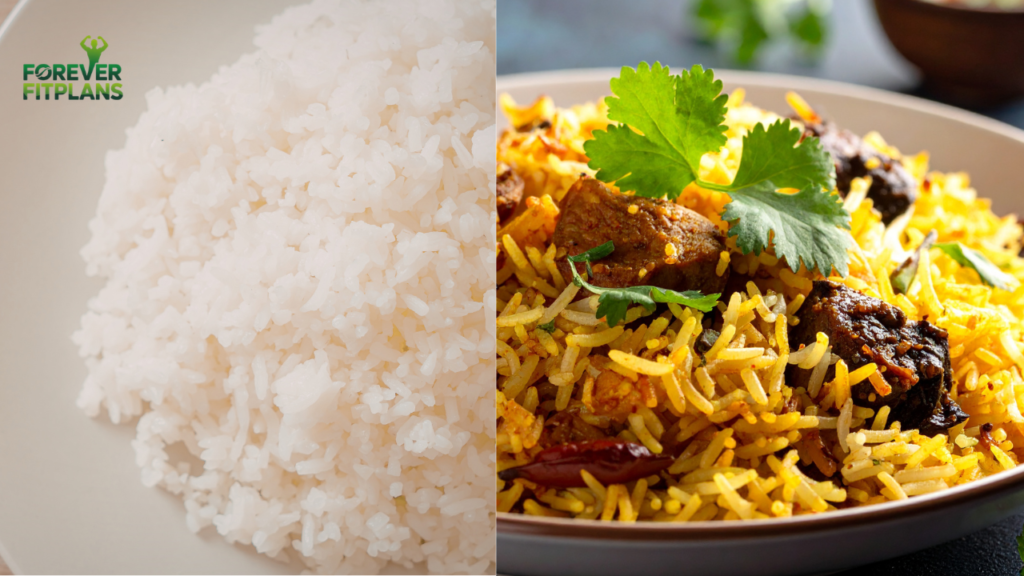
Brown Rice for Weight Loss
Brown rice is the whole grain — only the outermost husk is removed. It retains the bran and germ layers, which means:
- More fiber (3.5g per cup vs 0.6g in white rice) — fiber slows digestion, keeps you fuller longer, and feeds healthy gut bacteria
- More vitamins and minerals — magnesium, phosphorus, B vitamins
- Lower glycemic index (50) — slower blood sugar rise, less chance of rapid hunger returning
- More chewing required — you naturally eat slower and less
Verdict: Brown rice is the better choice, specifically for weight loss,s because of its higher fiber content and slower digestion rate.
White Rice for Weight Loss
White rice isn’t evil. It’s just more refined, lower in fiber, and faster-digesting. But it has advantages too:
- Easier to digest — good for people with sensitive stomachs or IBS
- Still a whole food with no added sugar, additives, or preservatives
- Can be part of a calorie-controlled diet successfully
- Pairs well with high-fiber vegetables and lean proteins to slow absorption
Verdict: White rice can work for weight loss — but you have to be more careful with portions and pairings.
The Smart Middle Ground
Many nutrition experts now suggest a 50/50 mix — cook half white rice, half brown rice together. You get better texture, better taste compliance, and still benefit from more fiber than white rice alone. Small changes like this are sustainable. Extreme swaps usually aren’t.
How Portion Size Makes or Breaks Rice and Weight Loss
This is honestly where most people go wrong — not the type of rice, but the amount.
A standard serving of cooked rice for weight management is ½ cup to ¾ cup (about 90–130 grams). Most people serving themselves at home pour roughly 1.5 to 2 cups without thinking twice. That’s 3–4 times the recommended portion — and 400–600 extra calories before you’ve even added anything to it.
Here’s a simple visual guide:
| Portion Size (Cooked) | Approx. Calories | Best For |
| ¼ cup (50g) | ~50 cal | Side dish, calorie deficit |
| ½ cup (90g) | ~100 cal | Weight loss meal |
| ¾ cup (130g) | ~150 cal | Active person, weight loss |
| 1 cup (185g) | ~200 cal | Maintenance |
| 2 cups (370g) | ~400 cal | Weight gain risk zone |
Real-life example: Priya, a 38-year-old teacher trying to lose weight, wasn’t eating unhealthy food — she was eating two large cups of white rice with dal and vegetables twice a day. That’s about 800 calories just from rice. When she reduced to ¾ cup per meal and added more vegetables, she created a 400-calorie daily deficit without feeling deprived — and lost 8 pounds in six weeks without giving up rice entirely.
The Cooking Method That Can Actually Make Rice Better for Weight Loss
Here’s a fascinating food science trick most people have never heard of: cooking rice and then cooling it in the fridge overnight changes its starch structure.
When cooked rice cools down, some of its digestible starch converts into resistant starch — a type of carbohydrate your body can’t fully digest. Resistant starch:
- Passes through your digestive system more like fiber
- Feeds beneficial gut bacteria
- Causes a lower blood sugar spike than freshly cooked hot rice
- May reduce the effective calorie absorption from rice
Studies have shown that this simple cooling process can reduce the calorie availability of rice by up to 10–15%. You can reheat the rice before eating — the resistant starch stays intact even after reheating.
Other Cooking Tips for Weight Loss:
- Add a teaspoon of coconut oil to the cooking water — this also increases resistant starch formation
- Use broth instead of water — adds flavor without significant calories, reducing the need for heavy sauces
- Cook with spices like turmeric, cumin, and black pepper — anti-inflammatory, metabolism-supporting, and they make plain rice taste great without adding calories.
- Don’t add butter, oil, or ghee after cooking — this dramatically increases calorie density.
What to Eat With Rice to Support Weight Loss
The company rice keeps matters enormously. The same cup of rice eaten with fried chicken and creamy sauce behaves very differently in your body than the same cup eaten with grilled fish and steamed broccoli.
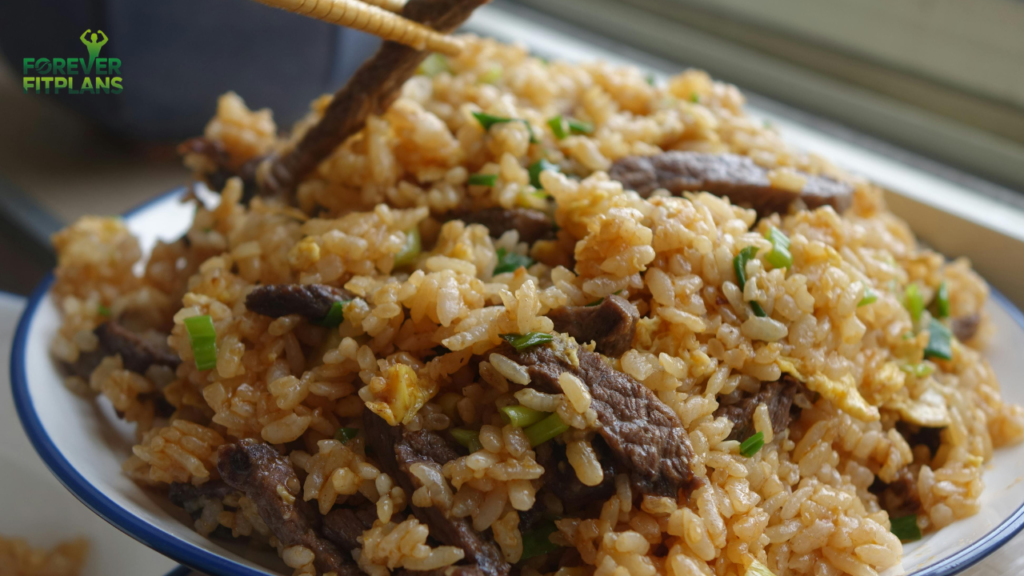
Best Foods to Pair With Rice for Weight Loss:
- Lean proteins: grilled chicken, fish, tofu, lentils, boiled eggs, chickpeas
- Non-starchy vegetables: spinach, broccoli, zucchini, bell peppers, cucumber, cabbage
- Healthy fats in small amounts: avocado, a drizzle of olive oil, a few nuts
- Fermented foods: kimchi, plain yogurt — support gut health and satiety
Foods to Avoid Pairing With Rice If You’re Losing Weight:
- Deep-fried proteins (fried chicken, fish fry)
- Heavy cream-based or oil-heavy curries
- Sugary sauces or sweet-and-sour toppings
- Other high-starch sides like bread, naan, or potatoes
The goal is to build a plate where rice takes up no more than one-quarter of your plate. Fill half your plate with vegetables and a quarter with protein. This is essentially the Harvard Healthy Eating Plate model — and it works with rice beautifully.
Best Types of Rice for Weight Loss: A Ranked Guide
Not all rice is created equal when it comes to your waistline.
1. Black Rice (The Best Overall)
Also called forbidden rice — rich in antioxidants (anthocyanins), high in fiber, low glycemic index, and incredibly filling. Harder to find and more expensive, but nutritionally outstanding.
2. Brown Rice (The Everyday Champion)
The most practical whole grain rice for daily weight loss eating. Higher fiber, more nutrients, widely available, and affordable.
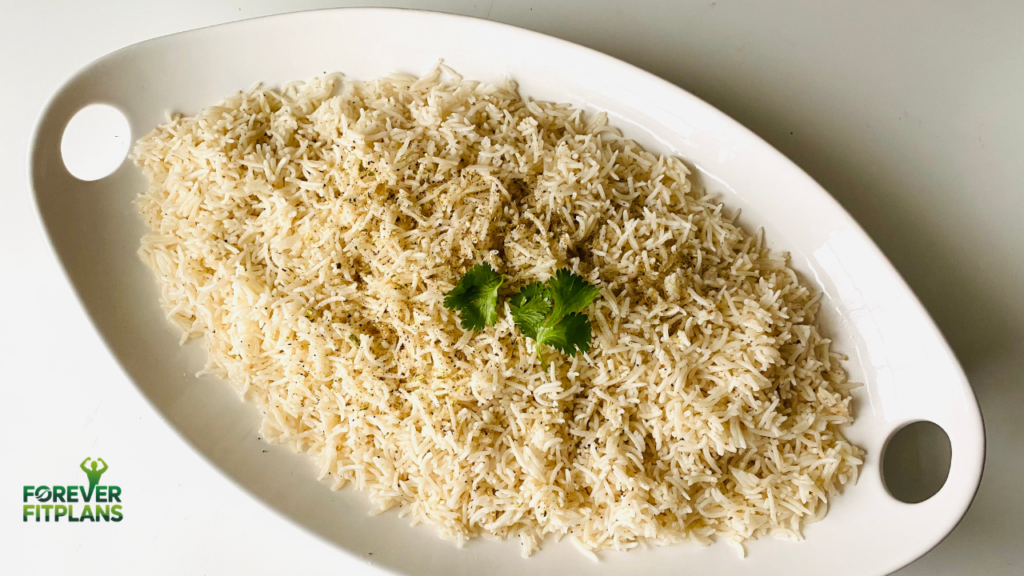
3. Basmati Rice (The Smart White Rice Choice)
Lower glycemic index than regular white rice due to its long-grain structure. A better option when you want white rice. The elongated grains digest slightly slower than short-grain white rice.
4. Parboiled Rice (The Underrated Option)
Parboiling pushes nutrients from the bran into the grain before milling. Lower glycemic index than regular white rice, with slightly more fiber. A good compromise.
5. Regular White Rice (Use With Caution)
Still fine in controlled portions paired with fiber and protein — just requires more mindfulness around serving size.
6. Cauliflower Rice (The Low-Calorie Swap)
Not actually rice, but a great option for dramatically cutting calories. At just 25 calories per cup versus 200 for white rice, mixing half cauliflower rice with half real rice cuts calories significantly while maintaining volume and fullness.
Timing: When Should You Eat Rice If You’re Trying to Lose Weight?
When you eat rice matters almost as much as how much you eat.
- Lunch is the best time for rice — your metabolism is more active mid-day, and you have hours of activity ahead to use the energy.
- Avoid large rice portions at dinner — slower nighttime metabolism means excess glucose is more likely to be stored as fat.
- Before exercise: A moderate portion of rice 1–2 hours before a workout provides clean, sustained energy.
- After exercise, Brown rice with protein is an excellent post-workout meal for muscle recovery without excessive calorie loading.
Common Myths About Rice and Weight Loss — Debunked
Myth 1: “Rice always makes you fat.” False. Portion size and overall diet quality determine weight gain — not rice alone.
Myth 2: “You have to give up rice completely to lose weight.” False. Millions of people lose weight successfully while still eating rice regularly.
Myth 3: “Brown rice has way fewer calories than white rice.” False. The calorie difference is minimal — about 10 calories per cup. The real advantage is fiber content, not calorie count.
Myth 4: “Rice has no nutritional value.” False. Rice provides B vitamins, manganese, magnesium, and is one of the most easily digestible energy sources available.
Myth 5: “Carbs at night always turn to fat.” Mostly false. What matters is total daily calorie balance, not the specific time you eat carbs. That said, large portions late at night are harder to burn off through activity.
Final Thoughts
So, is rice good for weight loss? The honest answer is yes — when you eat the right type, in the right amount, prepared the right way, with the right foods alongside it. Rice is not your enemy. Oversized portions, calorie-heavy pairings, and a sedentary lifestyle are.
The most sustainable weight loss plan is one you can actually stick to. For billions of people worldwide, that plan includes rice. You don’t have to be the exception. Choose brown, basmati, or black rice when you can. Keep portions to ¾ of a cup. Fill your plate with vegetables and lean protein. Try the cool-and-reheat trick to reduce calorie absorption. Small, consistent changes beat extreme elimination every time.
Try this week: Reduce your rice portion by just one-quarter and add an extra serving of vegetables in its place. Do it for seven days and see how you feel. You might be surprised how satisfying — and effective — that one small change can be.
Rice often gets a bad reputation when it comes to dieting, but the truth depends on portion size and type. According to experts at Healthline, certain types of rice can fit into a weight loss plan when consumed mindfully and paired with protein and fiber-rich foods.
Frequently Asked Questions
Is rice good for weight loss, or should I avoid it completely?
Rice can absolutely support weight loss when eaten in controlled portions. The key is choosing higher-fiber varieties like brown or basmati rice, keeping servings to ¾ cup, and pairing rice with lean proteins and plenty of vegetables.
Which rice is best for losing weight?
Black rice and brown rice are the top choices because of their higher fiber content and lower glycemic index. Basmati rice is the best option if you prefer white rice, as it digests more slowly than regular short-grain white rice.
How much rice can I eat per day to lose weight?
Most nutritionists recommend ½ to ¾ cup of cooked rice per meal for weight loss. If you eat rice twice a day, aim for a combined total of 1 to 1.5 cups maximum, depending on your overall calorie needs.
Does eating rice at night cause weight gain?
Eating a large portion of rice late at night — especially with heavy sides — can contribute to weight gain because you’re less likely to burn those calories through activity. A small portion with vegetables and protein at dinner is generally fine.
Is white rice bad for weight loss?
White rice isn’t inherently bad, but it’s lower in fiber and has a higher glycemic index than brown rice, meaning it digests faster and may leave you hungry sooner. With careful portioning and smart food pairings, white rice can still fit into a weight-loss diet.
Does cooling cooked rice reduce its calories?
Yes — cooling cooked rice in the fridge overnight converts some of its digestible starch into resistant starch, which your body absorbs less efficiently. Studies suggest this can reduce effective calorie absorption by up to 10–15%, even after reheating.

Dr. Daniel Carter is a certified health & wellness writer and fitness lifestyle researcher with over 8 years of experience in nutrition, weight management, sleep health, and preventive care. He is passionate about helping people live healthier, stronger, and more balanced lives through science-backed fitness strategies and easy-to-follow wellness tips.
Through FitForever Plan, Dr. Carter shares practical health advice, workout guidance, and nutrition insights designed to support long-term fitness, sustainable weight loss, and overall well-being. His mission is to make healthy living simple, achievable, and enjoyable for everyone.