
Is Sweating During Exercise a Sign of Weight Loss?
If you’ve ever finished a workout dripping in sweat and thought, “I must have burned so many calories today,” you’re not alone. Most people connect heavy sweating with serious fat burning. It feels logical, right? You work hard, you sweat a lot, and that sweat must mean something big is happening inside your body.
But is sweating during exercise actually a sign of weight loss? The short answer might surprise you — and understanding the full picture can completely change how you think about your workouts.
Let’s break this down in simple, easy-to-understand language so you can stop guessing and start knowing what’s really going on when you sweat.
Learn how to turn sweat into results with our 30-Day Weight Loss Exercise Plan.
What Is Sweat, Really?
Before we get into the weight loss part, let’s talk about what sweat actually is. Sweat is mostly water. It also contains small amounts of salt, potassium, and other minerals. Your body produces sweat through tiny glands in your skin called sweat glands, and there are millions of them all over your body.
The main job of sweat is to cool you down. When your body temperature rises — whether from exercise, hot weather, stress, or even spicy food — your brain sends a signal to start sweating. The sweat comes out through your skin, and as it evaporates, it takes heat with it. This keeps your body from overheating. It’s basically your body’s built-in air conditioning system.
So sweat is a cooling tool, not a fat-burning tool. That’s an important thing to keep in mind as we move forward.
Does Sweating Mean You’re Burning Calories?
Here’s where things get a little more nuanced. Sweating itself does not burn calories. The act of producing sweat doesn’t directly melt fat or cause your body to lose weight in any meaningful, lasting way. However, the activities that cause you to sweat — like running, cycling, jumping, or lifting weights — do burn calories.

So there’s a connection, but it’s not a direct one. Think of it this way: when you exercise hard enough to sweat, your body is working hard, and working hard burns energy. But the sweat is just a side effect of that effort, not the cause of weight loss.
If you sat in a sauna for an hour, you’d sweat a lot. But that doesn’t mean you burned a lot of fat. You’d just lose water weight, which comes right back as soon as you drink fluids again. This is one of the biggest misunderstandings people have about sweat and weight loss.
The Difference Between Water Weight and Fat Loss
This is really the heart of the matter. When you sweat, you lose water weight. Your body is releasing fluid, and yes, the number on the scale will go down temporarily after a sweaty workout. But that lost weight is just water — not fat.
As soon as you rehydrate by drinking water or eating food with water content, that weight comes right back. This is completely normal and healthy. Your body needs that water, and replacing it is important for your health, performance, and recovery.
True fat loss happens when your body uses stored fat as energy. This occurs through a calorie deficit — meaning you burn more calories than you take in over time. Exercise helps create that deficit, but the sweat from the exercise isn’t what’s causing you to lose fat. It’s the calories burned during the exercise that matter.
So if you want to track real fat loss, don’t rely on how much you sweat. Instead, pay attention to your overall calorie balance, your diet, your energy levels, and how your clothes fit over time.
Why Do Some People Sweat More Than Others?
You might have noticed that some people at the gym are completely soaked after a moderate workout, while others barely glisten after an intense session. This doesn’t mean one person is working harder or losing more weight than the other. Sweating is highly individual and depends on several factors.
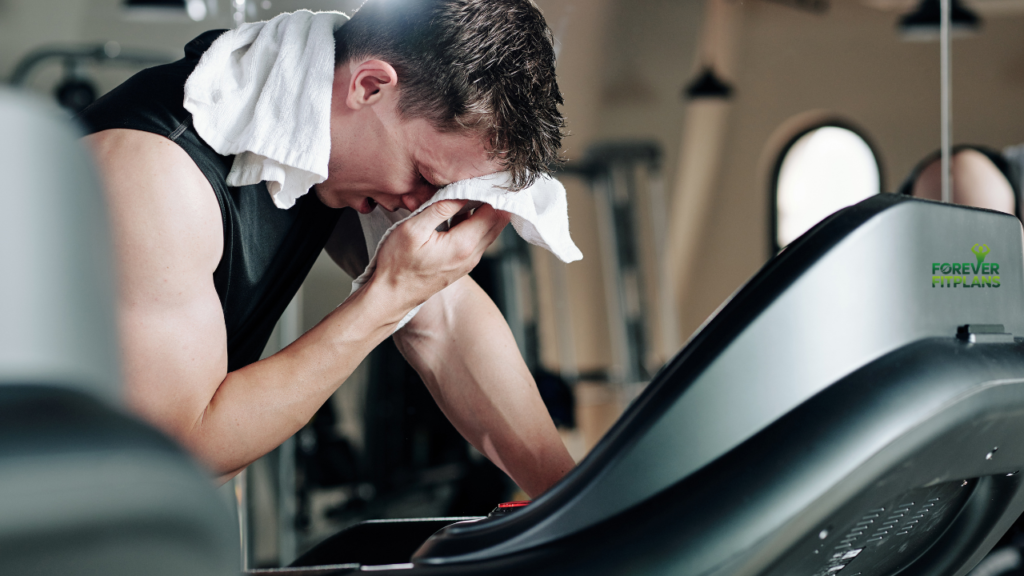
Your fitness level plays a big role. Interestingly, people who are more physically fit often start sweating earlier and sweat more than those who are less fit. This is because their bodies become more efficient at cooling down. So more sweat can actually be a sign of good fitness, not necessarily more fat burning.
Genetics also plays a huge role. Some people are simply born with more sweat glands or more active ones. Body size matters too — larger bodies generate more heat and tend to sweat more. Gender can be a factor, as men tend to sweat more than women on average. And of course, the temperature and humidity of your environment will affect how much you sweat.
None of these factors has anything to do with how much fat you’re burning. Two people doing the same workout could have very different sweat outputs, but they’d burn roughly the same number of calories based on the intensity and their body weight.
Can You Use Sweat as a Guide for Workout Intensity?
While sweat isn’t a direct measure of fat loss, it can give you a rough idea of your exertion level. If you’re pushing yourself hard in a workout and sweating heavily, it usually means your heart rate is up, and your body is working at a good intensity. High-intensity workouts tend to burn more calories, which can support weight loss over time.
But don’t trick yourself into thinking that if you’re not sweating, you’re not making progress. Low-impact exercises like yoga, walking, or swimming might not leave you drenched, but they still burn calories, improve cardiovascular health, strengthen your body, and support weight management. Consistency and effort matter far more than how wet your shirt gets.
What Actually Causes Weight Loss?
Since we’ve cleared up the sweat myth, let’s talk about what actually drives weight loss. The main driver is a sustained calorie deficit. When you consume fewer calories than your body needs to function, it turns to stored fat for energy. Over time, this results in fat loss and a reduction in body weight.

Exercise supports this by increasing the number of calories your body burns each day. Cardio exercises like running, biking, and swimming burn a lot of calories during the activity itself. Strength training builds muscle, which increases your resting metabolic rate — meaning you burn more calories even when you’re sitting still.
Diet plays an equally, if not more, important role. Many nutrition experts say that weight loss is about 70 to 80 percent diet and 20 to 30 percent exercise. Eating whole, nutrient-dense foods, managing portion sizes, staying hydrated, and cutting back on processed foods and added sugars all make a big difference.
Sleep and stress management also matter more than most people realize. Poor sleep and high stress levels can raise cortisol, a hormone that encourages fat storage and makes weight loss harder.
Should You Worry If You Don’t Sweat Much?
Not at all. If you finish a workout and you’re not drenched, it doesn’t mean you wasted your time. It might mean your body is well-adapted, the temperature is cool, or you’re doing a type of exercise that doesn’t generate as much heat. What matters most is that you’re moving your body, challenging yourself, and being consistent over time.
Trying to force yourself to sweat more — like wearing extra layers or exercising in extreme heat — is actually dangerous and provides no real benefit for fat loss. It can lead to dehydration and heat exhaustion. Always prioritize safety and smart training over chasing sweat.
Final Thoughts
So, is sweating during exercise a sign of weight loss? Not exactly. Sweat is your body’s way of regulating temperature — it’s a sign that your body is working and heating, not a direct indicator that you’re burning fat. The water you lose through sweat is quickly replaced when you hydrate, so it doesn’t represent real, lasting weight loss.
What sweating can tell you is that you’re likely working at a decent intensity, and intense exercise does burn more calories. But the real drivers of weight loss are a calorie deficit, a balanced diet, consistent exercise, proper sleep, and healthy lifestyle habits over time.
Stop judging your workouts by how soaked you get. Judge them by how consistent you are, how strong you’re getting, how your energy improves, and how your body changes gradually over weeks and months. That’s the real measure of progress.
Frequently Asked Questions
Does sweating more mean you’re losing more fat?
No. Sweating more just means your body is releasing more water to cool down. It doesn’t mean you’re burning more fat.
Can you lose weight just by sweating?
Only temporarily. You lose water weight when you sweat, but it returns as soon as you drink fluids. Real fat loss requires a calorie deficit over time.
Why do fit people sweat more?
Fit people often sweat earlier and more efficiently because their bodies are better at regulating temperature. It’s a sign of good fitness, not excess fat burning.
Is it bad if I don’t sweat during exercise?
Not at all. Some people naturally sweat less. What matters is that you’re moving, staying consistent, and challenging yourself appropriately.
Does sweating in a sauna help with weight loss?
Only in the short term, you lose water weight in a sauna. Once you rehydrate, the weight returns. Saunas are not an effective tool for fat loss.
What’s the best exercise for actual weight loss?
A combination of cardio and strength training works best. Cardio burns calories quickly while strength training builds muscle and increases your metabolism over time.

Dr. Daniel Carter is a certified health & wellness writer and fitness lifestyle researcher with over 8 years of experience in nutrition, weight management, sleep health, and preventive care. He is passionate about helping people live healthier, stronger, and more balanced lives through science-backed fitness strategies and easy-to-follow wellness tips.
Through FitForever Plan, Dr. Carter shares practical health advice, workout guidance, and nutrition insights designed to support long-term fitness, sustainable weight loss, and overall well-being. His mission is to make healthy living simple, achievable, and enjoyable for everyone.