Is Roller Skating Good Exercise for Weight Loss? The Fun Fat-Burning Truth
What if it did not seem like a job to lose weight? What if working out were less of a punishment and more of a celebration? That is precisely what roller skating provides, which is why so many people wonder if it is a healthy form of exercise for losing weight.
The answer is definitely yes. Because it is actually enjoyable, roller skating is a true, scientifically supported cardiovascular workout that burns significant calories, strengthens your legs and core, enhances balance and coordination, and keeps you coming back for more.
Roller skating does not feel like exercise, in contrast to the treadmill or stationary cycle. However, your body does not notice the difference; your heart rate increases, your muscles contract, and you burn calories at a pace similar to that of cycling and running.
In this post, we address whether roller skating is a suitable exercise for weight reduction using actual data, facts supported by research, useful advice, and a comprehensive roller skating workout plan to help you reach your objectives.
Read also this post for the best fruits for weight loss.
Is Roller Skating Good Exercise for Weight Loss? What the Science Says
Yes, the data unequivocallshshowthat roller skating is an effective kind of exercise for weight loss.
Roller skating is officially recognized by the American Heart Association as an aerobic activity that has the same cardiovascular advantages as swimming, cycling, and running. Inline skating at a moderate pace burns roughly the same number of calories per minute as running at the same perceived effort level, according to a search commissioned by the International Inline Skating Association.
The following explains why roller skating works so well for weight loss:
- It elevates heart rate into the fat-burning and cardio zones
- It engages large muscle groups — glutes, quads, hamstrings, calves, and core work together simultaneously
- It burns significant calories — comparable to jogging and cycling
- It’s low-impact — less joint stress than running, allowing more consistent training
- It creates an afterburn effect — your metabolism stays elevated after the session
- It’s enjoyable — meaning you actually do it consistently, which is the most important factor in any weight loss exercise
How Many Calories Does Roller Skating Burn?
Roller skating is a major fat-burning activity since it burns calories, which is the basis for weight loss through exercise.
Roller Skating Calorie Burn by Body Weight and Intensity
| Body Weight | Casual Skating (30 min) | Moderate Skating (30 min) | Vigorous Skating (30 min) | Roller Derby/Racing (30 min) |
| 55 kg (121 lbs) | 148 kcal | 210 kcal | 260 kcal | 310 kcal |
| 68 kg (150 lbs) | 183 kcal | 260 kcal | 320 kcal | 385 kcal |
| 82 kg (180 lbs) | 221 kcal | 315 kcal | 387 kcal | 465 kcal |
| 95 kg (210 lbs) | 257 kcal | 365 kcal | 450 kcal | 540 kcal |
| 109 kg (240 lbs) | 294 kcal | 418 kcal | 515 kcal | 617 kcal |
For 30 minutes, a 68 kg person skating at a moderate intensity burns about 260 calories, which is equivalent to jogging at a comfortable pace. That increases to 320 calories per session at high effort.
An hour of moderate-intensity skating burns 520 calories, which, when paired with a balanced diet, can result in a substantial weekly calorie deficit.
Roller Skating vs. Other Popular Cardio Exercises
| Exercise | Calories Burned (30 min, 68 kg) | Impact Level | Fun Factor | Injury Risk |
| Roller skating (moderate) | 260 kcal | Low-Medium | Very High | Medium |
| Running (moderate) | 320 kcal | High | Medium | Medium-High |
| Cycling (moderate) | 260 kcal | Very Low | Medium-High | Low |
| Swimming | 300 kcal | Very Low | High | Very Low |
| Walking (brisk) | 165 kcal | Very Low | Medium | Very Low |
| Jump rope | 400 kcal | High | Medium | Medium |
| Dancing | 200 kcal | Low | Very High | Low |
| Elliptical | 270 kcal | Very Low | Low | Very Low |
| Inline skating (vigorous) | 350 kcal | Low-Medium | Very High | Medium |
In terms of enjoyment, which is perhaps the most crucial component for long-term consistency, roller skating outperforms most traditional cardio options.
What Muscles Does Roller Skating Work?
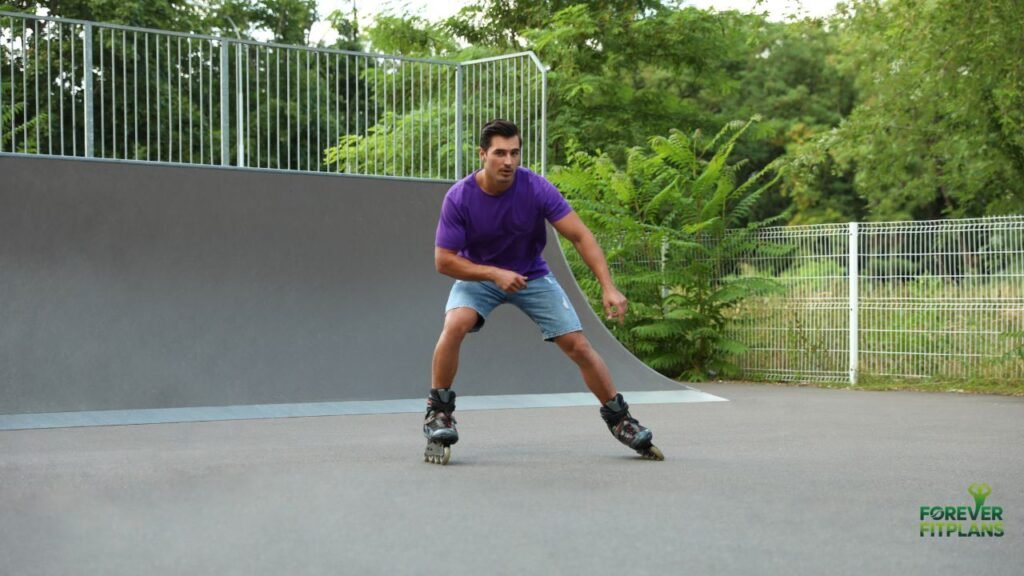
Knowing which muscles roller skating works explains why it is such a powerful full-body workout, and the answer to the question of whether roller skating is a good activity for weight loss is definitely yes.
Primary Muscles Activated
Lower Body:
- Gluteus maximus and medius — the primary power muscles for the skating stride; get an intense workout with every push-off
- Quadriceps — work constantly to maintain the bent-knee skating position
- Hamstrings — provide balance and support during the glide phase
- Calves (gastrocnemius and soleus) — activated with every push and landing
- Hip abductors and adductors — constantly engaged for lateral stability and the skating stride pattern
- Hip flexors — work to lift and drive the legs forward
Core:
- Transverse abdominis — the deep core muscle that activates continuously to maintain balance and upright posture
- Obliques — engaged during turning, cornering, and directional changes
- Erector spinae (lower back) — supports the slightly forward-leaning skating posture
Upper Body:
- Shoulders and arms — swing in rhythm with the legs for momentum and balance
- Upper back — maintains posture during the forward lean
Roller skating is essentially a full-body workout, which is a major reason why roller skating is good exercise for weight loss that goes beyond just burning calories during the session.
The Weight Loss Benefits of Roller Skating Beyond Calorie Burn
Calorie burn during the session is just one part of why roller skating is good exercise for weight loss. Here are the additional benefits that compound results over time:
1. Low-Impact Nature Allows Consistent Training
Running is one of the best calorie burners — but its high-impact nature leads to overuse injuries (shin splints, knee pain, stress fractures) that force many people to take weeks or months off.
Roller skating provides a similar cardiovascular stimulus with dramatically less joint impact:
- Impact forces during roller skating are approximately 50% lower than running
- The rolling wheels absorb much of the shock that would otherwise travel through ankles, knees, and hips
- This allows people with knee arthritis, previous injuries, or excess weight to exercise consistently without the pain that often stops running programs
Consistentexercise — even at moderate intensity — always outperforms occasional intense exercise interrupted by injury. This is one of the most important reasons roller skating is good exercise for weight loss for many people.
2. Builds Metabolism-Boosting Muscle
Roller skating develops lean muscle in the legs, glutes, and core in addition to burning calories. Additionally, at rest, muscle tissue consumes more calories than fat tissue.
A regular skater will develop much stronger legs, glutes, and core muscles over the course of three to four months, increasing their resting metabolic rate and burning more calories even on days when they do not skate.
Roller skating is a body-recomposition workout that helps you shed fat and get a more toned, contoured body at the same time because of its muscle-building benefits and aerobic calorie burn.
3. Improves Insulin Sensitivity
Regular aerobic exercise like roller skating dramatically improves insulin sensitivity — the body’s ability to use insulin effectively to move glucose from the blood into cells.
Better insulin sensitivity means:
- Less glucose is converted to and stored as fat
- More stable blood sugar levels — reducing cravings and hunger spikes
- Lower risk of type 2 diabetes
- Better energy throughout the day
A study in Diabetes Care found that moderate-intensity aerobic exercise performed 3–5 times per week improved insulin sensitivity by 25–40% over 8 weeks — a profound metabolic benefit that supports long-term weight management.
4. Reduces Stress and Cortisol — Fighting Belly Fat
Increased cortisol and long-term stress are directly related to the development of belly fat. Exercise is one of the most effective ways to alleviate stress, but it is important to enjoy it.
Exercise that is fun lowers cortisol and stress hormones more than exercise that is viewed as a chore, according to research. Roller skating may have greater cortisol-lowering effects than comparable but less fun sports because it is frequently considered one of the most pleasurable types of exercise.
Roller skating is especially beneficial for gradually reducing belly fat since lower cortisol results in less belly fat storage.
5. High Adherence — The Most Important Weight Loss Factor
Adherence, or how regularly you really do it across months and years, is the single most critical element in exercise-driven weight loss, according to study after study.
You regularly engage in exercise that you enjoy. You avoid exercising because you fear it.
Adherence rates are far greater than for standard gym exercise because roller skating is actually enjoyable, especially when done with friends, music, or in a social atmosphere. For long-term weight loss, regular moderate activity is always preferable to sporadic vigorous exercise.
The best response to the question of whether roller skating is a healthy kind of exercise for weight loss may be that it is an exercise that people really stick with.
Types of Roller Skating for Weight Loss
Different roller skating styles offer different intensities and calorie-burning profiles:
1. Recreational Roller Skating (Quad Skates)
Intensity: Low to Moderate Calories burned (30 min, 68 kg): 180–260 kcal Best for: Beginners, casual fat burning, fun social exercise
Classic four-wheel roller skating at a rink or smooth outdoor path. Great for beginners and those who want a fun, social workout. Consistent recreational skating 4–5 times per week creates a meaningful calorie deficit for steady weight loss.
2. Inline Skating (Rollerblading)
Intensity: Moderate to High Calories burned (30 minutes, 68 kg): 260–400 kcal Ideal for: Outdoor fitness, speed training, and higher calorie burn
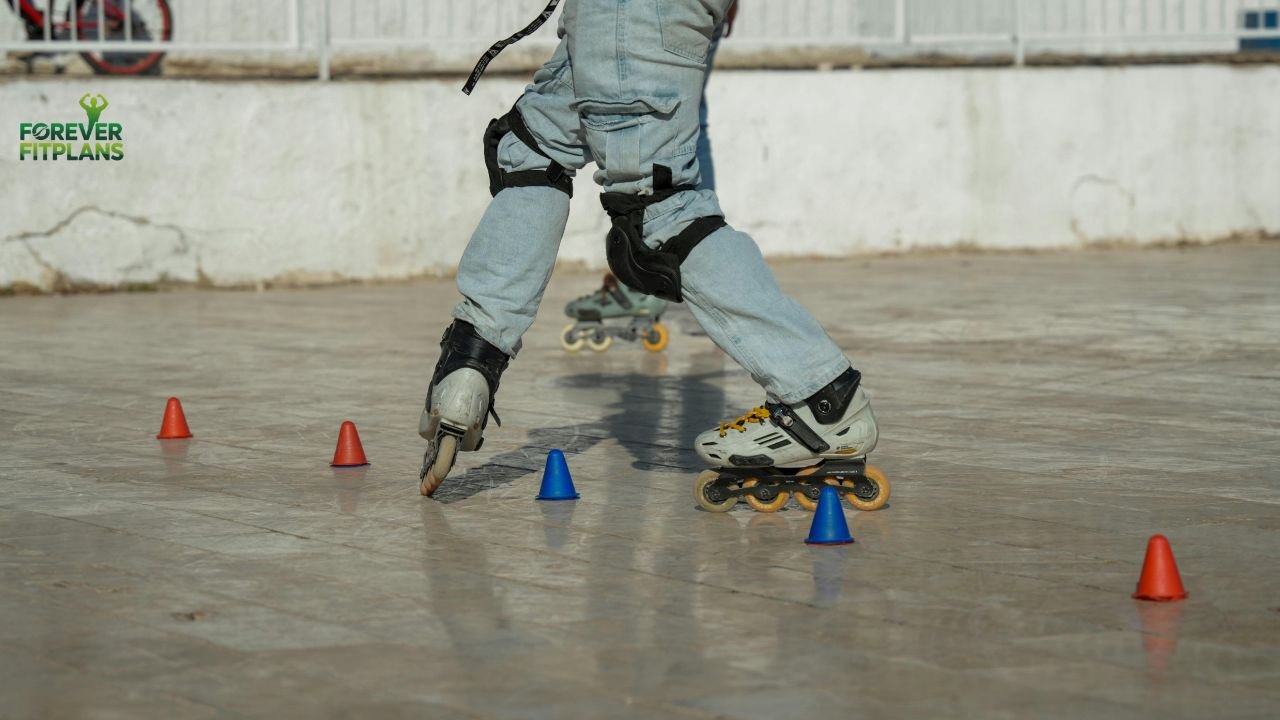
Compared to quad skates, inline skates, which have wheels arranged in a single line, enable quicker speeds and stronger leaps. Inline skating is one of the most comprehensive lower-body exercises accessible since its biomechanics closely resemble those of cross-country skiing.
One of the most calorie-efficient roller skating forms for weight loss is vigorous inline skating, which burns calories at a pace similar to jogging.
3. Roller Derby
Intensity: Extremely high calorie burn (30 minutes, 68 kg): 350–450 kcal. Ideal for: Strength, agility, competitive fitness, and maximum calorie burn
Intense bursts of speed, body contact, lateral movement, and sudden directional changes are all part of roller derby, which creates a training stimulus similar to high-intensity interval training (HIIT) that burns a lot of calories and develops significant athleticism.
A whole roller derby practice session can burn 600–900 calories, which is comparable to the most strenuous exercises at the gym.
4. Artistic/Dance Roller Skating
Intensity: 220–300 kcal of moderate calories burnt (30 minutes, 68 k.g).Ideal for: Full-body toning, coordination, and artistic expression
Choreography, spins, jumps, and dancing moves on skates are all combined in artistic skating. It offers a good aerobic workout and builds remarkable balance, coordination, and core strength.
Dance skating is one of the best types of roller skating for weight loss because of its constant activity and creative expression.
5. Outdoor Trail Skating
Depending on the terrain, the intensity ranges from moderate to high. Burned calories (30 minutes, 68 kg): 280–380 k.cal. Ideal for: Nature, variety, and terrain-based resistance training
Compared to flat indoor rinks, skating on outdoor routes, parks, or trails naturally increases workout intensity because to the varying resistance of wind, mild inclines, and surface variations.
Strength training is added to the aerobic exercise by the uphill portions, which especially boost the activation of the glute and leg muscles.
8-Week Roller Skating Weight Loss Plan
Here is a planned eight-week roller skating program to address the question of whether roller skating is a useful, progressive form of exercise for weight loss:
Weeks 1–2: Foundation (Beginners)
| Day | Session | Duration | Intensity |
| Monday | Casual recreational skating | 30 min | Easy |
| Tuesday | Rest or brisk walk | 30 min | Easy |
| Wednesday | Skating + balance drills | 35 min | Easy-Moderate |
| Thursday | Rest | — | — |
| Friday | Recreational skating | 30 min | Easy-Moderate |
| Saturday | Longer leisure skate | 45 min | Easy |
| Sunday | Rest | — | — |
Focus: Learn proper form, build skating confidence, and develop a basic cardiovascular base.
Weeks 3–4: Building Volume
| Day | Session | Duration | Intensity |
| Monday | Moderate continuous skating | 40 min | Moderate |
| Tuesday | Strength training (squats, lunges, glute bridges) | 30 min | Moderate |
| Wednesday | Interval skating (2 min fast / 2 min easy x 8) | 35 min | Moderate-High |
| Thursday | Rest or yoga | 20 min | Easy |
| Friday | Moderate skating | 40 min | Moderate |
| Saturday | Long leisure skate | 60 min | Easy-Moderate |
| Sunday | Rest | — | — |
Weeks 5–6: Intensification
| Day | Session | Duration | Intensity |
| Monday | Vigorous continuous skating | 45 min | Moderate-High |
| Tuesday | Strength training | 35 min | Moderate-High |
| Wednesday | Sprint intervals (30 sec sprint / 90 sec easy x 10) | 35 min | High |
| Thursday | Easy recovery skate | 30 min | Easy |
| Friday | Moderate-vigorous skating | 45 min | Moderate-High |
| Saturday | Long-distance skate | 70 min | Moderate |
| Sunday | Active recovery | Stretching/yoga | Easy |
Weeks 7–8: Peak Fat Burning
| Day | Session | Duration | Intensity |
| Monday | Vigorous skating + hill repeats | 50 min | High |
| Tuesday | Full body strength training | 40 min | High |
| Wednesday | HIIT skating (alternating max effort and recovery) | 40 min | Very High |
| Thursday | Easy recovery skate | 30 min | Easy |
| Friday | Tempo skating (sustained moderate-high effort) | 45 min | Moderate-High |
| Saturday | Endurance skate | 75–90 min | Moderate |
| Sunday | Rest | — | — |
Nutrition Tips to Support Roller Skating for Weight Loss
Skating creates the exercise side of weight loss — nutrition handles the rest. Here’s how to eat to maximize your roller skating weight loss results:
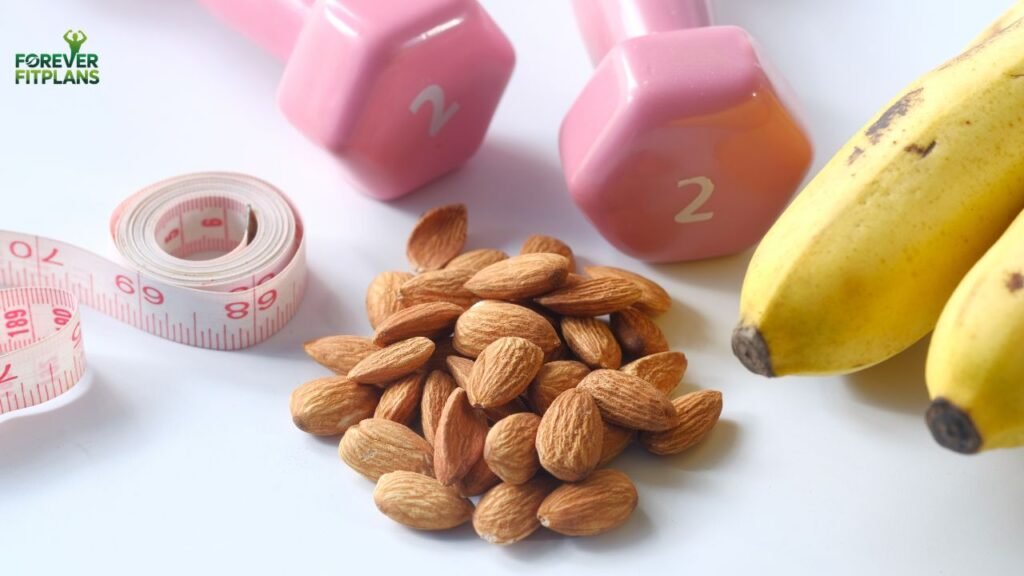
- Create a modest calorie deficit — 300–500 calories below your daily maintenance level. Don’t try to compensate for skating calories by eating more; this is the most common mistake.
- Prioritize protein — 1.6–2.0g per kg of body weight preserves muscle and keeps you full. Aim for protein at every meal: eggs, chicken, fish, Greek yogurt, legumes.s
- Fuel before skating — eat a light carbohydrate and protein snack 1–1.5 hours before skating to sustain energy and performance
- Recover after skating — consume protein and carbs within 30–45 minutes of finishing to support muscle repair. ir
- Stay hydrated — skating is aerobic exercise; drink 500ml of water before skating and sip throughout your session.
- Reduce processed foods and added sugar — these spike insulin, promote fat storage, and undermine the metabolic benefits of your skating workout.s
- Don’t over-reward — avoid the “I skated, ed so I deserve a treat” mindset that erases calorie deficits.
Safety Tips for Roller Skating as Exercise
Before committing fully to roller skating for weight loss, take these safety precautions:
- Always wear protective gear — helmet (essential), wrist guards, knee pads, and elbow pads significantly reduce injury risk
- Start on smooth, flat surfaces — master the basics before attempting hills, rough terrain, or crowded areas
- Learn to stop properly — practice the heel brake stop and T-stop before skating at speed
- Wear properly fitted skates — ill-fitting skates cause blisters, ankle instability, and reduced control
- Skate with others initially — learning with a partner or group increases safety and motivation
- Inspect your skates regularly — check wheels, bearings, and brake pads before each session
- Be visible outdoors — wear bright clothing and use lights when skating at dawn or dusk
Frequently Asked Questions
Is roller skating good exercise for weight loss for beginners?
Absolutely — roller skating is one of the best exercises for beginners seeking weight loss. Its low-impact nature means less joint pain than running, allowing beginners to exercise more consistently. Even casual beginner-level skating for 30 minutes burns 180–220 calories per session. As skating skill develops, intensity and calorie burn increase naturally. Start with 3 sessions per week on smooth, flat surfaces and build from there. Most beginners feel comfortable with basic skating within 3–5 sessions.
How often should I roller skate to lose weight?
For meaningful weight loss, aim to roller skate 4–5 times per week, with sessions lasting 30–60 minutes each. This frequency creates a consistent weekly calorie deficit while allowing adequate recovery between sessions. Combining 3–4 skating sessions with 1–2 strength training sessions per week produces the best results — skating provides the cardiovascular calorie burn, while strength training builds metabolism-boosting muscle. Even 3 sessions per week of moderate skating, combined with a healthy diet, can produce 0.3–0.5 kg of fat loss weekly.
Is roller skating as good as running for weight loss?
Roller skating burns slightly fewer calories per minute than running at comparable effort levels — but the difference is small. A 68 kg person running moderately burns about 320 calories in 30 minutes, versus 260–320 for vigorous roller skating. However, roller skating’s significant advantages — much lower injury risk, higher enjoyment, better long-term adherence, and lower joint impact — often make it more effective for weight loss in practice. The best exercise for weight loss is the one you’ll consistently do for months and years — and for many people, that’s roller skating rather than running.
Does roller skating tone your legs and glutes?
Yes — significantly. Roller skating is one of the best exercises for toning the glutes, quadriceps, hamstrings, calves, and hip abductors. The lateral push-off motion of the skating stride specifically targets the gluteus medius — a muscle that’s difficult to engage with traditional exercises and is responsible for the rounded, lifted glute shape. Regular skating combined with a calorie-controlled diet produces visible toning and definition in the lower body within 8–12 weeks of consistent training.
Can roller skating reduce belly fat?
Yes — roller skating reduces belly fat as part of overall body fat loss. You cannot spot-reduce fat from specific areas, but roller skating creates the calorie deficit and hormonal changes (improved insulin sensitivity, reduced cortisol) that lead to fat loss throughout the body — including the abdomen. Research shows that regular aerobic exercise, like roller skating,g is particularly effective at reducing visceral fat (the dangerous deep belly fat around organs). Pairing regular skating with a reduced-sugar, high-protein diet accelerates abdominal fat reduction.
Is inline skating or quad skating better for weight loss?
Inline skating (rollerblading) generally burns more calories than quad skating at the same perceived effort — approximately 10–20% more — due to the more powerful stride mechanics and ability to reach higher speeds. However, quad skating is easier for beginners to learn and may allow longer sessions initially due to greater stability. Both are excellent for weight loss. The best choice is whichever style you enjoy most and will do most consistently. Many people find quad skating more social and fun, while inline skating offers a more intense outdoor fitness experience.
What should I eat before roller skating for weight loss?
Eat a light meal or snack containing carbohydrates and protein 1–1.5 hours before roller skating. Good options include a banana with peanut butter, oats with berries, toast with eggs, or Greek yogurt with fruit. Avoid heavy meals within 2 hours of skating as they can cause discomfort during exercise. After skating, consume protein and carbohydrates within 30–45 minutes to support muscle recovery — try chicken with rice, a protein shake with fruit, or cottage cheese with berries. Avoid high-calorie reward meals after skating, as these are the most common way people unintentionally eliminate the calorie deficit their skating created.
Conclusion
After analyzing all the data, it is clear that roller skating is an excellent kind of exercise for weight loss. Roller skating burns about as many calories as jogging, works the entire lower body and core, increases insulin sensitivity, lowers cortisol, which promotes belly fat, increases muscle mass that speeds up metabolism, and—most importantly—is genuinely fun enough for individuals to do it regularly.
Does roller skating help beginners lose weight? Yes. Is roller skating an effective way for people who detest the gym to lose weight? Absolutely. Does roller skating help people with joint problems who can not run lose weight? Without a doubt.
Losing weight does not have to be an unpleasant experience. One happy glide at a time, roller skating demonstrates that you can burn fat, get in shape, and have the time of your life all at once.All set to go? This week, grab a pair of skates, put on your safety equipment, and head to the path or rink. Three times a week, start with 30 minutes and work your way up. Give yourself eight to twelve weeks to see what roller skating can actually do for your body, keep track of your diet, and be consistent. Your quest to lose weight is now much more enjoyable.
if you want to know about benefits of roller skating read this blog from decathlon.

Dr. Daniel Carter is a certified health & wellness writer and fitness lifestyle researcher with over 8 years of experience in nutrition, weight management, sleep health, and preventive care. He is passionate about helping people live healthier, stronger, and more balanced lives through science-backed fitness strategies and easy-to-follow wellness tips.
Through FitForever Plan, Dr. Carter shares practical health advice, workout guidance, and nutrition insights designed to support long-term fitness, sustainable weight loss, and overall well-being. His mission is to make healthy living simple, achievable, and enjoyable for everyone.