
Are Eggs Good for Weight Loss? The Honest Answer You’ve Been Looking For
You are not alone if you have ever stood in front of the refrigerator debating whether or not to get an egg. Over the years, eggs have had a mixed reputation: they were first revered, then feared, and now they are once again in the spotlight. So, are eggs beneficial for losing weight? In a nutshell, the answer is yes, and the science is quite compelling.
One of the world’s most nutrient-dense foods is eggs. They are inexpensive, easy to make, and full of high-quality protein that will keep you satisfied for several hours. That combo is incredibly effective for anyone attempting to lose weight without constantly feeling hungry.
In this article, you’ll get the full, honest picture — Are Eggs Good for Weight Loss? What eggs do to your body, how they support fat loss, how many you should eat, and the best ways to prepare them for maximum results.
Read this blog of best exercises for belly fat.
What Makes Eggs So Special for Weight Loss?
Before answering whether eggs are good for weight loss, it helps to look at what’s actually inside them.
Nutritional profile of one large whole egg:
| Nutrient | Amount | Why It Matters |
| Calories | 78 kcal | Low-calorie, high-satiety food |
| Protein | 6.3 g | Builds muscle, reduces hunger |
| Fat | 5 g | Mostly healthy fats |
| Carbohydrates | 0.6 g | Almost zero carbs |
| Vitamin D | 44 IU | Supports metabolism |
| Choline | 147 mg | Essential for fat metabolism |
| Selenium | 15.4 mcg | Thyroid health (metabolism) |
| Vitamin B12 | 0.6 mcg | Energy production |
With only 78 calories and 6 grams of protein per egg, you’re getting a lot of nutritional value for a very small calorie cost. That’s the core reason eggs are good for weight loss — they deliver maximum nutrition with minimal calories.
Are Eggs Good for Weight Loss? Here’s What the Science Says
The Protein Power of Eggs
Protein is the most important macronutrient for weight loss — and eggs are an outstanding source of it.
Here’s why protein matters so much:
- It keeps you full longer. Protein takes more time to digest than carbohydrates, which means you stay satisfied after an egg-based meal for several hours.
- It reduces your appetite. Protein lowers levels of the hunger hormone ghrelin while raising levels of peptide YY, a hormone that makes you feel full.
- It preserves muscle mass. When you’re in a calorie deficit (eating less to lose weight), your body can break down muscle for energy. Eating enough protein — like that from eggs — prevents this and keeps your metabolism running strong.
- It has a high thermic effect. Your body burns about 20–30% of the calories from protein just to digest it. Compare that to just 5–10% for carbs and 0–3% for fat. This means eating eggs actually boosts how many calories your body burns.
The egg white alone contains about 3.6 grams of pure, high-quality protein. The yolk contributes another 2.7 grams, along with nearly all the vitamins, minerals, and healthy fats. Eating the whole egg — not just the white — is almost always the better choice for weight loss.
Eggs Keep You Full and Reduce Calorie Intake
One of the strongest arguments that eggs are good for weight loss comes from research on satiety — how full a food makes you feel.
A well-known study published in the International Journal of Obesity compared people who ate an egg breakfast to those who ate a bagel breakfast with the same number of calories. The egg group:
- Felt significantly fuller throughout the morning
- Ate 65% less at lunch
- Consumed 34% fewer calories over the following 36 hours
That’s remarkable. Two meals with identical calories — but one led people to eat dramatically less for the rest of the day. This is exactly why eggs are good for weight loss in a practical, real-world sense.
Another study in the Nutrition Research journal found that men who ate eggs for breakfast consumed fewer calories at their next meal and throughout the entire day compared to those who ate a carbohydrate-heavy breakfast.
Eggs and Metabolism: The Choline Connection
Most people don’t know about choline, but it’s one of the most important nutrients when it comes to fat loss.
Choline is a nutrient found primarily in egg yolks. Your body needs it to:
- Transport fat out of the liver and into cells for energy use
- Supports the production of acetylcholine, a neurotransmitter involved in muscle function
- Maintain healthy cell membranes
A choline deficiency can lead to fat accumulation in the liver, which impairs metabolism and makes weight loss harder. Eggs are one of the richest dietary sources of choline — one egg provides about 147 mg, covering roughly 27% of your daily needs.
This is another clear reason eggs are good for weight loss — they actively support your body’s fat-burning machinery.
Eggs and Blood Sugar Stability
Blood sugar spikes and crashes are one of the biggest enemies of weight loss. When blood sugar spikes (usually after eating refined carbs or sugary foods), your body releases a surge of insulin. High insulin levels signal your body to store fat — not burn it.
Eggs have virtually zero carbohydrates, so they cause almost no blood sugar response. Eating eggs — especially at breakfast — sets your blood sugar on a stable path for the morning. This means:
- Fewer energy crashes
- Less craving for sugary or high-carb snacks
- Better insulin sensitivity over time
Stable blood sugar = less fat storage = better conditions for weight loss. So when people ask whether eggs are good for weight loss, blood sugar stability is a factor that doesn’t get nearly enough attention.
How Many Eggs Should You Eat Per Day for Weight Loss?
One of the most frequent queries is this one. The answer varies depending on your general diet and state of health, but for the majority of healthy individuals:

- For weight loss, one to three eggs a day is a safe and beneficial range.
- Studies have shown that eating up to three eggs a day has no detrimental effects on cholesterol in healthy people.
- Consult your physician if you have type 2 diabetes or cardiovascular disease; advice may vary.
The previous concern about cholesterol and eggs has mostly been dispelled. The American Heart Association and other major health organizations agree that dietary cholesterol from eggs has a far smaller impact on blood cholesterol than previously believed, particularly when combined with a healthy diet.
What you eat with eggs is more important than the quantity of eggs you consume. Below is further information on that.
Best Ways to Eat Eggs for Weight Loss
Not all egg preparations are equal. How you cook your eggs matters a lot for weight loss.
✅ Best Methods
Boiled eggs (hard or soft)
- Zero added fat
- Easy to prepare in bulk
- Portable — great for meal prep
- Approximately 78 calories per egg
Poached eggs
- Cooked in water, no oil needed
- Excellent over vegetables or whole-grain toast
- One of the cleanest ways to eat eggs
Scrambled eggs (dry or with minimal fat)
- Use a non-stick pan with a tiny amount of olive oil
- Add vegetables like spinach, tomatoes, and mushrooms for volume and fiber
- Avoid butter or cream for lower calories
Omelettes loaded with vegetables
- Pack in bell peppers, onions, zucchini, and leafy greens
- More filling, more nutrients, without significantly more calories
❌ Methods to Limit
Fried eggs in butter or oil
- Adds 50–120 extra calories per tablespoon of fat
- Healthy in moderation but easy to overdo
Eggs with processed meats (bacon, sausage)
- Processed meats are high in sodium, saturated fat, and calories
- This combination can easily turn a healthy egg breakfast into a calorie bomb
Egg salad with heavy mayonnaise
- Mayonnaise is calorie-dense; a few tablespoons can add 200+ calories
- Use Greek yogurt instead for a lighter alternative
Eggs vs. Other Common Breakfast Foods: A Weight Loss Comparison
| Breakfast Option | Calories | Protein | Satiety Level | Blood Sugar Impact |
| 2 whole eggs (boiled) | 156 | 12.6 g | High | Minimal |
| 1 plain bagel | 270 | 9 g | Low | High spike |
| Bowl of sugary cereal | 200–300 | 2–4 g | Very Low | Very high spike |
| Greek yogurt (plain) | 100 | 10 g | Moderate | Low |
| 2 slices of white toast | 160 | 4 g | Low | High spike |
| Oatmeal (plain) | 150 | 5 g | Moderate | Moderate |
The data is clear. Eggs provide excellent protein for their calorie count, with very high satiety and almost no impact on blood sugar. When stacked against other popular breakfast choices, eggs hold up extremely well for anyone focused on weight loss.
The Egg Diet for Weight Loss: What You Need to Know
The “egg diet” is a short-term dietary regimen that mostly consists of eggs. While there are various variations, the majority entail consuming eggs at every meal for a predetermined amount of time (typically two weeks).
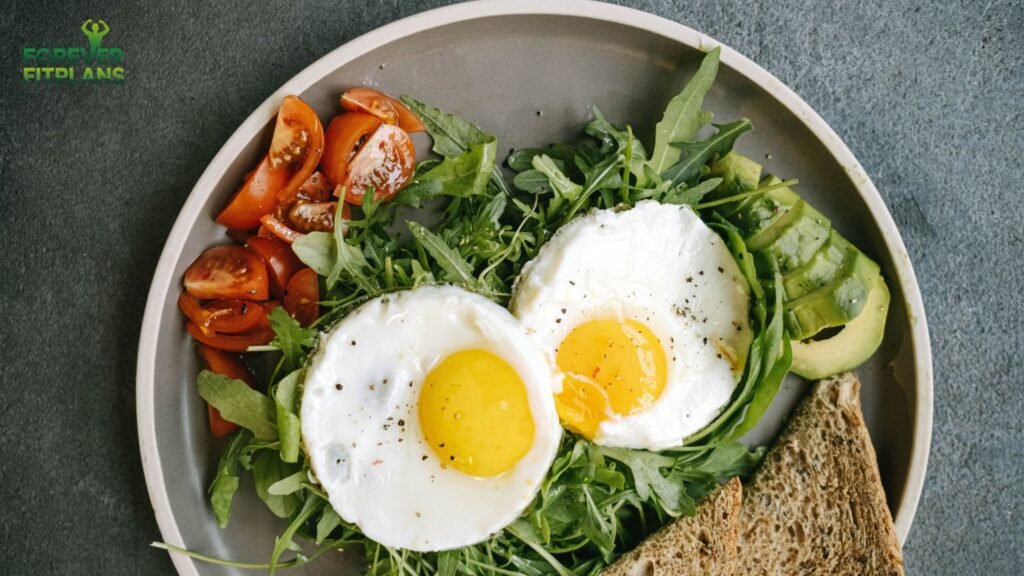
Does it function? possibility for immediate outcomes due to:
It contains very few carbs.
A high-protein diet significantly reduces hunger.
Consumption of calories naturally declines
The issues
- It is difficult to maintain and quite restrictive.
- Removing a lot of nutrient-dense foods
- may eventually result in nutritional deficits
Once regular eating begins, weight might soon return.
Instead of making eggs the only food in a balanced diet, it is more sensible and sustainable to include them on a regular basis. In this manner, you can benefit from all the advantages of eggs for weight loss without the drawbacks of severe restriction.
Eggs for Specific Weight Loss Goals
Eggs to Reduce Belly Fat
Visceral fat, or belly fat, is especially hazardous and obstinate. It has been demonstrated that diets high in protein can shrink waist circumference more successfully than diets heavy in carbohydrates. Including eggs on a daily basis helps reduce belly fat as part of a calorie-controlled diet since they are a great source of protein with almost no carbohydrates.
Eggs to Preserve Muscle While Losing Weight
You want to shed fat, not muscle, when you lose weight. Your metabolism is maintained by muscle, which also gives you a toned appearance. When you are in a calorie deficit, the high-quality protein in eggs, particularly the leucine content (an amino acid essential for muscle protein synthesis), helps maintain muscle tissue.
Eggs for Keto and Low-Carb Diets
Eggs are a staple of ketogenic and low-carb diets since they are high in fat and protein and almost entirely free of carbohydrates. Eggs are not only beneficial but also necessary for anyone using these methods to lose weight.
Practical Tips to Include Eggs in Your Weight Loss Diet
Here are some easy, practical methods to use eggs daily to lose weight:

- Prepare hard-boiled eggs for meals at the beginning of the week so you can grab one when you are hungry rather than reaching for a snack.
- For a protein boost without adding extra calories from dressing, add a poached egg to salads.
- For dinner, make an omelette laden with vegetables; it is quick, satisfying, and low in calories.
- Swap out high-sugar meals like cereal, pastries, and juice with two scrambled eggs and an avocado slice.
- Make protein bowls with eggs, quinoa, roasted veggies, and a small amount of tahini.
- For grab-and-go breakfasts, try egg muffins, which are baked eggs in a muffin tin with veggies and herbs.
Frequently Asked Questions
Are eggs good for weight loss every day?
Yes, eggs can be eaten daily as part of a healthy weight loss diet. Most research supports eating 1–3 eggs per day without negative effects for healthy adults. Their high protein content helps control appetite and reduce overall calorie intake, making them one of the best daily foods for weight management.
Is it better to eat whole eggs or just egg whites for weight loss?
Whole eggs are generally better for weight loss than egg whites alone. While egg whites are pure protein with very few calories, the yolk contains choline, vitamin D, healthy fats, and other nutrients that support metabolism and satiety. Studies on egg-based breakfasts typically use whole eggs and still show significant weight loss benefits.
Can eggs help reduce belly fat?
Eggs don’t directly target belly fat, but as part of a high-protein, low-carb diet, they support overall fat loss — including visceral (belly) fat. High-protein diets have been specifically linked to greater reductions in waist circumference compared to lower-protein diets. Replacing a carb-heavy breakfast with eggs is a practical step toward reducing belly fat over time.
How many eggs a day are safe for weight loss?
For most healthy adults, 1–3 eggs per day is safe and effective for weight loss. Some studies have used higher amounts (up to 3 eggs daily) without adverse effects on cholesterol or heart health in healthy individuals. If you have diabetes, high cholesterol, or heart disease, consult your doctor for personalized guidance.
What is the best time to eat eggs for weight loss?
Breakfast is the most studied and most effective time. Eating eggs in the morning has been shown to reduce calorie intake for the rest of the day by increasing fullness and lowering hunger hormones. That said, eggs are beneficial at any meal — as a high-protein lunch, a light dinner, or a between-meal snack.
Do eggs slow down weight loss?
No — eggs do not slow down weight loss when eaten as part of a calorie-controlled diet. They actually support weight loss by reducing hunger, stabilizing blood sugar, preserving muscle mass, and boosting the thermic effect of your meals. The cooking method and what you pair them with matter more than the eggs themselves.
Are brown eggs better than white eggs for weight loss?
No. The color of an egg’s shell is determined by the breed of hen, not by its nutritional content. Brown and white eggs have essentially identical nutritional profiles. For weight loss, what matters is how the egg is cooked and what it’s eaten with, not its shell color.
Conclusion
So, are eggs good for weight loss? Absolutely — and the evidence is solid. Eggs are low in calories, high in protein, nutrient-dense, and incredibly satisfying. They reduce hunger hormones, stabilize blood sugar, support muscle preservation, and help you eat less without even trying. Few foods can claim all of that.
The best part? Eggs are affordable, quick to cook, and flexible enough to fit into almost any eating plan — whether you’re doing low-carb, Mediterranean, calorie counting, or just trying to make smarter daily choices.
If you’re serious about losing weight, eggs deserve a regular spot on your plate. Start simple: swap tomorrow’s sugary breakfast for two boiled or scrambled eggs with some vegetables, and notice how much longer you feel full.
Small changes, done consistently, lead to big results — and eggs are one of the easiest places to start.
For more detailed read the blog from Healthline.

Dr. Daniel Carter is a certified health & wellness writer and fitness lifestyle researcher with over 8 years of experience in nutrition, weight management, sleep health, and preventive care. He is passionate about helping people live healthier, stronger, and more balanced lives through science-backed fitness strategies and easy-to-follow wellness tips.
Through FitForever Plan, Dr. Carter shares practical health advice, workout guidance, and nutrition insights designed to support long-term fitness, sustainable weight loss, and overall well-being. His mission is to make healthy living simple, achievable, and enjoyable for everyone.