Low Impact Exercise for Weight Loss: 15 Gentle but Powerful Workouts That Actually Burn Fat
It is OK that not everyone is able to run, leap, or perform burpees. Low-impact exercise is the solution you have been searching for, whether you have joint pain, are healing from an accident, are overweight, or just find high-impact exercise too taxing on your body.
The majority of individuals mistakenly believe that “low influence” equates to “poor results.” The truth could not be further from that. Without the pounding, bouncing, and jarring associated with high-impact workouts, low-impact exercise for weight loss can burn significant calories, increase lean muscle, enhance cardiovascular health, and completely change your body.
You will find 15 of the best low-impact workouts for weight reduction in this comprehensive book, along with information on how to organize your weekly program, nutrition advice to optimize results, and frank responses to the most often asked questions. This guide is for everyone, regardless of experience level, age, knee condition, or desire to exercise more intelligently.
If you want to know about the egg diet for weight loss, read this. Are eggs good for weight loss?
What Is Low-Impact Exercise and Why Does It Work for Weight Loss?
There is a lot of misunderstanding regarding low-impact exercise for weight loss, so let us define it before getting into the specific routines.
What Low-Impact Exercise Is
When you engage in low-impact exercise, at least one foot or other portion of your body must always be in contact with the ground or a support surface. When both feet lift off the ground at the same time, as they do during jogging, jumping jacks, or plyometric workouts, this removes the startling forces that pass through your joints.
Low impact does not imply:
- Simple or inefficient
- Low burning of calories
- Only for the elderly or those with injuries
- less effective in losing weight than high-impact exercise
Low impact DOES indicate:
- Joint-friendly—less strain on the spine, hips, ankles, and knees
- Sustainable: You can perform it repeatedly without causing your body to deteriorate.
- Accessible—suitable for novices, injured individuals, and overweight persons
- Genuinely effective—when used gradually and consistently
The Science: Why Low-Impact Exercise for Weight Loss Works
When done at a suitable intensity and duration, research repeatedly demonstrates that low-impact exercise for weight loss yields outcomes comparable to high-impact exercise.
According to a study that was published in the Journal of Strength and Conditioning Research, moderate-to-intense low-impact aerobic activity burned just as many calories per session as high-impact exercise, but it required much less joint stress and recovery time.
Another significant study published in Medicine & Science in Sports & Exercise discovered that total weekly energy expenditure, not exercise intensity or impact level, was the primary predictor of successful weight loss from exercise. This indicates that regular low-impact exercise for weight loss, done four to five days a week, might yield great fat loss outcomes comparable to less regular high-impact training.
The basic mechanisms of low-impact exercise for weight loss are the same as those of any exercise:
- burns calories that contribute to the energy deficit needed for fat loss, creating a calorie deficit.
- builds lean muscle, particularly through resistance and water-based activities that test muscles without causing a lot of stress.
- lessens the hormones that cause fat storage and increases insulin sensitivity.
- lowers cortisol, particularly with low-impact mind-body activities like yoga, tai chi, and swimming.
- enhances cardiovascular health by building the aerobic foundation needed for fat burning as the main energy source.
- permits consistency, which is the most important component of any workout program for weight loss.
Who Benefits Most From Low-Impact Exercise for Weight Loss?
Low-impact exercise is especially beneficial for:

- Reduced impact results in less pain for those with arthritis or joint problems, enabling regular activity.
- Beginners: reduce the risk of injury while establishing a foundation of fitness
- Obese people’s increased body weight increases the impact stress on their joints; minimal impact eliminates this barrier.
- Maintaining fitness and encouraging fat loss while preserving joint health in older adults
- Safe cardiovascular exercise for expectant mothers that does not put undue strain on the pelvic
- Individuals recuperating from injuries maintain their level of fitness and control over their weight.
- Low impact eliminates spinal compressive pressures for anyone with persistent back discomfort.
The intimidation barrier is removed for those who detest high-intensity exercise, making regular exercise attainable.
15 Best Low-Impact Exercises for Weight Loss
1. Walking — The Most Underrated Fat Burner
Calories burned (30 min, 70 kg): 140–200 kcal Impact level: Very Low Equipment needed: Comfortable shoes.
Walking is the most accessible, most sustainable, and most underappreciated form of low-impact exercise for weight loss available to anyone, anywhere, at any fitness level.
Don’t be fooled by its simplicity. Research from the American Journal of Clinical Nutrition found that daily walking significantly reduces visceral fat — the dangerous belly fat around organs — independent of diet changes.
How to maximize walking for weight loss:
- Walk faster — aim for a brisk pace where you can talk but not sing (about 5–6 km/h)
- Add incline — walking uphill increases calorie burn by 40–60% and dramatically increases glute and leg muscle activation
- Increase duration progressively — build from 20 minutes to 45–60 minutes over 8 weeks
- Walk after meals — a 10–15 minute walk after eating reduces post-meal blood sugar spikes by up to 22%
- Use poles — Nordic walking adds upper body engagement and increases calorie burn by 20–46%
- Aim for 8,000–10,000 steps daily — research links this step count to meaningful fat loss over time
Weekly goal for weight loss: 150–300 minutes of brisk walking per week, spread across 5–7 days.
2. Swimming — The Complete Low Impact Workout
Calories burned (30 min, 70 kg): 250–400 kcal Impact level: Zero (water supports body weight completely) Equipment needed: Pool access, swimsuit, goggle.s
Swimming is arguably the best low-impact exercise for weight loss for people with joint conditions, back pain, or obesity. Water supports up to 90% of your body weight, eliminating virtually all impact stress while providing natural resistance that challenges every muscle in your body.
Why swimming is exceptional for weight loss:
- Burns comparable calories to running with zero joint impact
- Engages the entire body — arms, legs, core, and back work simultaneously
- The resistance of water is 800 times greater than that of air — every movement requires more effort
- Naturally cooling — allows sustained effort without overheating
- Excellent for people with fibromyalgia, arthritis, and chronic pain
Best swimming styles for weight loss (by calorie burn):
| Stroke | Calories Burned (30 min, 70 kg) | Primary Muscles |
| Butterfly | 380–450 kcal | Chest, shoulders, core, full body |
| Freestyle (fast) | 300–400 kcal | Full body, shoulders, core |
| Backstroke | 250–300 kcal | Back, shoulders, legs, core |
| Breaststroke | 280–350 kcal | Chest, legs, arms, core |
| Water aerobics | 200–280 kcal | Full body, lower body emphasis |
For weight loss: Aim for 30–45 minute swimming sessions, 3–4 times per week. Vary strokes for full-body development and to prevent boredom.
3. Cycling (Stationary or Outdoor)
Calories burned (30 min, 70 kg): 210–300 kcal Impact level: Very Low Equipment needed: Bicycle or stationary bike.
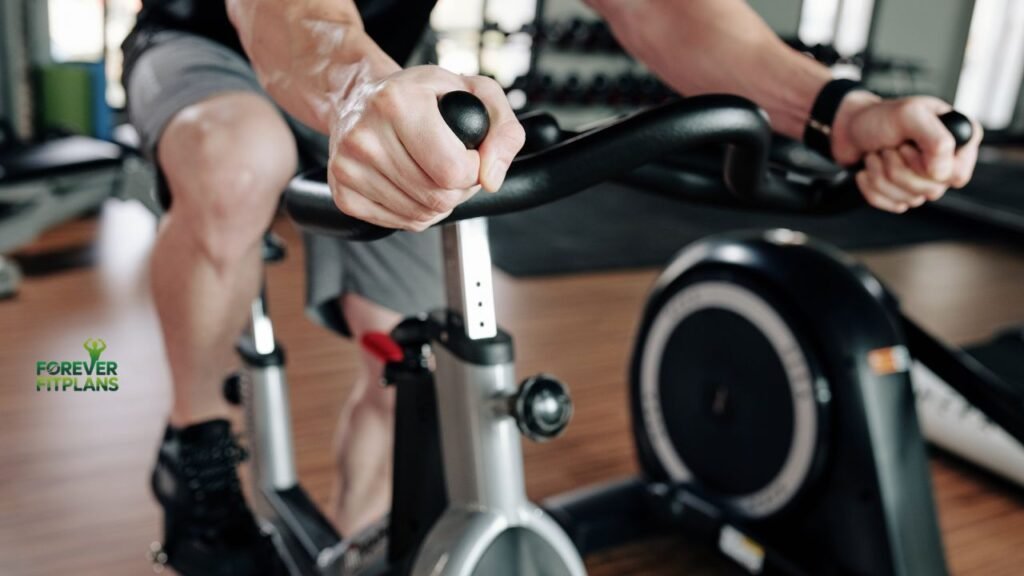
Cycling is one of the most popular and effective forms of low-impact exercise for weight loss — and for good reason. It provides an intense lower-body cardiovascular workout with virtually zero impact on knees and hips when done correctly.
Stationary vs. outdoor cycling for weight loss:
- Stationary bike: More controlled, no weather dependency, easier to maintain specific heart rate zones — ideal for beginners and those with balance concerns
- Outdoor cycling: Variable terrain adds natural interval training; fresh air improves mood and adherence; burns slightly more calories due to wind resistance
- Spin classes: High-energy group environment motivates harder effort; structured intervals maximize calorie burn
Low-impact cycling protocols for weight loss:
- Steady state: 45–60 minutes at moderate resistance and cadence (70–90 RPM) — excellent fat burning
- Interval cycling: 30 seconds hard / 60 seconds easy, repeated 10–15 times — maximum calorie burn and afterburn
- Hill simulation: Progressively increase resistance every 5 minutes — builds leg strength alongside fat burning
Key tip: Proper bike fit is essential. Seat height should allow a slight bend in the knee at the bottom of the pedal stroke — this protects the knee joint and allows efficient power output.
4. Elliptical Trainer
Calories burned (30 min, 70 kg): 270–360 kcal Impact level: Very Low Equipment needed: Elliptical machine (gym or home)
The elliptical trainer was specifically designed to replicate the motion of running while eliminating its impact forces. It’s one of the most effective low-impact exercises for weight loss machines available — burning nearly as many calories as running with a fraction of the joint stress.
Why the elliptical is particularly effective for low-impact weight loss:
- The oval motion path eliminates the ground-contact impact of walking and running
- Full body engagement when arms are used — upper body involvement increases calorie burn by 15–20%
- Reverse pedaling specifically targets glutes and hamstrings — excellent for lower body shaping
- Easy to maintain an elevated heart rate for extended periods
- Suitable for people with knee replacement, hip issues, and lower back pain
Elliptical workout for fat loss:
- Warm up at easy resistance for 5 minutes
- Alternate 2 minutes at moderate resistance with 1 minute at high resistance — repeat 8–10 times
- Include 5 minutes of reverse pedaling to target glutes
- Cool down at easy resistance for 5 minutes
- Total: 35–40 minutes, 300–360 calories burned
5. Rowing Machine
Calories burned (30 min, 70 kg): 280–380 kcal Impact level: Very Low Equipment needed: Rowing machine (gym or home)
Rowing is one of the most underused and most effective forms of low-impact exercise for weight loss. It’s a full-body workout that engages 86% of your muscles — including legs, glutes, back, core, and arms — in a smooth, flowing motion with zero impact.
Why rowing is exceptional for low-impact weight loss:
- Burns calories at a rate comparable to running while being completely impact-free
- 60% lower body drive + 40% upper body pull — truly total body engagement
- Builds significant back, shoulder, and core strength alongside cardiovascular fitness
- Research shows rowing improves insulin sensitivity, reduces visceral fat, and builds lean muscle simultaneously
Common rowing mistakes to avoid:
- Hunching the back (keep it straight and slightly leaned back at the finish)
- Using arms before legs (legs drive first, then lean back, then pull arms — this is the correct sequence)
- Pulling with arms only — legs should generate 60% of the power
Rowing workout for weight loss:
- 5 min easy warm-up
- 20 min steady moderate-effort rowing
- 5 min of 10 strokes hard / 10 strokes easy intervals
- 5 min cool-down
- Total: 35 min, 280–350 calories
6. Yoga (Vinyasa and Power Yoga)
Calories burned (30 min, 70 kg): 150–250 kcal Impact level: Zero Equipment needed: Yoga mat.

Yoga is much more than stretching. Power yoga, Vinyasa flow, and Ashtanga yoga provide genuine cardiovascular challenge, build lean muscle throughout the body, and — critically — reduce cortisol more effectively than virtually any other exercise type.
Why yoga is a powerful low-impact exercise for weight loss:
- Directly reduces cortisol — the primary belly fat storage hormone
- Builds core strength, flexibility, and balance that support other exercises
- Improves body awareness and mindful eating behaviors — research links regular yoga practice to healthier food choices
- A study in the Journal of Alternative and Complementary Medicine found yoga practitioners had lower BMI and waist circumference than non-practitioners, even when calorie intake was similar
Best yoga styles for weight loss:
| Yoga Style | Calories (60 min) | Intensity | Best For |
| Power Yoga | 350–500 kcal | High | Maximum calorie burn |
| Vinyasa Flow | 300–450 kcal | Moderate-High | Balance of burn and mindfulness |
| Ashtanga | 350–500 kcal | High | Structured, progressive challenge |
| Hatha | 175–250 kcal | Moderate | Beginners, stress reduction |
| Restorative/Yin | 120–150 kcal | Low | Recovery days, cortisol reduction |
For weight loss, practice Power or Vinyasa yoga 4–5 times per week, supplemented with Restorative yoga on recovery days.
7. Water Aerobics
Calories burned (30 min, 70 kg): 180–280 kcal Impact level: Zero (water supported) Equipment needed: Pool access.
Water aerobics deserves its own entry beyond general swimming. Structured water aerobics classes provide social motivation, guided progressive programming, and the unique benefit of water resistance — where every movement in any direction meets resistance, engaging muscles from multiple angles.
Why water aerobics is an exceptionally low-impact exercise for weight loss:
- Zero impact — ideal for arthritis, obesity, pregnancy, and joint replacement recovery
- Water resistance naturally increases muscle tone without heavy weights
- Social class environment dramatically improves adherence — the single most important factor in weight loss
- Works particularly well for post-menopausal women, for whom traditional exercise is often limited by joint pain
A typical water aerobics session for weight loss includes:
- Water walking and jogging (zero-impact running equivalent)
- Jumping jacks (impact-free in water)
- Leg kicks and arm sweeps against water resistance
- Pool noodle exercises
- Flutter kicks and core work at the pool edge
8. Pilates
Calories burned (30 min, 70 kg): 150–250 kcal Impact level: Zero Equipment needed: Mat (or reformer machine)
Pilates is one of the most effective low-impact exercises for weight loss that specifically targets deep core muscles, improves posture, and builds functional strength throughout the entire body — all without any jumping or high-impact movement.
Why Pilates produces weight loss results:
- Builds the deep transverse abdominis muscle — creating a natural corset effect that visibly flattens the stomach
- Improves posture dramatically — standing taller immediately makes the body look slimmer and more toned
- Reformer Pilates burns significantly more calories than mat Pilates (250 vs 150 per hour)
- Addresses muscle imbalances that lead to injury in other exercises, making it excellent for injury prevention and rehabilitation
- Research from the Journal of Physical Activity and Health found that 8 weeks of Pilates training significantly reduced abdominal fat and improved body composition in overweight women
9. Resistance Band Training
Calories burned (30 min, 70 kg): 150–250 kcal Impact level: Zero Equipment needed: Resistance bands ($10–30)
Resistance band training is one of the most versatile and effective low-impact exercises for weight loss available — requiring minimal equipment, zero impact, and providing genuine muscle-building stimulus that raises resting metabolism for up to 48 hours after the session.
Why resistance band training supports weight loss:
- Builds lean muscle that raises resting metabolic rate — every pound of muscle burns approximately 6 additional calories per day at rest
- The constant tension of bands (unlike free weights, which have zero tension at certain points) maximizes muscle fiber recruitment
- Progressive overload is simple — just use a heavier band as you get stronger
- Can replicate virtually any gym exercise — squats, rows, chest press, lateral raises, leg curls — all with zero impact
Full body resistance band circuit for weight loss (30 minutes):
| Exercise | Sets | Reps | Rest |
| Banded squats | 3 | 15 | 30 sec |
| Banded rows | 3 | 12 | 30 sec |
| Banded glute bridges | 3 | 15 | 30 sec |
| Banded chest press | 3 | 12 | 30 sec |
| Banded lateral walks | 3 | 12 each | 30 sec |
| Banded shoulder press | 3 | 12 | 30 sec |
| Banded leg curls | 3 | 12 | 30 sec |
| Banded bicep curls | 3 | 15 | 30 sec |
10. Tai Chi
Calories burned (30 min, 70 kg): 120–180 kcal Impact level: Zero Equipment needed: Open space
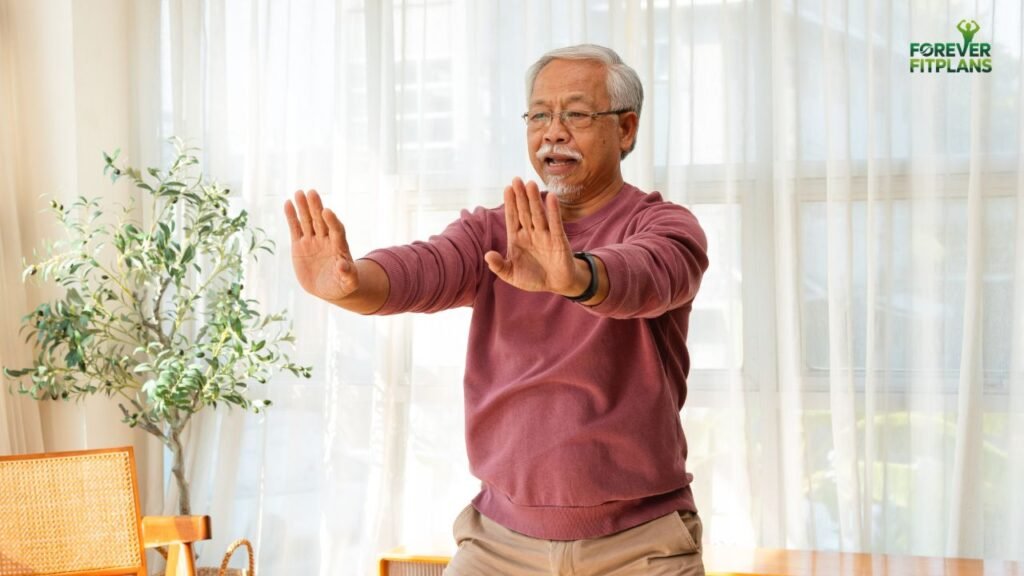
Tai chi is an ancient Chinese practice that combines slow, flowing movements with mindful breathing — creating one of the most gentle yet effective low-impact exercises for weight loss, particularly for older adults and those with chronic pain.
Why Tai Chi Supports Weight Loss:
- Burns calories through continuous slow movement — comparable to brisk walking per minute
- Dramatically reduces cortisol — research shows 12 weeks of tai chi practice reduces cortisol by up to 25%
- Improves balance and coordination that prevents falls in older adults
- A study in the Annals of Internal Medicine found that tai chi produced improvements in blood pressure, insulin sensitivity, and body composition comparable to conventional exercise programs
11. Dance and Zumba
Calories burned (30 min, 70 kg): 200–350 kcal Impact level: Low Equipment needed: Space, music (no equipment)
Dance-based exercise is one of the most enjoyable forms of low-impact exercise for weight loss, and enjoyment is the most powerful predictor of long-term exercise adherence.
Why dancing burns serious fat:
- Continuous full-body movement elevates heart rate effectively
- The cognitive engagement of learning choreography makes time pass quickly — longer sessions feel shorter
- Social dancing adds accountability and motivation
- Zumba research shows it produces average calorie burns of 350–450 calories per hour, comparable to moderate jogging
- Improves coordination, balance, and mood through music-driven movement
Best dance styles for weight loss:
- Zumba — Latin rhythms, high energy, structured classes
- Salsa — continuous lower body movement, partner or solo
- Hip hop dance fitness — high energy, youth-friendly
- Ballroom dancing — surprisingly effective calorie burner
- Line dancing — accessible, social, lower intensity option
12. Hiking
Calories burned (30 min, 70 kg): 200–320 kcal Impact level: Low Equipment needed: Hiking shoes, trail acce.ss
Hiking takes walking to the next level — adding elevation changes, varied terrain, and the psychological benefits of nature to create one of the most powerful and enjoyable low-impact exercises for weight loss available.
Why hiking burns more fat than flat walking:
- Uphill sections dramatically increase calorie burn (40–100% more than flat walking)
- Uneven terrain requires constant micro-adjustments from core, ankle, and stabilizer muscles
- Research shows that time in nature reduces cortisol and stress hormones more effectively than urban exercise
- Carrying a pack adds extra resistance — start with a light day pack and progress
Fat-burning benefits of hiking:
- Burns 300–550 calories per hour, depending on terrain and pack weight
- Builds glutes, quads, and calves through uphill sections
- Develops ankle and core stability through uneven terrain
- Psychological benefits of nature reduce stress-driven emotional eating
13. Chair Exercises (Seated Low Impact Workouts)
Calories burned (30 min, 70 kg): 100–180 kcal Impact level: Zero Equipment needed: Sturdy chair
Chair-based exercise is the most accessible form of low-impact exercise for weight loss — suitable for elderly individuals, those with severe joint pain, wheelchair users, and anyone whose mobility limitations prevent standing exercise.
Effective chair exercises for weight loss:
- Seated marching (lift knees alternately) — cardiovascular activation
- Seated leg extensions — quadriceps strengthening
- Seated arm circles and shoulder press with light weights
- Seated torso rotations — core engagement
- Chair-supported standing exercises — gradually increasing weight bearing
- Seated rowing motion with resistance bands
Even chair-based exercise performed consistently 4–5 times per week burns meaningful calories, improves circulation, maintains muscle mass, and contributes to the calorie deficit needed for weight loss.
14. Aqua Jogging (Deep Water Running)
Calories burned (30 min, 70 kg): 250–350 kcal Impact level: Zero Equipment needed: Pool, flotation belt.
Aqua jogging involves running in deep water with a flotation belt supporting body weight — replicating the running motion with literally zero impact on any joint. Injured runners frequently use it to maintain cardiovascular fitness during recovery.
Why aqua jogging is an exceptionally low-impact exercise for weight loss:
- Burns comparable calories to land running with completely zero joint impact
- Provides natural full-body resistance — water is 800 times denser than air
- Particularly effective for people recovering from stress fractures, knee surgery, or hip replacement
- Can be performed at high intensity — aqua jogging intervals closely mimic land-based HIIT benefits
15. Low Impact HIIT (Modified High Intensity Interval Training)
Calories burned (30 min, 70 kg): 280–400 kcal Impact level: Low Equipment needed: None or minimal
Low-impact HIIT is perhaps the most powerful option in the entire low-impact exercise for weight loss category — combining the fat-burning intensity of interval training with the joint-friendly nature of low-impact movement.
What makes it “low impact HIIT”:
- No jumping, no running, no plyometrics
- High intensity achieved through increased speed, range of motion, and muscle engagement rather than impact
- Heart rate reaches the same levels as traditional HIIT without joint stress
Sample 30-Minute Low-Impact HIIT Circuit:
| Exercise | Work | Rest | Rounds |
| Fast marching in place | 40 sec | 20 sec | 4 |
| Squat to standing | 40 sec | 20 sec | 4 |
| Standing mountain climbers | 40 sec | 20 sec | 4 |
| Side steps with arm reach | 40 sec | 20 sec | 4 |
| Modified burpee (no jump) | 40 sec | 20 sec | 4 |
| Standing bicycle crunches | 40 sec | 20 sec | 4 |
Rest 90 seconds between complete rounds. Total: 3 rounds = approximately 30 minutes.
8-Week Low-Impact Exercise Plan for Weight Loss
Here is a complete 8-week progressive program using the exercises above:
Weeks 1–2: Foundation
| Day | Exercise | Duration | Intensity |
| Monday | Brisk walking | 30 min | Easy-Moderate |
| Tuesday | Chair exercises or yoga (Hatha) | 25 min | Easy |
| Wednesday | Swimming or water aerobics | 30 min | Easy-Moderate |
| Thursday | Rest or gentle stretching | 20 min | Very Easy |
| Friday | Cycling (stationary, flat) | 30 min | Easy-Moderate |
| Saturday | Walking + resistance bands | 40 min | Easy-Moderate |
| Sunday | Rest | — | — |
Weeks 3–4: Building
| Day | Exercise | Duration | Intensity |
| Monday | Brisk walking (incline) | 40 min | Moderate |
| Tuesday | Pilates or yoga (Vinyasa) | 35 min | Moderate |
| Wednesday | Rowing machine | 35 min | Moderate |
| Thursday | Swimming intervals | 35 min | Moderate |
| Friday | Elliptical | 35 min | Moderate |
| Saturday | Hiking or a long walk | 60 min | Easy-Moderate |
| Sunday | Restorative yoga | 25 min | Very Easy |
Weeks 5–6: Intensification
| Day | Exercise | Duration | Intensity |
| Monday | Low-impact HIIT | 30 min | Moderate-High |
| Tuesday | Resistance bands (full body) | 40 min | Moderate |
| Wednesday | Swimming (varied strokes) | 45 min | Moderate-High |
| Thursday | Cycling intervals | 35 min | Moderate-High |
| Friday | Power yoga or Pilates reformer | 45 min | Moderate-High |
| Saturday | Hiking with a light pack | 75 min | Moderate |
| Sunday | Rest or stretching | 20 min | Very Easy |
Weeks 7–8: Peak Fat Burning
| Day | Exercise | Duration | Intensity |
| Monday | Low impact HIIT (harder circuit) | 35 min | High |
| Tuesday | Rowing machine (intervals) | 40 min | High |
| Wednesday | Swimming (butterfly + freestyle) | 50 min | High |
| Thursday | Dance/Zumba or cycling intervals | 45 min | High |
| Friday | Resistance bands + elliptical combo | 50 min | Moderate-High |
| Saturday | Hiking or aqua jogging | 90 min | Moderate |
| Sunday | Restorative yoga | 30 min | Very Easy |
Calorie Burn Comparison: All 15 Low Impact Exercises
| Exercise | Calories/30 Min (70 kg) | Muscle Focus | Joint Stress | Fun Rating |
| Walking (brisk) | 140–200 | Legs, glutes | Very Low | ⭐⭐⭐⭐ |
| Swimming | 250–400 | Full body | None | ⭐⭐⭐⭐⭐ |
| Cycling | 210–300 | Legs, glutes | Very Low | ⭐⭐⭐⭐ |
| Elliptical | 270–360 | Full body | Very Low | ⭐⭐⭐ |
| Rowing | 280–380 | Full body | Very Low | ⭐⭐⭐⭐ |
| Yoga (Power) | 200–280 | Core, full body | None | ⭐⭐⭐⭐⭐ |
| Water aerobics | 180–280 | Full body | None | ⭐⭐⭐⭐⭐ |
| Pilates | 150–250 | Core, full body | None | ⭐⭐⭐⭐ |
| Resistance bands | 150–250 | Full body | None | ⭐⭐⭐⭐ |
| Tai chi | 120–180 | Full body | None | ⭐⭐⭐⭐ |
| Dancing/Zumba | 200–350 | Full body | Low | ⭐⭐⭐⭐⭐ |
| Hiking | 200–320 | Legs, core | Low | ⭐⭐⭐⭐⭐ |
| Chair exercises | 100–180 | Upper/lower body | None | ⭐⭐⭐ |
| Aqua jogging | 250–350 | Full body | None | ⭐⭐⭐⭐ |
| Low-impact HIIT | 280–400 | Full body | Low | ⭐⭐⭐⭐ |
Nutrition Tips to Maximize Low-Impact Exercise for Weight Loss
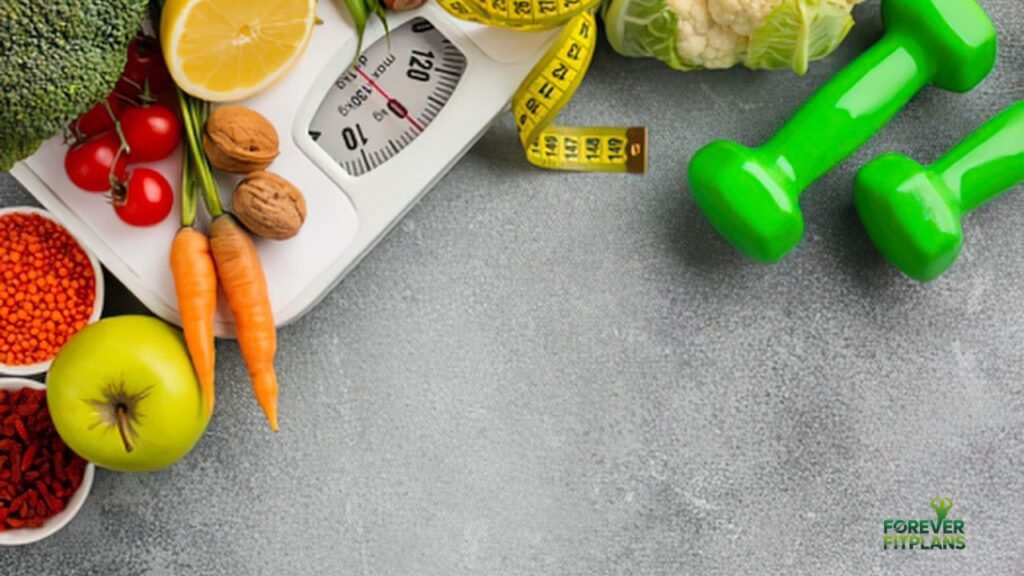
Low-impact exercise for weight loss creates the exercise side of fat loss. Nutrition creates the other — and larger — part of the equation.
Establish the Correct Calorie Deficit
- Use a trustworthy online calculator to determine your TDEE (Total Daily Energy Expenditure).
- Make a daily calorie deficit of 300–500 below your TDEE. This will allow you to lose 0.3–0.5 kg of fat each week without experiencing a decrease in your metabolism.
- Never consume fewer than 1,200 calories for women or 1,500 calories for men; excessive restriction results in nutritional deficiencies, muscle loss, and metabolic adaptation.
Give Protein First Priority to Preserve Muscle
- Your body runs the danger of losing both muscle and fat when in a calorie deficit, particularly when engaging in low-intensity activity. Consuming a lot of protein stops this:
- Aim for 1.6–2.0g of protein per kilogram of body weight per day.
- Greek yogurt, eggs, chicken, fish, lentils, cottage cheese, and protein powder are the best sources.
- Distribute evenly: Aim for 25–35g of protein per meal as opposed to a single, high-protein meal.
Time Nutrition Around Exercise
| Timing | Recommendation | Why |
| 1–2 hours before exercise | Light carb + protein snack | Sustained energy without digestive discomfort |
| During exercise (over 60 min) | Water or electrolyte drink | Hydration and performance |
| Within 30–45 min after | Protein + moderate carbs | Muscle repair, glycogen replenishment |
| Rest days | Slightly lower carbs, maintain protein | Match intake to reduced energy expenditure |
Focus on Food Quality
- Prioritize whole foods — vegetables, fruits, lean proteins, whole grains, healthy fats.
- Reduce ultra-processed foods — these are engineered to bypass fullness signals and promote overconsumption.
- Limit added sugar — the primary dietary driver of insulin spikes that promote fat storage.e
- Eat adequate fiber — 25–35g daily from vegetables, legumes, and whole grains for fullness and digestive health
- Stay hydrated — drink 2–3 liters of water daily; dehydration is frequently mistaken for hunger.
Common Mistakes That Prevent Low-Impact Exercise From Producing Weight Loss
These errors can impede or completely eradicate the effects of even the best low-impact exercise program for weight loss:
- Your body adjusts to the same workout in 4–6 weeks if you do not gradually raise the intensity; instead, increase the duration, resistance, or speed regularly.
- Exercise only makes up 20–30% of weight loss; food makes up the remaining 70–80%.
- For best results, switch between cardio (walking, swimming, cycling) and strength (resistance bands, Pilates) exercises.
- Most people greatly underestimate how many calories they consume, so it is important to track for at least two to four weeks in order to develop proper awareness.
- Ignoring rest days: fat-burning adaptations take place during recovery; persistent overtraining raises cortisol and impedes advancement.
- Expecting quick results? Low-impact exercise is a long-term, sustainable strategy for weight loss; significant effects usually require 8–12 weeks of constant work.
- Non-exercise activity (NEAT) is crucial; even on days when you exercise, try to move throughout the day.
Frequently Asked Questions
Can low-impact exercise for weight loss really work as well as high-impact exercise? Yes — when performed consistently and at sufficient intensity and duration, low-impact exercise for weight loss produces comparable results to high-impact exercise. The key research finding is that total weekly calorie expenditure determines weight loss outcomes more than exercise intensity or impact level. A person who swims, cycles, and does yoga consistently 5 days per week will lose more weight than someone who runs intensely twice a week. Low-impact exercise also has significantly lower injury rates — meaning fewer interruptions to your program — which dramatically improves long-term results.
How many days per week should I do low-impact exercise to lose weight?
For meaningful weight loss, aim to perform low-impact exercise for weight loss 4–5 days per week, with sessions lasting 30–60 minutes each. The American College of Sports Medicine recommends 250–300 minutes of moderate-intensity exercise per week for significant weight loss — achievable through five 50–60 minute low-impact sessions. Beginners should start with 3 days per week and build progressively. Always include 1–2 rest or active recovery days per week to allow muscle repair and prevent overtraining.
What is the best low-impact exercise for weight loss for beginners?
For beginners, walking is the single best starting point for low-impact exercise for weight loss — it requires no equipment, no skill, and can be started at any fitness level. Begin with 20–30 minutes of brisk walking 3–4 days per week and build to 45–60 minutes over 4–6 weeks. As fitness improves, add a second type of low-impact exercise — swimming, cycling, or yoga — to increase weekly calorie burn and prevent adaptation. Swimming is also excellent for beginners who find walking limited by joint pain or excess weight.
How long does it take to see weight loss results from low-impact exercise?
Most people performing low-impact exercise for weight loss consistently 4–5 days per week, combined with a modest calorie deficit, begin to see initial results within 2–4 weeks — primarily in the form of reduced bloating, improved energy, and better sleep. Visible fat loss typically becomes apparent at 6–8 weeks of consistent effort. Significant, noticeable body transformation usually takes 12–16 weeks. Remember that muscle development happens alongside fat loss — the scale may not always reflect body composition changes accurately. Progress photos and waist measurements are more reliable tracking methods.
Is walking enough low-impact exercise to lose weight?
Yes — walking alone, when performed consistently at sufficient duration and combined with a healthy diet, is absolutely enough to produce meaningful weight loss. Research shows that brisk walking for 45–60 minutes daily burns enough calories to create a significant weekly energy deficit. The key is “brisk” — you need to walk fast enough to elevate your heart rate (roughly 60–70% of maximum). Adding incline, increasing duration, and incorporating walking after meals maximizes walking’s effectiveness as low-impact exercise for weight loss.
Can I lose belly fat specifically with low-impact exercise?
You cannot spot-reduce fat from specific areas — low-impact exercise for weight loss reduces overall body fat, including belly fat, rather than targeting the abdomen specifically. However, low-impact exercise is particularly effective at reducing visceral fat (the dangerous deep belly fat around organs) because it improves insulin sensitivity and reduces cortisol — two primary hormonal drivers of abdominal fat storage. Yoga, in particular, reduces cortisol more effectively than almost any other exercise, making it especially powerful for belly fat reduction. Consistent low-impact exercise combined with a reduced-sugar diet produces significant abdominal fat reduction over 12–16 weeks.
Is low-impact exercise suitable for people with bad knees?
Absolutely — low-impact exercise for weight loss is specifically ideal for people with knee problems. Swimming and water aerobics eliminate virtually all knee joint stress (water supports body weight). Cycling places minimal stress on knee cartilage when the bike fit is correct. The elliptical trainer was designed specifically to replicate running without knee impact. Chair exercises allow full cardiovascular and strength training with zero knee loading. Yoga and Pilates build the quad and glute strength that actually support and protect the knee joint over time. Always consult your physiotherapist or orthopedic specialist about which specific exercises are most appropriate for your knee condition.
Conclusion
The most crucial thing to know about low-impact exercise for weight loss is that long-term benefits consistently outweigh transient intensity. The most effective fitness regimen for losing weight is not the most difficult; rather, it is the one you can follow regularly, week after week, month after month, without depleting your body or depleting your enthusiasm.
You get just that with low-impact exercise for weight loss. Exercises like swimming, walking, cycling, yoga, Pilates, rowing, and dance can burn significant amounts of calories, increase lean muscle, enhance insulin sensitivity, lower the cortisol that causes belly fat, and change your body without the danger of injury, joint discomfort, and recuperation requirements associated with high-impact exercise.
Low-impact exercise is effective for weight loss regardless of your age, whether you are 25 or 75, a total novice or coming back after a long absence, managing arthritis, i is,s or recuperating from surgery, carrying excess weight, or just wanting a more gentle approach to fitness. The science is obvious. The outcomes are genuine. It is a genuinely enjoyable road. Low impact does not equate to poor outcomes. It means intelligent outcomes that are based on a sustainable strategy that keeps you going for the rest of your life, progressive challenge, and consistency.
Are you prepared to go on a low-impact weight loss journey? Whether it is a Zumba class with friends, a swim at your neighborhood pool, or a brisk evening walk, pick one exercise from this list that truly appeals to you. Start now. Repeat the process tomorrow. One session at a time, develop the habit. Give yourself 12 weeks of consistent effort paired with sensible eating — and let your body show you what low-impact exercise for weight loss can really do.
For detailed informations Also read this blog from Crunch.

Dr. Daniel Carter is a certified health & wellness writer and fitness lifestyle researcher with over 8 years of experience in nutrition, weight management, sleep health, and preventive care. He is passionate about helping people live healthier, stronger, and more balanced lives through science-backed fitness strategies and easy-to-follow wellness tips.
Through FitForever Plan, Dr. Carter shares practical health advice, workout guidance, and nutrition insights designed to support long-term fitness, sustainable weight loss, and overall well-being. His mission is to make healthy living simple, achievable, and enjoyable for everyone.