How to Get Rid of Back Fat: 15 Proven Strategies That Actually Slim Your Back
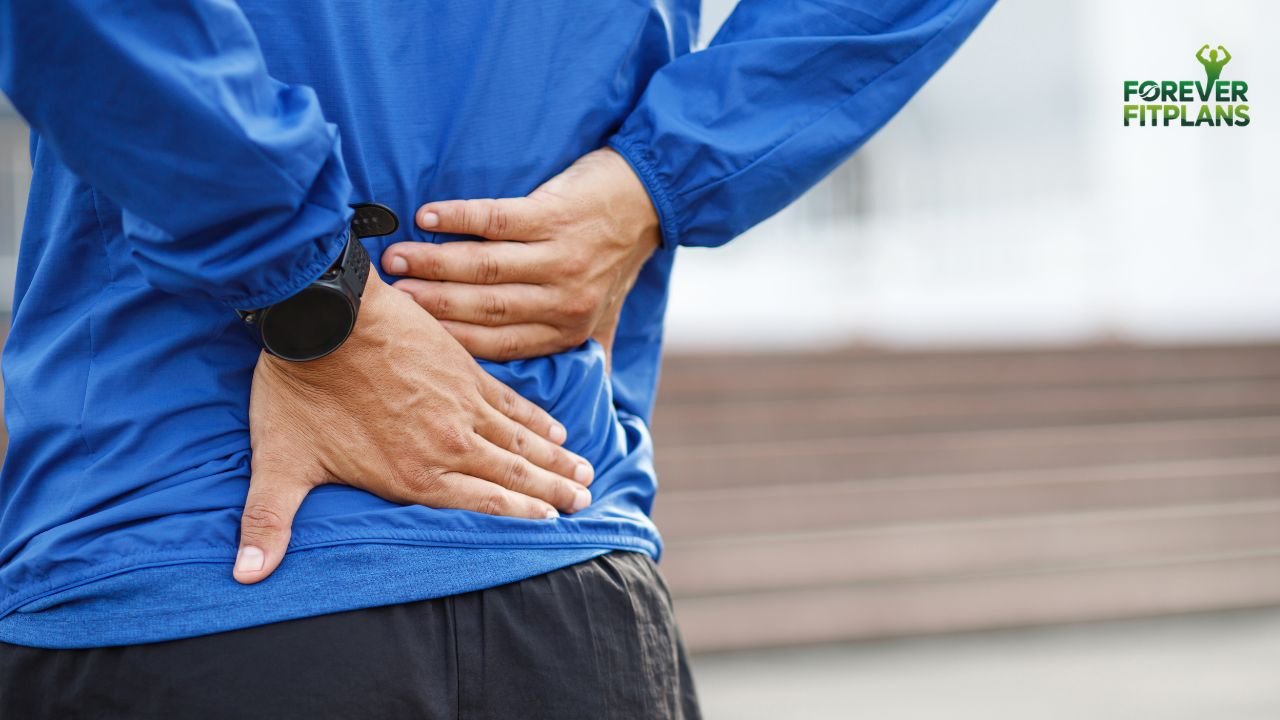
Back fat is one of the most stubborn and frustrating areas of the body to slim down. Whether it shows up as rolls around the bra line, a soft padding along the lower back, or that resistant layer along your sides, knowing how to get rid of back fat feels like one of fitness’s most elusive challenges.
Here’s the truth: you cannot spot-reduce fat from any specific area, including the back. But you absolutely can get rid of back fat through the right combination of overall fat loss, targeted back muscle strengthening, improved posture, and smart nutrition. When you address all four of these factors together, the results on your back can be dramatic.
Also, know about how to balance hormones for weight loss.
In this complete guide, you’ll find 15 proven strategies to get rid of back fat — including the best exercises, nutrition approaches, lifestyle changes, and body composition tips that genuinely work. Let’s transform your back.
Why Back Fat Develops — and What Makes It Hard to Lose
Knowing why back fat builds up can help you select the best methods for getting rid of it before you start.
Back fat usually results from a combination of:
The primary reason is excess body fat. Your body builds fat throughout your body, including your back, when it retains more fat than it can utilize as fuel. The back is one of the sites where fat tends to build up and is frequently the last area to show noticeable weight loss.
Weak back muscles: The back lacks definition and tone when its muscles, especially the latissimus dorsi, rhomboids, and erector spinae, are underdeveloped. A back with weak, underdeveloped muscles appears mushy and undefined even at modest body fat levels.
Bad posture: Slouching causes soft tissue along the back to compress, increasing the visibility and prominence of fat folds. A person with a hunched, rounded posture may appear to have a lot more back fat than they actually have, but this may be completely corrected with back strengthening and posture correction.
Sedentary lifestyle: Long stretches of time spent sitting still promote the body’s buildup of fat. Particularly at risk is the back, a sizable portion of the body that is rarely used while sitting.
Hormonal factors: Insulin resistance, estrogen imbalances, and cortisol, the stress hormone, can encourage fat accumulation in the back, especially in women, where hormonal fat tends to build up around the lower back and bra line.
Understanding these causes makes it clear that knowing how to get rid of back fat requires a multi-pronged approach — not just one type of exercise or one dietary change.
The Truth About Spot Reduction and Back Fat
Before we proceed, it is crucial to comprehend this. Is it possible to particularly target back fat with back exercises?
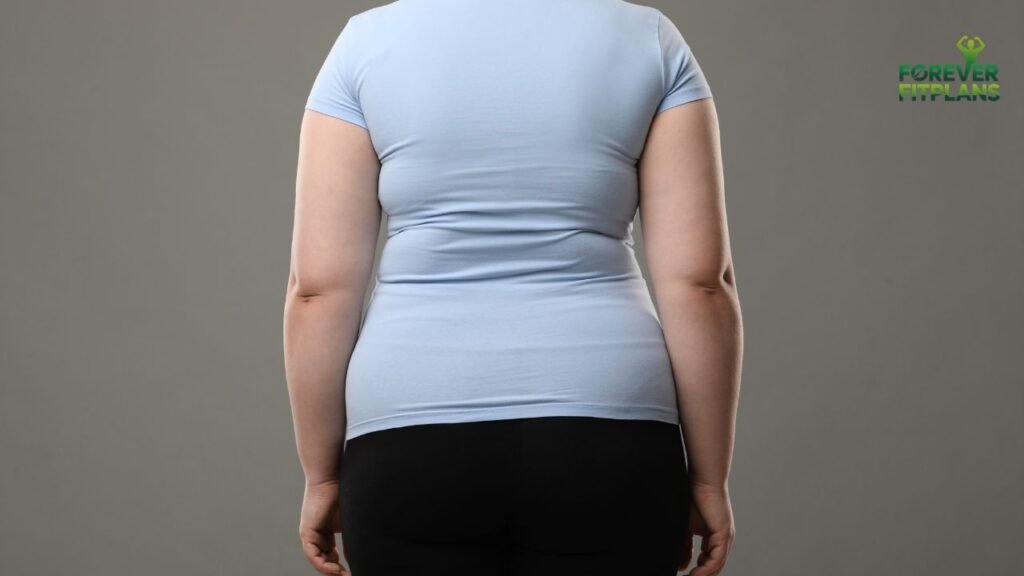
In all honesty, the answer is no, and this is a question that has been resolved by science. For six weeks, participants in a study that was published in the Journal of Strength and Conditioning Research engaged in abdominal exercises. The outcome? Belly strength has improved, but there has been no discernible decrease in belly fat. The back is subject to the same rule.
When you generate a calorie deficit, your entire body loses fat. Where your body loses fat is not something you can control. The order in which your body loses fat from various locations is mostly determined by genetics.
What you can control:
- Total fat reduction by exercise, calorie restriction, and lifestyle modifications
- Development of back muscles through focused resistance training that produces definition when fat drops
- Standing taller instantly results in a slimmer, more defined back.
- decreasing water retention, which might give the impression that the back is puffier than it truly is
Taking care of all four aspects at once is the best way to lose back fat.
How to Get Rid of Back Fat: The 15 Best Strategies
1. Create a Sustainable Calorie Deficit
Why it’s essential: This is the non-negotiable foundation of how to get rid of back fat — or any body fat. Without a calorie deficit, no amount of exercise will reduce your back fat.
A calorie deficit means burning more calories than you consume. Your body then turns to stored fat — including back fat — to make up the difference.
How to create a smart deficit:
- Calculate your TDEE (Total Daily Energy Expenditure) using an online calculator
- Reduce intake by 300–500 calories below your TDEE daily
- This produces 0.3–0.5 kg of fat loss per week — sustainable without triggering metabolic slowdown or muscle loss
- Never cut more than 500–700 calories below TDEE — excessive restriction causes muscle loss that slows metabolism long-term
Practical calorie reduction strategies:
- Replace high-calorie drinks (soda, juice, alcohol) with water or green tea — can save 200–400 calories daily
- Reduce portion sizes by 20% at main meals without changing what you eat
- Increase vegetables at every meal — they add volume without significant calories
- Track food intake for 2–4 weeks to build accurate awareness of what you’re consuming
2. Bent-Over Dumbbell Rows — The Most Direct Back Fat Exercise
Why it works: Bent-over rows directly target the latissimus dorsi and rhomboids — the muscles that create the defined, toned look of a slim back. As fat decreases, these developed muscles create visible shape and definition where back fat once was.
How to do it:
- Hold a dumbbell in each hand, hinge forward at the hips until the torso is nearly parallel to the floor
- Let dumbbells hang straight down
- Pull both dumbbells up toward your hips, squeezing shoulder blades together at the top
- Lower slowly and repeat
- 3–4 sets of 10–12 reps
No dumbbells? Use filled water bottles, resistance bands, or a heavy backpack.
Progression: Increase weight by 5–10% when you can complete all sets and reps with perfect form.
3. Pull-Ups and Lat Pulldowns — For Back Width and Definition
Why it works: Pull-ups and lat pulldowns target the latissimus dorsi — the large, wing-shaped muscles of the back. Developing these muscles creates the V-taper effect that makes the back look lean, strong, and defined — essential for visible results when working on how to get rid of back fat.

Pull-up how-to:
- Grip a pull-up bar slightly wider than shoulder-width, palms facing away
- Start from a dead hang with arms fully extended
- Pull your chest toward the bar by driving your elbows down and back
- Lower slowly to the starting position
- 3 sets of as many reps as possible
For beginners: Use an assisted pull-up machine, a resistance band for assistance, or perform negative pull-ups (jump to the top position, lower yourself slowly for 5–6 seconds)
Lat pulldown (cable machine):
- Sit facing the machine, grip the bar wider than shoulder-width
- Pull the bar toward your upper chest, driving elbows down and back
- Return slowly to the starting position
- 3–4 sets of 10–12 reps
4. Cardio Exercise — The Calorie Burn That Reduces Overall Body Fat
Why it works: Cardiovascular exercise is one of the most effective tools for creating the calorie deficit that enables you to get rid of back fat. It also specifically reduces visceral fat — the deep fat that accumulates internally and contributes to a thicker midsection and back appearance.
Best cardio options for back fat reduction:
| Exercise | Calories/30 Min (70kg) | Back Engagement | Joint Impact |
| Rowing machine | 280–380 kcal | Very High | Very Low |
| Swimming | 250–400 kcal | Very High | None |
| Jump rope | 300–400 kcal | Moderate | Moderate |
| Running | 300–380 kcal | Low | High |
| Cycling | 210–300 kcal | Low | Very Low |
| HIIT | 300–450 kcal | Varies | Moderate |
The rowing machine is the standout choice — it burns the most calories per minute while simultaneously working the back muscles directly. It’s one of the best single activities for how to get rid of back fat because it addresses both calorie burning and back muscle development simultaneously.
Recommendation: 150–300 minutes of moderate-intensity cardio weekly, with at least 2 rowing or swimming sessions.
5. Superman Holds — Lower and Upper Back Toning
Why it works: Superman holds directly strengthens and tones the erector spinae and lower back muscles — areas often overlooked but critical for overall back definition.
How to do it:
- Lie face down on a mat with arms extended overhead
- Simultaneously lift your arms, chest, and legs off the floor
- Squeeze your glutes and back muscles at the top
- Hold for 2–3 seconds
- Lower slowly and repeat
- 3 sets of 12–15 reps
Progression: Add a 2–5 second hold at the top, or hold light weights in your hands for increased resistance.
6. High-Intensity Interval Training (HIIT) — Maximum Fat Burning Efficiency
Why it works: HIIT burns more calories in less time than steady-state cardio and creates a powerful afterburn effect (EPOC) — your metabolism stays elevated for up to 24 hours after the session, continuing to burn calories while you rest.
This makes HIIT one of the most time-efficient methods for how to get rid of back fat as part of overall body fat reduction.
Sample 25-minute HIIT circuit for back fat reduction:
| Exercise | Work | Rest |
| Burpees | 40 sec | 20 sec |
| Mountain climbers | 40 sec | 20 sec |
| Jump rope or jumping jacks | 40 sec | 20 sec |
| Renegade rows (dumbbells) | 40 sec | 20 sec |
| High knees | 40 sec | 20 sec |
Repeat circuit 3 times with 90-second rest between rounds.
Frequency: 2–3 HIIT sessions per week maximum — HIIT requires significant recovery time.
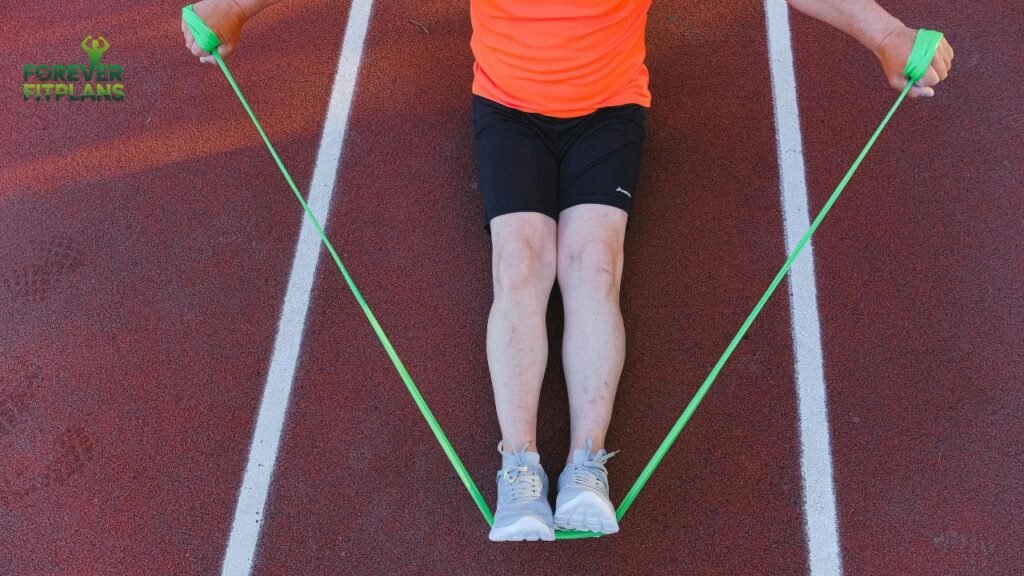
7. Resistance Band Pull-Aparts — Upper Back and Posture
Why it works: Resistance band pull-aparts directly target the rhomboids and rear deltoids — muscles of the upper back that, when strengthened, pull the shoulders back and improve posture. Better posture immediately makes the upper back appear slimmer and more defined.
How to do it:
- Hold a resistance band at shoulder width with arms extended in front of you
- Pull the band apart by moving both hands outward until it touches your chest
- Squeeze shoulder blades together at the end of the movement
- Return slowly to the starting position
- 3 sets of 15 reps
Why posture matters for back fat appearance: When you slump forward, soft tissue along the upper back compresses into folds — making it look like significantly more fat than is actually there. Strengthening the muscles that hold the shoulders back and the spine tall reduces this effect immediately and dramatically.
8. Prioritize Protein Intake — Muscle Preservation and Metabolism
Why it works: When you’re in a calorie deficit to get rid of back fat, your body risks losing muscle alongside fat. Muscle loss slows metabolism and reduces the visible definition that makes back fat reduction meaningful. High protein intake prevents this.
How protein helps specifically:
- Preserves and builds back muscle while you lose fat — so the back becomes more defined, not just smaller
- Has the highest thermic effect of any macronutrient — your body burns 20–30 calories for every 100 calories of protein consumed, just through digestion
- Reduces hunger more effectively than carbohydrates or fat, making your calorie deficit easier to maintain
Protein targets:
| Goal | Daily Protein Target |
| Moderate fat loss | 1.6g per kg of body weight |
| Aggressive fat loss | 2.0–2.4g per kg of body weight |
| Body recomposition (fat loss + muscle gain) | 2.0–2.4g per kg of body weight |
Best protein sources for a weight loss diet:
- Chicken breast (31g protein per 100g, 165 kcal)
- Canned tuna in water (26g protein per 100g, 116 kcal)
- Greek yogurt (10g per 100g, 59 kcal)
- Eggs (6g per egg, 78 kcal)
- Lentils (9g per 100g cooked, 116 kcal)
- Cottage cheese (11g per 100g, 98 kcal)
9. Reduce Sugar and Refined Carbohydrates
Why it works: Sugar and refined carbohydrates cause rapid blood sugar spikes that trigger insulin surges. Insulin is a fat-storage hormone — elevated insulin levels directly signal the body to store glucose as fat. Chronic high insulin is one of the primary metabolic drivers of body fat accumulation, including back fat.
Most impactful foods to reduce:
- Sugary drinks — sodas, fruit juices, energy drinks, sweetened coffee
- White bread, white rice, and refined pasta
- Breakfast cereals with added sugar
- Pastries, cookies, cakes, and candy
- Packaged snacks with refined flour
Replace with:
- Vegetables and whole fruits
- Whole grains — oats, brown rice, quinoa
- Legumes — beans, lentils, chickpeas
- Nuts and seeds
- Water, green tea, black coffee (unsweetened)
Reducing refined carbohydrates and sugar is one of the most direct dietary interventions for how to get rid of back fat, because it addresses the hormonal driver of fat storage rather than just reducing total calories.
10. Renegade Rows — Core and Back Combined
Why it works: Renegade rows are one of the most efficient exercises for back fat reduction because they simultaneously work the latissimus dorsi (pulling), the core (stabilization in plank position), and the shoulders — burning significant calories while building the back muscles that create visible definition.
How to do it:
- Start in a push-up position, holding a dumbbell in each hand
- Keep your body in a straight line from head to heels
- Row one dumbbell up toward your hip while maintaining the plank position
- Lower it and repeat on the other side
- That’s one rep — do 3 sets of 8–10 reps per side
Modification: Drop to your knees if maintaining the plank position is too challenging initially.
11. Improve Sleep Quality — The Hidden Fat Loss Accelerator
Why it works: Poor sleep is one of the most underappreciated barriers to getting rid of back fat and body fat generally. Its effects on weight management are profound and well-documented.
How poor sleep drives fat accumulation:
- Raises ghrelin (hunger hormone) by up to 28% after just one night of poor sleep — you feel significantly hungrier the next day
- Reduces leptin (fullness hormone) — you feel less satisfied even after eating the same amount
- Elevates cortisol — the stress hormone that directly promotes abdominal and back fat storage
- Reduces insulin sensitivity — the same food that maintained weight when you slept well now promotes fat storage when sleep-deprived
Sleep optimization for fat loss:
- Aim for 7–9 hours of quality sleep nightly — this is not a luxury, it’s a metabolic necessity
- Maintain a consistent sleep and wake schedule — even on weekends
- Keep the bedroom cool (16–19°C is optimal for sleep quality)
- Eliminate screens for 60 minutes before bed
- Avoid caffeine after 2 PM
- Consider magnesium glycinate (200–400mg before bed) — research supports its sleep-improving effects
12. Manage Cortisol and Stress — Fighting Hormonal Fat Storage
Why it works: Chronic stress maintains elevated cortisol, and elevated cortisol directly promotes fat storage around the midsection and back. This is why people under chronic stress often gain back and abdominal fat even without dietary changes.
Cortisol reduction strategies:
- Regular exercise — paradoxically, exercise (especially resistance training and yoga) reduces chronic cortisol levels even though it temporarily raises them during the workout
- Meditation and mindfulness — even 10 minutes daily- have been shown to reduce cortisol
- Deep breathing exercises — activate the parasympathetic nervous system, directly lowering cortisol
- Social connection — positive social interaction reduces cortisol significantly
- Time in nature — research shows that even 20 minutes in a natural environment measurably reduces cortisol
- Limiting caffeine — more than 4 cups of coffee daily keeps cortisol chronically elevated
13. Increase Daily Non-Exercise Movement (NEAT)
Why it works: NEAT — Non-Exercise Activity Thermogenesis — refers to all the calories you burn through movement that isn’t formal exercise: walking, fidgeting, taking stairs, household activities, standing instead of sitting. NEAT can account for 200–600+ calories per day — often more than a single gym session.
Practical NEAT strategies for getting rid of back fat:
- Take the stairs instead of elevators whenever possible
- Walk or cycle for short errands instead of driving
- Stand at your desk for at least 2–3 hours of the workday
- Take a 10-minute walk after each meal
- Set a timer to stand and move for 2 minutes every hour during desk work
- Park further away from destinations
- Take phone calls standing or walking
A person with an active NEAT burns 300–500 more calories per day than someone who is sedentary between formal exercise sessions — making it a major factor in total calorie expenditure and back fat reduction.
14. Stay Consistently Hydrated
Why it works: Proper hydration supports virtually every metabolic process involved in fat burning — and it specifically reduces the water retention that makes the back appear puffier than it actually is.
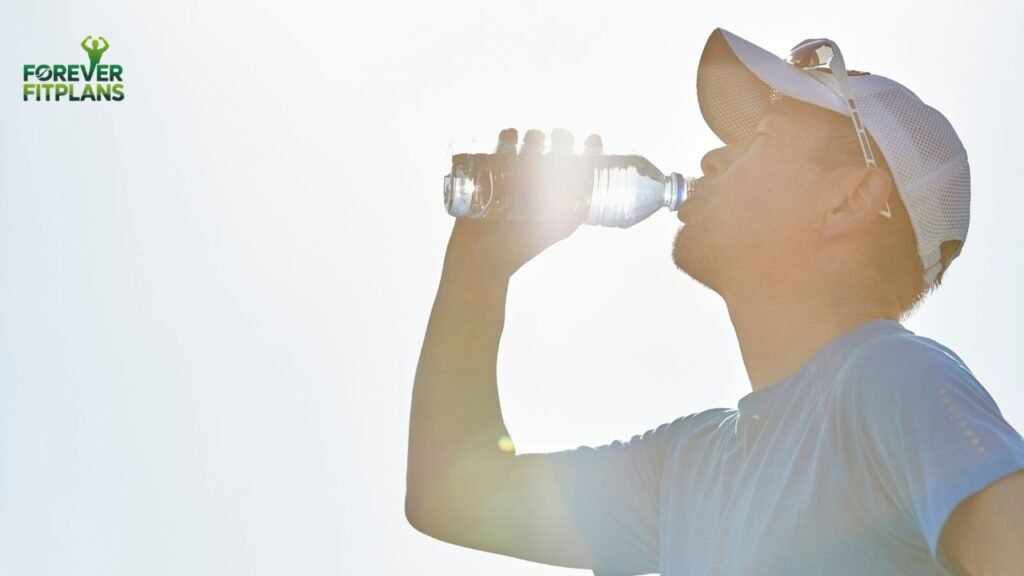
How hydration helps get rid of back fat:
- Supports the kidneys in processing and excreting excess sodium, reducing water retention
- Supports the liver in metabolizing stored fat for energy
- Reduces false hunger signals — dehydration is frequently mistaken for hunger, leading to unnecessary calorie consumption
- Improves exercise performance — even mild dehydration reduces strength, endurance, and overall calorie burn during workouts
Hydration targets:
- General: 2.5–3.5 liters daily
- On exercise days: Add 500ml–1 liter beyond baseline
- Practical tip: Drink 500ml of water upon waking — rehydrates after the overnight fast and provides immediate metabolic benefit
15. Track Progress With the Right Metrics
Why it matters: Most people trying to get rid of back fat make the mistake of using scale weight as their only progress metric. This is misleading — muscle development alongside fat loss often keeps the scale stable even as the body is dramatically changing shape.
Better metrics for back fat reduction progress:
| Metric | How to Measure | Frequency |
| Back measurements (bra line, waist) | Tape measure | Every 2 weeks |
| Progress photos (back view) | Camera | Every 3–4 weeks |
| Strength gains in back exercises | Workout log | Every session |
| How do clothes fit around the back | Try on a specific garment | Monthly |
| Body fat percentage | DEXA scan, caliper, bioimpedance | Monthly |
| Scale weight | Scale, same time daily | Weekly average |
Taking progress photos from the back, specifically — in the same lighting, position, and clothing — is one of the most motivating and accurate ways to see how well your approach to getting rid of back fat is actually working.
8-Week Back Fat Reduction Plan
Here is a complete 8-week program combining all the key strategies for how to get rid of back fat:
Weeks 1–2: Foundation
| Day | Training | Nutrition Focus |
| Monday | Back strength (rows, pull-aparts, superman) 30 min | Establish protein target, reduce sugar |
| Tuesday | Cardio — brisk walk or cycling 40 min | Track calories for awareness |
| Wednesday | Full body HIIT 25 min | Increase vegetable intake |
| Thursday | Rest or yoga | Reduce refined carbs |
| Friday | Back strength + core 35 min | Meal prep for the week |
| Saturday | Rowing or swimming for 40 min | Maintain hydration target |
| Sunday | Rest — focus on sleep | Review the week’s nutrition |
Weeks 3–4: Building Intensity
- Add resistance to all back exercises (heavier bands or dumbbells)
- Increase cardio sessions from 40 to 50 minutes
- Add a third strength session focused on the back
Weeks 5–6: Acceleration
- Introduce renegade rows and pull-ups (or assisted variations)
- Add one additional HIIT session per week
- Tighten nutrition — reduce calorie surplus or increase deficit slightly
Weeks 7–8: Peak Phase
- Maximum training intensity across all sessions
- Take progress photos at week 8 and compare with week 0
- Assess measurements and adjust plan for continued progress
What NOT to Do When Trying to Get Rid of Back Fat
Steer clear of these typical errors that impede or stop progress:

- Performing back workouts alone is insufficient to eliminate back fat; total fat loss is necessary.
- Crash dieting: extreme calorie restriction results in muscle loss, which lowers back definition and decreases metabolism.
- Overtraining raises cortisol and impedes growth; skipping rest days is when muscle repair and fat loss adaptations take place.
- Ignoring sleep: Insufficient sleep increases hunger hormones and cortisol, which actively encourage the storage of fat.
- Cardio alone will not develop the back muscles that provide noticeable definition if resistance training is not included.
- The scale is the only tool used to measure success; it cannot reveal improvements in back definition, muscle growth, or fat loss. Make use of measurements and images
Frequently Asked Questions
How long does it take to get rid of back fat?
Most people begin to see visible changes in back fat after 8–12 weeks of regular exercise, calorie deficit, and adequate sleep. In the first 4 weeks, improvements in posture and reductions in water retention can make the back appear visibly slimmer even before significant fat loss occurs. Significant back fat reduction — the kind that changes how clothes fit around the back — typically requires 12–16 weeks of consistent effort. Results depend heavily on your starting body fat percentage, the consistency of your calorie deficit, training frequency, and sleep quality.
Can you lose back fat without exercise?
Yes — overall fat loss through diet alone will reduce back fat. A sustained calorie deficit through improved nutrition will result in fat loss throughout the body, including the back. However, exercise — particularly back strengthening exercises — is important for creating visible definition and tone as fat decreases. Without resistance training, you may lose fat, but the back can remain soft and undefined. The most effective approach to get rid of back fat combines dietary changes for fat loss with back-specific exercises for muscle development.
What exercises target bra line back fat specifically?
The most effective exercises for bra line back fat (upper and mid-back area) are: resistance band pull-aparts (directly targets rhomboids and rear deltoids), bent-over dumbbell rows (lats and rhomboids), reverse flyes (rear deltoids and upper back), lat pulldowns or pull-ups (entire back width), and seated cable rows or resistance band rows (mid-back, rhomboids). These exercises build the muscles directly beneath the bra line area, creating definition that becomes visible as overall fat decreases. Combined with a calorie deficit, they produce the most visible results in this specific area.
Does drinking more water help get rid of back fat?
Yes — adequate hydration supports fat loss, including back fat reduction, through multiple mechanisms. Proper hydration supports the liver in metabolizing stored fat, reduces the false hunger that leads to unnecessary eating, improves exercise performance, allowing more calories to be burned during workouts, and reduces water retention that makes the back appear puffier than it actually is. Drinking 500ml of water before meals has been shown to reduce calorie intake at those meals by 10–12%. While water alone won’t eliminate back fat, insufficient hydration creates real metabolic obstacles to fat loss.
Is back fat harder to lose than belly fat?
Both areas can be stubborn, but back fat and belly fat respond similarly to the fundamentals of fat loss (calorie deficit, exercise, sleep, stress management). The distribution of fat loss across the body is largely determined by genetics and hormones. Some people lose back fat early in their weight loss journey; others find it comes off later as they approach leaner body fat percentages. The approach to get rid of back fat is the same regardless — consistent calorie deficit, whole-body cardio, back-specific resistance training, and lifestyle optimization. Patience with the process produces results even in stubborn areas.
Can yoga help get rid of back fat?
Yes — yoga contributes to back fat reduction in two important ways. First, power yoga and Vinyasa yoga burn 300–450 calories per hour, creating a meaningful calorie deficit contribution. Second, yoga reduces cortisol more effectively than almost any other exercise — and cortisol reduction directly reduces hormonal fat storage in the back and midsection. Yoga also improves posture significantly, which immediately makes the back appear leaner and more defined. While yoga alone won’t produce dramatic back fat reduction without accompanying dietary changes, it’s an excellent complementary practice within a comprehensive approach.
Why is my back fat not going away despite exercising regularly?
If you’re exercising regularly but not getting rid of back fat, the most common reasons are: eating too many calories (exercise doesn’t compensate for a poor diet — nutrition drives 70–80% of fat loss outcomes), not doing the right type of exercise (cardio alone without resistance training won’t build the back muscle definition that makes fat reduction visible), poor sleep (raises hunger hormones and cortisol that promote fat storage), high stress (chronically elevated cortisol directly promotes back and abdominal fat storage), or insufficient patience (visible back fat reduction typically takes 12+ weeks of consistent effort). Assess all four areas — training, nutrition, sleep, and stress — rather than just training alone.
Conclusion
Getting rid of back fat is genuinely achievable — but it requires understanding that there’s no shortcut, no magic exercise, and no single solution. The most effective approach to get rid of back fat combines a sustainable calorie deficit that drives overall fat loss, targeted back resistance exercises that build visible muscle definition, consistent cardio that accelerates fat burning, and lifestyle fundamentals — sleep, stress management, and hydration — that support the hormonal environment for fat loss.
The 15 strategies in this guide work together as a system. Start with the calorie deficit and two or three back exercises. Add cardio. Optimize sleep. Reduce sugar and refined carbs. Each additional piece amplifies the others — and after 8–12 consistent weeks, the cumulative effect on your back will be genuinely visible and motivating.
Back fat didn’t appear overnight — and it won’t disappear overnight. But with the right combination of effort and patience, you absolutely can get rid of back fat and build the strong, defined, confident back you’re working toward.
Ready to start? Pick three exercises from this guide and do them today. Prepare a protein-rich meal tonight. Set a bedtime reminder for 30 minutes earlier than usual. These three actions — started right now — are how every successful back fat transformation begins. Take that first step today.
Also, read this blog from Healthline for more information.

Dr. Daniel Carter is a certified health & wellness writer and fitness lifestyle researcher with over 8 years of experience in nutrition, weight management, sleep health, and preventive care. He is passionate about helping people live healthier, stronger, and more balanced lives through science-backed fitness strategies and easy-to-follow wellness tips.
Through FitForever Plan, Dr. Carter shares practical health advice, workout guidance, and nutrition insights designed to support long-term fitness, sustainable weight loss, and overall well-being. His mission is to make healthy living simple, achievable, and enjoyable for everyone.