Does Weed Make You Lose Weight? The Surprising Science Behind Cannabis and Body Fat
Everyone knows cannabis causes the munchies. You smoke, you get hungry, you eat everything in the kitchen. So it seems completely backwards to ask: Does weed make you lose weight?
But here’s the thing — research keeps showing something unexpected. Study after study finds that regular cannabis users, on average, have lower body weights, smaller waist circumferences, and lower rates of obesity than non-users. Even though they tend to consume more calories, that paradox has scientists genuinely puzzled — and genuinely investigating.
This guide digs into the real science behind cannabis and weight. You’ll learn why cannabis users tend to weigh less despite the munchies, what THC and CBD actually do to fat cells and metabolism, which strains and compounds show promise, what the research limitations are, and whether weed could ever be a legitimate weight loss tool. No hype, no oversimplification — just honest, evidence-based answers.
Also read How Much Water Should I Drink to Lose Belly Fat?
Does Weed Make You Lose Weight? What the Research Actually Shows
Let’s start with the epidemiological data — the big-picture population studies — because they’re genuinely surprising.
The Cannabis-Weight Paradox in Population Studies
Multiple large-scale studies have found that cannabis users have lower rates of obesity and lower average BMI than non-users. Here are some key findings:
A study published in the American Journal of Epidemiology analyzed data from over 52,000 participants and found that:
- The obesity rate among cannabis users was 22%
- The obesity rate among non-users was 25.3%
- This difference held even after controlling for age, sex, tobacco use, and physical activity
A separate analysis of the National Health and Nutrition Examination Survey (NHANES) — one of the most comprehensive health databases in the United States — found that current cannabis users had meaningfully lower fasting insulin levels, smaller waist circumferences, and better insulin sensitivity than non-users.
Even more striking: a review published in Obesity Reviews examined 9 separate studies and found a consistent negative association between cannabis use and obesity — meaning regular cannabis users were consistently less likely to be obese across all nine studies.
The Munchies Paradox: Eating More but Weighing Less?
This is the central puzzle. Cannabis famously stimulates appetite — THC activates the CB1 receptors in the hypothalamus, increasing hunger signals and making food smell, taste, and feel more appealing. Cannabis users often consume significantly more calories during and after using it. Yet they tend to weigh less.
Several mechanisms have been proposed to explain this paradox — and they form the basis of the scientific case for cannabis and weight regulation.
How Cannabis May Affect Weight and Fat: The Mechanisms

1. THC and the Endocannabinoid System
Your body has an endocannabinoid system (ECS) — a network of receptors (CB1 and CB2) and naturally produced cannabinoids that regulate appetite, metabolism, energy storage, and fat cell function. Cannabis interacts with this system directly.
Short-term THC effects: Stimulates CB1 receptors in the brain → increases appetite → the munchies. This is the well-known acute effect.
Long-term THC effects with chronic use: Something more complex happens. With regular cannabis use, CB1 receptors in fat tissue and the liver begin to downregulate — they become less sensitive and less numerous. This desensitization may actually reduce the metabolic effects that promote fat storage over time.
2. THC and Fat Cell Function
Research published in Drug and Alcohol Dependence found that THC may interact directly with fat cells (adipocytes) in ways that affect how fat is stored and metabolized. Some animal studies show that THC can stimulate fat browning — the conversion of white adipose tissue (energy-storage fat) to brown adipose tissue (energy-burning fat).
Brown fat is metabolically active. It burns calories to generate heat rather than storing them. If THC promotes fat browning in humans as it does in animal models, this would partially explain lower body weight despite increased calorie intake.
This research is promising but preliminary — most of it has been conducted in animals or cell cultures, not large human trials.
3. THCV — The Cannabinoid That May Suppress Appetite
Here’s where it gets interesting. Cannabis contains over 100 different cannabinoids, and not all of them behave like THC. THCV (Tetrahydrocannabivarin) is a lesser-known cannabinoid that appears to have the opposite effect on appetite from THC.
THCV acts as a CB1 receptor antagonist — it blocks rather than activates the receptor that causes hunger. Early research suggests THCV may:
- Suppress appetite rather than stimulate it
- Improve insulin sensitivity
- Reduce fasting glucose levels
- Support weight loss in obese animal models
A small human trial published in Diabetes Care found that THCV improved blood sugar control in people with type 2 diabetes. While dedicated weight loss trials are limited, THCV-rich cannabis strains have attracted significant interest in the weight management research community.
THCV is found in higher concentrations in certain African sativa strains, which may be one reason different cannabis strains produce different effects on appetite and weight.
4. CBD and Fat Metabolism
CBD (cannabidiol) — the non-psychoactive compound in cannabis — has attracted substantial research attention for its potential metabolic effects.
Several mechanisms have been identified in preclinical research:
- Fat browning: CBD appears to stimulate the conversion of white fat cells to brown fat cells, potentially increasing calorie burning
- Lipogenesis inhibition: CBD may reduce the creation of new fat cells
- Increased mitochondrial activity: CBD may enhance the energy-burning capacity of existing fat cells
A study published in Molecular and Cellular Biochemistry found that CBD affected fat cells through three mechanisms simultaneously — reducing lipid production, promoting fat breakdown, and triggering fat browning. The researchers described CBD as having “triple action” on fat cells.
Again, much of this research is preclinical (cell or animal studies). Human randomized controlled trials on CBD and body weight are still limited, though the early results are generating genuine scientific interest.
5. Cannabis and Insulin Sensitivity
The NHANES data mentioned earlier found that cannabis users had 16% lower fasting insulin levels and 17% lower insulin resistance than non-users, even after controlling for other variables. This is significant because:
- High insulin levels promote fat storage — particularly visceral belly fat
- Insulin resistance is a major driver of type 2 diabetes and obesity
- Improving insulin sensitivity is one of the most important factors in long-term weight management
If cannabis use genuinely improves insulin sensitivity — even partially — this could explain the lower body weights and smaller waist circumferences seen in population studies.
Does Weed Make You Lose Weight: The Factors That Complicate the Answer
The population data and mechanistic research suggest cannabis may support weight regulation in some way. But before drawing strong conclusions, several important complications need to be addressed honestly.
The Self-Selection Problem
People who use cannabis regularly may differ from non-users in many ways that also affect body weight — dietary patterns, activity levels, socioeconomic factors, stress levels, and more. Observational studies struggle to fully account for all confounding variables.
Appetite Stimulation Is Real and Significant
For many users — particularly occasional users, people in recovery, and those using cannabis medically for appetite stimulation — the munchies are real and can significantly increase calorie intake. If those extra calories come from high-fat, high-sugar junk food (which cannabis tends to make more appealing), regular use could absolutely contribute to weight gain in some individuals.
The key variable appears to be usage pattern — frequency, dosage, method of consumption, and strain type.
Method of Consumption Matters
| Method | Appetite Effect | Other Metabolic Effects |
| Smoking | Moderate appetite increase | Some appetite adaptation with chronic use |
| Vaping | Similar to smoking | Fewer combustion-related compounds |
| Edibles | Often stronger, longer-lasting appetite effect | More variable blood levels |
| CBD oil (no THC) | Minimal appetite stimulation | Possible fat browning effects |
| THCV-rich strains | Appetite suppression | Improved insulin sensitivity |
| Topicals | No systemic effect | Not relevant for weight |
Cannabis Is Not a Weight Loss Drug
This is the most important clinical clarification: no medical authority currently recommends cannabis for weight loss, and there is no approved cannabis-based weight loss medication (as of 2026). The research is interesting and evolving, but it is not yet at the level of clinical practice guidelines.
Using cannabis for weight loss without medical guidance — particularly in regions where it remains legally restricted — carries meaningful risks:
- Respiratory effects from smoking
- Dependence potential
- Cognitive effects with heavy, prolonged use
- Legal consequences in jurisdictions where cannabis is not legal
- Potential interaction with medications
Cannabis Strains and Compounds: What Matters for Weight
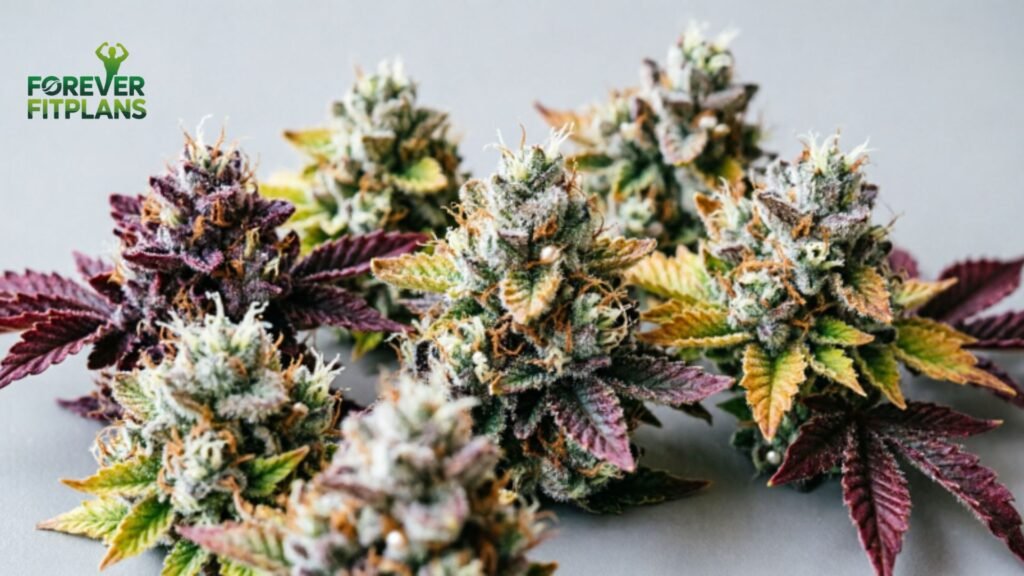
Not all cannabis is the same. The potential weight-related effects of cannabis vary significantly by compound profile:
THC-Dominant Strains
High-THC strains strongly activate CB1 receptors and typically produce the most pronounced appetite stimulation (munchies). Regular users may develop some adaptation over time, but these strains are generally the least favorable for weight management.
CBD-Dominant Strains
CBD-dominant strains (low or no THC) provide the potential metabolic benefits of CBD — including fat browning and anti-inflammatory effects — without significant appetite stimulation. These are the most studied for general metabolic health.
THCV-Rich Strains
Strains with higher THCV content — typically certain African sativa varieties — are the most interesting from a weight management perspective. THCV may actively suppress appetite and improve insulin function. These strains are less common in mainstream markets but are growing in availability.
Balanced THC: CBD Strains
These provide a moderate effect on appetite — less intense than high-THC strains — combined with the potential metabolic benefits of CBD. For experienced users who use cannabis for other reasons and want to minimize weight impact, balanced strains may be preferable to high-THC options.
The Case Against Weed as a Weight Loss Tool
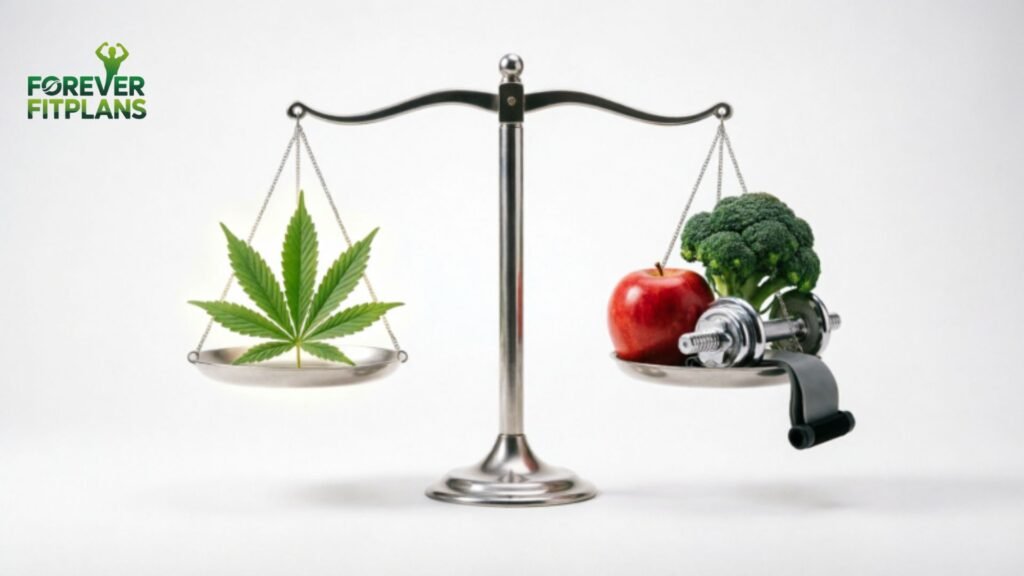
In fairness — because the evidence genuinely cuts both ways — here are the strongest arguments against using cannabis for weight loss:
Munchies-Driven Overeating Is Common
Most people who use cannabis, especially occasionally, experience genuine appetite stimulation that leads to consuming extra calories — often from hyperpalatable junk food. For someone without dietary discipline in place, cannabis use could easily cause a net calorie surplus and weight gain rather than loss.
The Population Data Doesn’t Prove Causation
The fact that cannabis users on average weigh less doesn’t mean cannabis caused the lower weight. It could reflect any number of lifestyle differences between the populations. Correlation is not causation.
Sleep Disruption From Heavy Use
While CBD may improve sleep quality, heavy THC use — particularly late at night — disrupts REM sleep architecture. Poor REM sleep increases cortisol and ghrelin, both of which promote fat storage and increase hunger. Heavy cannabis use before bed may paradoxically worsen the hormonal environment for fat loss.
Mental Health and Motivation Factors
Some people experience reduced motivation, increased sedentary behavior, and emotional eating patterns with regular cannabis use — all of which would work against weight loss goals.
What Science Says About CBD Specifically for Weight Loss
Since CBD is legally available as a supplement in many countries and has no intoxicating effect, it deserves its own focused section.
| CBD Research Finding | Study Type | Human Evidence Level |
| Promotes white-to-brown fat conversion | Cell study | Preclinical |
| Reduces new fat cell creation | Cell study | Preclinical |
| Increases fat cell mitochondrial activity | Cell study | Preclinical |
| May reduce appetite via CB1/CB2 pathways | Animal + cell | Limited human data |
| May improve insulin sensitivity | Small human trial | Early |
| Reduces anxiety (which can reduce stress eating) | Multiple human RCTs | Moderate evidence |
The anxiety reduction finding is perhaps the most practically relevant: CBD has reasonable clinical evidence for reducing anxiety, and stress and anxiety are major drivers of emotional eating, cortisol-driven fat storage, and poor sleep — all of which promote belly fat accumulation.
Using CBD to manage stress and anxiety, which in turn reduces stress eating and improves sleep quality, may be an indirect but clinically plausible mechanism through which CBD supports weight management.
Practical Takeaways: What This Means for You
If you’re considering how cannabis-related information might be relevant to your health and weight goals, here’s a balanced summary of what the evidence supports:
If You Already Use Cannabis:
- Strain choice matters — THCV-rich or CBD-dominant strains have more favorable profiles for weight management than high-THC strains
- Mind the munchies — have healthy, pre-prepared food available rather than junk food to prevent calorie surplus during appetite-stimulated periods
- Timing matters — using cannabis late at night before bed may disrupt sleep quality and worsen hormonal conditions for fat loss
- Method matters — edibles tend to produce stronger, longer-lasting appetite stimulation; CBD oil or vaping provides more controlled dosing
If You’re Considering CBD Specifically:
- CBD is legal in many jurisdictions, non-intoxicating, and has reasonable preclinical evidence for metabolic support
- It may be most practically useful for reducing anxiety and stress, which indirectly supports weight management through better sleep, reduced emotional eating, and lower cortisol
- Always choose third-party tested CBD products with verified cannabinoid content
- Discuss with your doctor if you take medications — CBD interacts with several common drugs (including blood thinners and certain antidepressants)
What Will Actually Lose Weight
Cannabis-related compounds may be supportive tools in some contexts — but they are not weight loss solutions. The fundamentals remain non-negotiable:
- Calorie deficit through better food choices
- Regular physical activity (150+ minutes per week minimum)
- Adequate sleep (7–9 hours)
- Stress management
- Consistent hydration
Frequently Asked Questions
Does smoking weed make you skinnier?
Population studies consistently show that regular cannabis users have lower average BMI and smaller waist circumferences than non-users, but this doesn’t mean smoking cannabis directly causes weight loss. The relationship is complex, involving the endocannabinoid system, potential effects on insulin sensitivity, and differences in metabolism between regular and occasional users. Occasional users often experience appetite stimulation that leads to calorie gain. Regular, long-term users may see different metabolic adaptations. The strain, frequency, and individual metabolism all significantly affect the outcome.
Does weed speed up your metabolism?
There is some evidence that cannabis — particularly with regular use — may affect metabolic rate. THC acutely activates the endocannabinoid system, and long-term regular use appears to influence insulin sensitivity and fat cell function in ways that could support metabolic efficiency. NHHANES data shows cannabis users have lower fasting insulin and better insulin resistance markers. However, the metabolic effects of cannabis are complex and not fully understood — cannabis is not currently recommended as a metabolism-boosting tool in clinical practice.
Why do stoners stay thin despite the munchies?
This is the central paradox in cannabis and weight research. Several mechanisms may explain it: long-term CB1 receptor downregulation in fat tissue reducing fat storage efficiency, potential fat browning effects of THC and CBD, improved insulin sensitivity seen in regular users, and possible differences in gut microbiome composition between users and non-users. Researchers are still investigating which mechanism — or combination — accounts for the consistently lower BMI seen in population studies.
Can CBD oil help with weight loss?
Preclinical research shows CBD promotes fat browning (conversion of white fat to calorie-burning brown fat), reduces new fat cell formation, and may improve insulin sensitivity. Human clinical trial evidence remains limited, but CBD has well-supported evidence for reducing anxiety — and since anxiety drives stress eating, cortisol-related fat storage, and poor sleep, CBD’s anxiolytic effects may indirectly support weight management. CBD is not approved as a weight loss treatment but is legally available in many regions as a supplement.
Which cannabis strains are best for weight loss?
THCV-rich strains — typically certain African sativa varieties — have the most theoretical benefit for weight management, as THCV appears to suppress appetite rather than stimulate it. CBD-dominant strains (low or no THC) avoid the munchies effect and offer potential metabolic benefits. High-THC strains are the least favorable for weight management due to their strong appetite-stimulating effect. As the cannabis market evolves, THCV-specific products are becoming more available in legal markets.
Does weed cause belly fat?
Not consistently, based on population data — cannabis users actually tend to have smaller waist circumferences on average than non-users. However, in individuals who regularly experience strong munchies and respond by eating high-calorie, high-sugar junk food, cannabis use could absolutely contribute to belly fat gain. The individual response varies significantly by frequency of use, strain, dosage, dietary discipline, and overall lifestyle. Cannabis is not categorically a fat-gaining or fat-losing substance — context determines the outcome.
Should I use weed to lose weight?
No medical authority currently recommends using cannabis specifically for weight loss. The research is interesting, but not yet at the level of clinical recommendations. Additionally, cannabis carries potential risks — respiratory effects from smoking, dependence potential, cognitive effects with heavy use, legal considerations, and drug interactions. If you’re interested in metabolic research, CBD supplements (where legal) offer some potential benefits with a safer profile than THC-containing cannabis. The most evidence-based path to weight loss remains a calorie deficit, regular exercise, quality sleep, and stress management.
Conclusion
The honest answer to ” Does weed make you lose weight is: possibly — in some people, under some conditions — but it’s complicated, it’s not reliable, and it’s certainly not a weight loss strategy anyone should pursue in place of proven fundamentals.
The epidemiological data are genuinely surprising: regular cannabis users consistently have lower BMI and smaller waists than non-users in large population studies. The proposed mechanisms — endocannabinoid system effects on fat metabolism, potential fat browning from THC and CBD, THCV’s appetite-suppressing properties, and improved insulin sensitivity — are biologically plausible and actively researched.
But the munchies are real. The research is largely preclinical. Individual responses vary enormously. And no medical authority recommends cannabis as a weight loss tool.
What the science does suggest is that the endocannabinoid system plays a meaningful role in metabolic regulation — and that as cannabis research matures, specific cannabinoid compounds (particularly THCV and CBD) may eventually find legitimate supporting roles in metabolic health management.
For now: eat well, exercise consistently, sleep properly, manage stress, and drink enough water. Those interventions have decades of clinical evidence behind them. Does weed make you lose weight is a fascinating question — but the answer to losing weight isn’t found in a joint. It’s found in the fundamentals, applied consistently over time.
This article is for informational purposes only and does not constitute medical advice or a recommendation to use cannabis or cannabis-derived products. Always consult a licensed healthcare provider before using any substance for health purposes. Follow the laws regarding cannabis use in your jurisdiction.
TheNational Institute on Drug Abuse (NIDA) maintains ongoing research on cannabis and health — including metabolic effects, the endocannabinoid system, and the current state of evidence on cannabis use and body weight regulation.

Dr. Daniel Carter is a certified health & wellness writer and fitness lifestyle researcher with over 8 years of experience in nutrition, weight management, sleep health, and preventive care. He is passionate about helping people live healthier, stronger, and more balanced lives through science-backed fitness strategies and easy-to-follow wellness tips.
Through FitForever Plan, Dr. Carter shares practical health advice, workout guidance, and nutrition insights designed to support long-term fitness, sustainable weight loss, and overall well-being. His mission is to make healthy living simple, achievable, and enjoyable for everyone.