Peanut Butter for Weight Loss: How to Use It the Right Way Without Sabotaging Your Results
Peanut butter feels like the kind of food you’re supposed to avoid when you’re trying to lose weight. It’s high in fat. It’s calorie-dense. Two tablespoons pack nearly 200 calories — and let’s be honest, nobody stops at two tablespoons.
But here’s the thing: peanut butter for weight loss is not only possible — it’s actually supported by nutrition science. Studies consistently show that people who eat peanut butter regularly are less likely to be obese, have better appetite control, and lose weight more successfully on calorie-controlled diets than people who avoid it entirely.
The difference isn’t whether you eat peanut butter — it’s how and how much. Peanut butter eaten in the right amounts, at the right times, in the right form, is one of the most satisfying, nutrient-dense, and diet-friendly foods you can include in a weight loss plan. This guide shows you exactly how.
Also read about Low-Calorie Snacks for Weight Loss.
Peanut Butter for Weight Loss: What the Science Actually Says
Let’s start with the research — because there’s more of it than most people realize.
What Studies Show About Peanut Butter and Body Weight
A landmark study published in the International Journal of Obesity followed over 51,000 women over 8 years and found that those who ate nuts (including peanuts and peanut butter) at least twice a week had a significantly lower risk of weight gain than those who rarely ate nuts, despite nuts being calorie-dense.
Another study published in Obesity found that adults who ate peanuts and peanut butter regularly had lower BMI, smaller waist circumferences, and better diet quality than non-consumers — even after controlling for total calorie intake.
A 2013 research review in the British Journal of Nutrition concluded that frequent nut and peanut butter consumption was associated with reduced risk of obesity, and that the high satiety provided by peanuts meant people naturally compensated by eating less at other meals.
So the evidence is clear: peanut butter for weight loss works — when used correctly. Let’s look at why.
Why Peanut Butter Supports Weight Loss: 6 Proven Mechanisms
1. Extremely High Satiety Per Calorie
Peanut butter is one of the most satiating foods available calorie for calorie. Two tablespoons provide:
- 8 grams of protein — the most filling macronutrient
- 2 grams of fiber — slows digestion and extends fullness
- 16 grams of healthy fat — the slowest-digesting macronutrient, keeping you full for hours
This combination — protein + fiber + healthy fat — activates multiple satiety pathways simultaneously. Research shows that peanut butter at breakfast or as a snack reduces hunger and calorie intake at subsequent meals, often by more calories than the peanut butter itself contributed.
2. Not All the Fat Is Absorbed
One of the most clinically interesting findings about peanuts is that the body doesn’t fully absorb all the fat in them. Because peanut fat is encased in plant cell walls, a significant portion passes through the digestive system without being fully metabolized.
A study published in the British Journal of Nutrition found that peanut consumers absorbed about 80% of the expected calories from peanuts — meaning the effective calorie count of peanut butter may be 15–20% lower than what the nutrition label suggests.
This is called incomplete fat absorption — and it’s one reason why the high calorie count on peanut butter labels doesn’t fully translate to weight gain in practice.
3. Peanut Butter Boosts Metabolism Through Protein
Protein has the highest thermic effect of food (TEF) of any macronutrient — your body burns 20–30% of protein calories just through the process of digesting it. With 8 grams of protein per serving, peanut butter makes a meaningful contribution to your daily protein intake, slightly elevating your metabolic rate through digestion.
4. Reduces Cravings for High-Sugar Foods
The combination of fat and protein in peanut butter stabilizes blood sugar and prevents the post-meal blood sugar crashes that drive cravings for sweet, refined carbohydrates. People who include peanut butter in their morning routine or afternoon snack consistently report fewer cravings for chocolate, cookies, and sugary drinks in the hours that follow.
This craving-reduction effect is practically important — eliminating one 250-calorie sugary snack per day, because peanut butter keeps you satisfied, adds up to over 7,500 calories saved per month.
5. Provides Healthy Monounsaturated Fats
Peanut butter is rich in oleic acid — the same monounsaturated fat found in olive oil. Oleic acid has been shown to:
- Reduce inflammation (chronic inflammation is associated with increased belly fat)
- Improve insulin sensitivity
- Support healthy hormone production (including hormones that regulate appetite)
- Reduce the risk of cardiovascular disease during weight loss
6. Supports Muscle Preservation During Weight Loss
When you lose weight through calorie restriction, you risk losing muscle along with fat. Muscle loss slows metabolism — making future weight loss harder. Peanut butter’s protein content helps preserve lean muscle during a calorie deficit, protecting your metabolic rate through the weight loss process.
Peanut Butter Nutrition: What You’re Actually Getting
| Nutrient | Per 2 Tablespoons (32g) | Significance |
| Calories | 190–200 kcal | Calorie-dense but satiating |
| Protein | 7–8g | Muscle preservation, satiety |
| Total Fat | 16g | Primarily healthy monounsaturated |
| Saturated Fat | 3–3.5g | Moderate — acceptable range |
| Carbohydrates | 6–7g | Low — minimal blood sugar impact |
| Fiber | 1.5–2g | Slows digestion, feeds gut bacteria |
| Magnesium | 49mg (12% DV) | Supports metabolism and insulin function |
| Niacin (B3) | 4.2mg (26% DV) | Energy metabolism |
| Vitamin E | 2.9mg (19% DV) | Antioxidant, anti-inflammatory |
| Potassium | 200mg (6% DV) | Blood pressure, muscle function |
| Manganese | 0.6mg (28% DV) | Bone health, metabolism |
Two tablespoons of natural peanut butter are genuinely nutrient-dense — not just high in fat and calories, but a meaningful source of vitamins, minerals, protein, and healthy fats that support metabolic health during weight loss.
How Much Peanut Butter Should You Eat for Weight Loss?
This is where most people go wrong — and where peanut butter for weight loss either succeeds or fails.
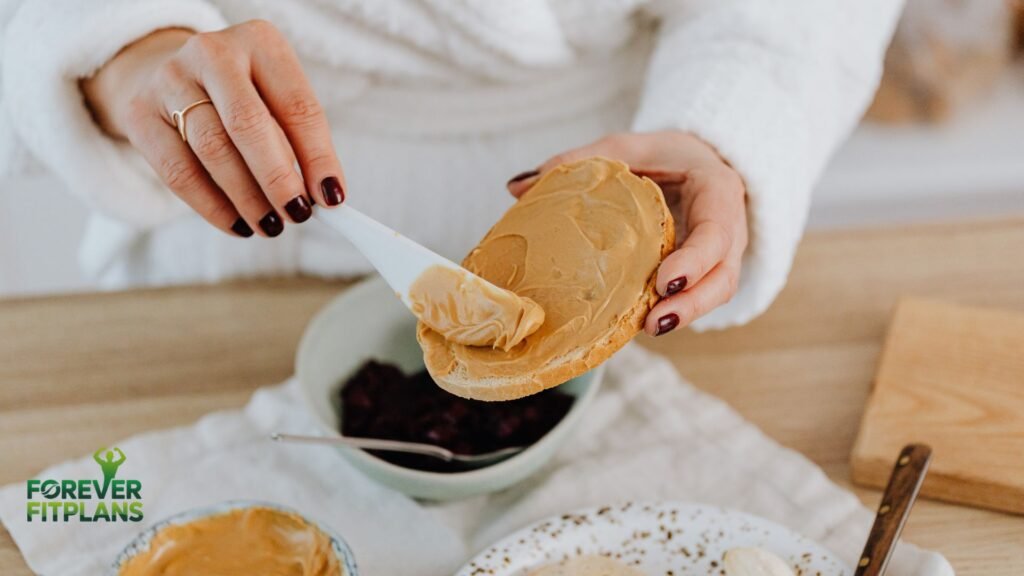
Peanut butter is calorie-dense. One tablespoon is approximately 95–100 calories. Eating peanut butter directly from the jar with a spoon — which many people do — can deliver 400–600 calories without a single other food involved. That’s a quarter to a third of most people’s daily calorie budget.
The right amount for weight loss:
| Goal | Recommended Daily Amount | Approximate Calories |
| Active weight loss | 1–1.5 tablespoons | 95–145 kcal |
| Moderate weight loss | 1.5–2 tablespoons | 145–200 kcal |
| Maintenance | 2–3 tablespoons | 200–300 kcal |
| Muscle building (calorie surplus) | 3–4 tablespoons | 300–400 kcal |
For most people actively trying to lose weight, 1–2 tablespoons of peanut butter per day, measured precisely, provides the satiety and nutritional benefits without exceeding the calorie budget that makes fat loss possible.
The Most Important Rule: Measure Every Time
The most common peanut butter mistake for weight loss is estimating portions by eye. Research consistently shows that people underestimate peanut butter portions by 40–60% when scooping without measuring. Two tablespoons become three or four without realizing it.
Use an actual measuring spoon — not a kitchen spoon, which holds 1.5–2 times more than a measuring spoon — for every serving during active weight loss. After a few weeks of measuring, you’ll develop an accurate visual estimate.
Choosing the Right Peanut Butter for Weight Loss
Not all peanut butters are created equal. The type you choose significantly affects whether peanut butter helps or hinders your weight loss.
What to Buy: Natural Peanut Butter
Ingredients should be: Peanuts (and optionally salt). That’s it.
Natural peanut butter contains only ground peanuts — no added oils, no added sugar, no preservatives. It provides all the health benefits with none of the additives that reduce nutritional quality.
Signs of a good natural peanut butter:
- Oil sits on top when unopened (this is natural — stir it in)
- Short ingredient list: peanuts (and perhaps salt)
- No partially hydrogenated oils or palm oil
- No added sugar (or less than 1g per serving)
What to Avoid: Processed Peanut Butter
Many popular brands are more “peanut-flavored spread” than actual peanut butter. They contain:
- Added sugar (2–4g per serving) — adds unnecessary calories and insulin spikes
- Hydrogenated or palm oil — these oils stabilize texture but reduce the health benefits and may promote inflammation
- High sodium — some commercial brands contain 150–200mg of sodium per serving, adding up quickly
| Peanut Butter Type | Added Sugar | Added Oil | Best for Weight Loss? |
| Natural (peanuts only) | None | None | ✅ Best choice |
| Natural with salt | None | None | ✅ Excellent |
| Commercial smooth (Jif, Skippy) | 2–3g | Yes | ⚠️ Acceptable in moderation |
| Reduced-fat peanut butter | 3–4g (adds sugar to compensate) | Modified | ❌ Worse than regular |
| Honey-roasted peanut butter | 6–8g | Yes | ❌ Avoid |
| Chocolate peanut butter spread | 8–12g | Yes | ❌ Not for weight loss |
Important note on reduced-fat peanut butter: Many people assume “reduced fat” means better for weight loss. It doesn’t. Reduced-fat peanut butter removes the healthy fat and replaces it with added sugar and thickeners — making it nutritionally inferior and less effective for satiety.
The Best Ways to Eat Peanut Butter for Weight Loss
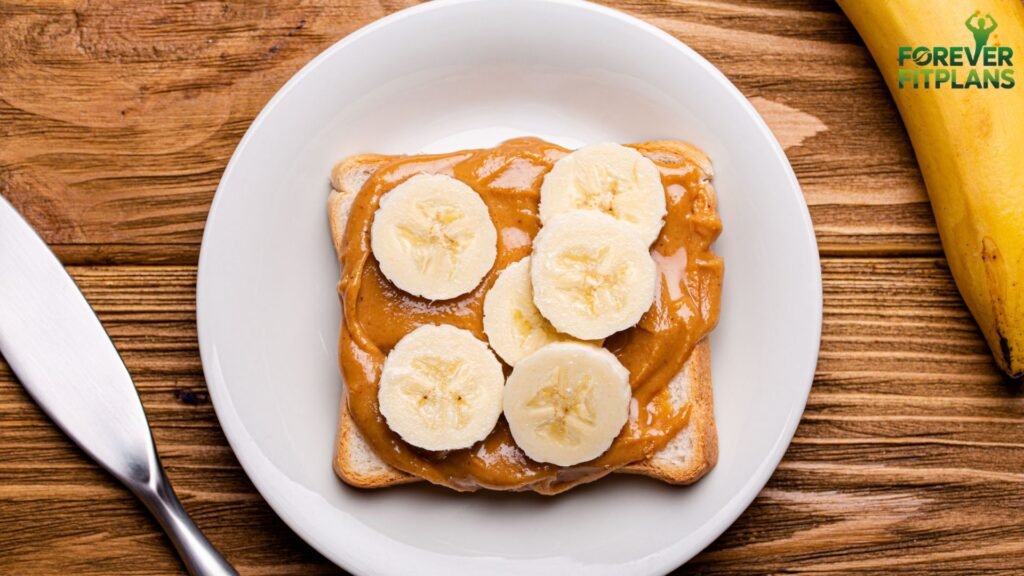
1. As a Breakfast Protein Booster
Adding one tablespoon of peanut butter to your morning oatmeal or whole-grain toast provides the protein and fat needed to extend satiety through the morning and reduce calorie intake at lunch.
Best breakfast combinations:
- ½ cup oats + 1 tbsp peanut butter + ½ sliced banana + cinnamon (~280 calories)
- 1 slice whole grain toast + 1 tbsp peanut butter + sliced strawberries (~200 calories)
- Smoothie: banana + 1 tbsp peanut butter + plain Greek yogurt + almond milk (~250 calories)
2. As a Pre-Workout Snack
The combination of slow-releasing fat and protein in peanut butter makes it an excellent pre-workout fuel — providing sustained energy without blood sugar spikes that interfere with fat burning during exercise.
Timing: Eat 60–90 minutes before exercise.
Best pre-workout options:
- 1 tbsp peanut butter on 1 small banana (22g carbs for energy + protein/fat for endurance)
- 1 tbsp peanut butter on 2 rice cakes (light and effective)
- Apple slices with 1 tbsp of peanut butter
3. As an Afternoon Snack to Prevent Pre-Dinner Overeating
The hours between 3 and 6 PM are when many people experience their strongest cravings and make their worst dietary choices. A small peanut butter snack during this window:
- Stabilizes blood sugar and prevents energy crashes
- Reduces hunger going into dinner, naturally decreasing dinner portion size
- Provides a satisfying experience that reduces the urge to snack on high-sugar alternatives
Best afternoon snack options:
- 1 tbsp peanut butter + celery sticks (~100 calories)
- 1 tbsp peanut butter + apple slices (~195 calories)
- 1 tbsp peanut butter + 5 whole grain crackers (~200 calories)
4. As a Salad Dressing Base
Natural peanut butter makes an excellent base for Asian-style salad dressings — adding protein and healthy fat to a salad that would otherwise leave you hungry within an hour.
Simple peanut dressing recipe:
- 1 tbsp natural peanut butter
- 1 tbsp soy sauce (low sodium)
- 1 tbsp rice vinegar
- ½ tsp sesame oil
- Splash of water to thin
Use 2 tablespoons over a large salad — satisfying, nutritious, and keeps the calorie count reasonable.
5. In Smoothies for Sustained Energy
Adding 1 tablespoon of peanut butter to a protein smoothie adds richness, protein, and healthy fat that transforms a thin, quickly digested smoothie into a genuinely filling meal replacement.
What Not to Do With Peanut Butter When Losing Weight
1. Don’t Eat Peanut Butter Straight From the Jar
This is the fastest way to consume 500+ untracked calories. Always use a measuring spoon and put the jar away before eating. Out of sight, out of mouth.
2. Don’t Use Peanut Butter as a Post-Workout Recovery Food
Peanut butter’s high fat content slows digestion, which is excellent for satiety but counterproductive for post-workout recovery, when you want fast-absorbing protein and carbohydrates to reach muscles quickly. Use whey protein and a banana post-workout; save peanut butter for other meals.
3. Don’t Pair Peanut Butter With High-Calorie Foods Unnecessarily
Peanut butter on a rice cake: good. Peanut butter on a thick slice of banana bread with honey: a high-calorie combination that turns a weight-loss food into a diet buster. Pair peanut butter with low-calorie, high-volume partners — vegetables, fruit, plain crackers.
4. Don’t Choose Peanut Butter as a Calorie Shortcut
Some people eat peanut butter instead of meals — “just a few spoonfuls” — thinking it’s a quick, healthy option. Without accompanying fiber and volume from vegetables or fruit, this doesn’t provide adequate fullness or nutrition and can easily result in overeating later.
Sample Day Using Peanut Butter for Weight Loss
Here’s a realistic, balanced day that incorporates peanut butter into a 1,500-calorie weight loss plan:
| Meal | Food | Calories | PB Role |
| Breakfast | ½ cup oats + 1 tbsp PB + berries + green tea | ~280 kcal | Extends morning satiety |
| Morning snack (optional) | Apple slices + 1 tsp PB | ~115 kcal | Light protein + fiber snack |
| Lunch | Grilled chicken salad + 2 tbsp peanut dressing | ~420 kcal | Healthy fat in dressing |
| Afternoon snack | Celery sticks + 1 tbsp PB | ~100 kcal | Prevents pre-dinner hunger |
| Dinner | Stir-fried vegetables + tofu + brown rice | ~480 kcal | No PB needed |
| Total | ~1,395 kcal |
This plan provides sustained energy, excellent fiber and protein intake, and genuine satisfaction — all while maintaining the calorie deficit needed for weight loss.
Peanut Butter vs. Other Nut Butters for Weight Loss
| Nut Butter | Calories (2 tbsp) | Protein | Fat | Best Feature |
| Peanut butter | 190–200 kcal | 8g | 16g | Best protein, most affordable |
| Almond butter | 195–210 kcal | 6.7g | 18g | More vitamin E and calcium |
| Cashew butter | 185 kcal | 5g | 15g | Creamier texture, lower protein |
| Sunflower seed butter | 200 kcal | 5.5g | 17g | Good for nut allergies |
| Tahini (sesame) | 178 kcal | 5g | 16g | High calcium, slightly bitter |
| Walnut butter | 190 kcal | 4.5g | 18g | High omega-3 content |
For weight loss specifically, Peanut butter wins on the protein front — 8 grams per serving makes it the most satiating option and the best for muscle preservation during calorie restriction.
Frequently Asked Questions
Is peanut butter good for losing belly fat?
Yes — peanut butter can support belly fat loss as part of a calorie-controlled diet. It’s monounsaturated fat (oleic acid) that reduces inflammation associated with visceral fat accumulation. Its protein and fiber combination keeps blood sugar stable, reducing the insulin spikes that promote abdominal fat storage. Research shows that people who include nuts and peanut butter in their diet have smaller waist circumferences on average than those who avoid them. The key is portion control — 1–2 tablespoons daily, measured precisely.
How much peanut butter should I eat per day to lose weight?
For active weight loss, aim for 1–2 tablespoons (16–32g) of natural peanut butter per day — measured precisely, not estimated. This provides 95–200 calories, 7–16 grams of protein, and meaningful satiety without exceeding a moderate calorie budget. Eating more than 2 tablespoons daily during active weight loss is possible but requires careful accounting within your total daily calorie target. Pre-portioning servings prevents the all-too-common “just one more spoon” overconsumption.
Is it better to eat peanut butter in the morning or at night for weight loss?
Morning is a better time for peanut butter for weight loss purposes. Eaten at breakfast or as a morning snack, peanut butter’s protein and fat extend satiety through the day’s most calorie-challenging hours — reducing lunch and dinner intake naturally. Eating peanut butter at night, especially close to bedtime, adds calories when your metabolic rate is lowest and you have fewer hours to burn them. Small amounts in the afternoon are also effective for curbing pre-dinner cravings.
Can I eat peanut butter on a low-carb or keto diet?
Yes — peanut butter is relatively low in carbohydrates (6–7g per 2 tbsp) and fits well in low-carb and ketogenic diets. Natural peanut butter with no added sugar is the best choice for low-carb eating. Its fat and protein content align naturally with both low-carb and keto macronutrient targets. On a ketogenic diet, peanut butter can be eaten in slightly larger portions (2–3 tbsp) because fat is the primary fuel source in that eating pattern.
Does eating peanut butter before bed cause weight gain?
Not inherently — but timing matters. Eating 1 tablespoon of peanut butter before bed is unlikely to cause weight gain on its own, particularly in the context of a day where your total calorie intake is within your target range. However, eating peanut butter late at night is a high-risk activity for portion creep — the jar stays in the kitchen, willpower is low after a long day, and 1 tablespoon becomes 3 or 4 quickly. If you do eat peanut butter at night, pre-portion it into a small bowl before you start, and put the jar away.
Is peanut butter or peanuts better for weight loss?
Both are effective, but they differ practically. Whole peanuts require chewing — slowing consumption, increasing mindful eating, and activating jaw muscles that contribute to satiety signaling. Peanut butter is more versatile and convenient, but it is easier to overconsume. Research suggests whole peanuts may be marginally more satiating per calorie because their slower mechanical processing in the mouth extends the eating experience and enhances satiety signals. For weight loss, either works — the one you’ll consistently portion control is the better choice for you personally.
What is the healthiest peanut butter for weight loss?
The healthiest peanut butter for weight loss is natural peanut butter with one or two ingredients: peanuts and (optionally) salt. Avoid peanut butter with added sugar, hydrogenated oils, palm oil, or extensive additives. Look for options where the oil separates naturally (this indicates no stabilizing oils were added). Popular clean options include Smucker’s Natural, Adams Natural, Justin’s Classic, and many store-brand natural peanut butters. Reduced-fat peanut butter is not a healthier option — it removes healthy fat and replaces it with sugar and thickeners.
Conclusion
The verdict is clear: peanut butter for weight loss is not only possible — it’s smart, when done correctly.
The science shows that regular peanut butter consumption is associated with lower body weight, better appetite control, and more successful long-term weight management. Its combination of protein, healthy fat, and fiber makes it one of the most satiating foods available calorie for calorie. Its incomplete fat absorption means it delivers fewer effective calories than its label suggests. And its nutrients — magnesium, niacin, vitamin E, potassium — support the metabolic health that makes weight loss sustainable.
The rules for making peanut butter work for weight loss are simple:
- Choose natural peanut butter — peanuts and salt, nothing else
- Measure 1–2 tablespoons precisely — every single time
- Pair it with low-calorie, high-volume foods like fruit, vegetables, and whole grains
- Time it strategically — morning and afternoon are optimal
- Use it to replace higher-calorie cravings — not as an addition to an already-full day of eating
Peanut butter doesn’t have to be the food you give up to lose weight. It can be the food that helps you get there — and stay there — more comfortably and more sustainably than a diet without it.
This article is for informational purposes only and does not replace personalized dietary advice. Consult a registered dietitian or your healthcare provider for a nutrition plan tailored to your specific health needs and weight loss goals.
According to the Harvard T.H. Chan School of Public Health — The Nutrition Source, regular consumption of peanuts and peanut butter is associated with reduced risk of cardiovascular disease and supports healthy weight management — citing their high satiety, protein content, and healthy fat profile as key mechanisms.

Dr. Daniel Carter is a certified health & wellness writer and fitness lifestyle researcher with over 8 years of experience in nutrition, weight management, sleep health, and preventive care. He is passionate about helping people live healthier, stronger, and more balanced lives through science-backed fitness strategies and easy-to-follow wellness tips.
Through FitForever Plan, Dr. Carter shares practical health advice, workout guidance, and nutrition insights designed to support long-term fitness, sustainable weight loss, and overall well-being. His mission is to make healthy living simple, achievable, and enjoyable for everyone.