
Best Time to Take B12 for Weight Loss: The Complete Guide to Getting Real Results From This Vitamin
You’ve heard that vitamin B12 gives you energy and supports metabolism. You’ve seen B12 shots advertised at weight loss clinics. You’re taking a B12 supplement — or thinking about starting one — and the question is simple: when should I actually take it to get the most benefit?
Knowing the best time to take B12 for weight loss matters more than most people realize. B12 is a water-soluble vitamin that the body absorbs and uses in time-sensitive ways — and taking it at the wrong time of day can reduce its absorption, interfere with sleep, or simply mean you’re not getting the energy benefit when you actually need it most. Getting the timing right, choosing the right form, and taking the correct dose makes the difference between a supplement that works and one that doesn’t.
This guide covers everything: how B12 actually affects weight loss, the optimal timing window, the best forms of B12, the right doses, what enhances and blocks absorption, and the real expectations you should have when using B12 as part of a weight management plan.
Also read about Peanut Butter for Weight Loss.
What Is Vitamin B12 and Why Does It Matter for Weight Loss?
Before diving into timing, let’s understand what vitamin B12 actually does — because its role in weight loss is real but often misunderstood.
B12’s Core Functions in the Body
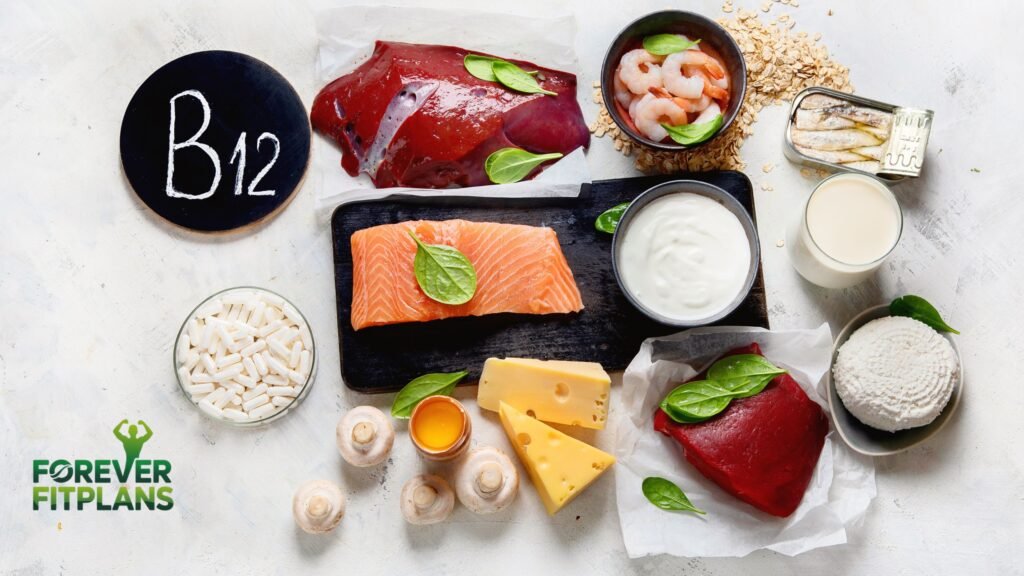
Vitamin B12 (cobalamin) is an essential water-soluble vitamin that the body cannot produce on its own. It must come from food or supplements. B12 is involved in:
- Red blood cell formation — B12 is essential for producing healthy red blood cells that carry oxygen efficiently throughout the body
- DNA synthesis — required for cell division and renewal
- Neurological function — maintains the myelin sheath protecting nerve fibers; deficiency causes neurological damage
- Energy metabolism — B12 is a cofactor in converting food (particularly fats and proteins) into usable cellular energy (ATP)
- Homocysteine regulation — B12 converts homocysteine to methionine; elevated homocysteine is linked to inflammation and cardiovascular disease
How B12 Connects to Weight Loss
B12 doesn’t directly burn fat or block calorie absorption. Its connection to weight loss works through several indirect but important pathways:
1. Energy Production
B12 is essential for the citric acid cycle (Krebs cycle) — the metabolic process that converts carbohydrates, fats, and proteins into cellular energy (ATP). When B12 is deficient, this process becomes less efficient. The result: fatigue, weakness, and reduced ability to exercise — all of which slow weight loss.
When B12 levels are restored from deficiency, people often experience a meaningful increase in energy that supports more regular exercise and daily activity — burning more calories without consciously trying harder.
2. Metabolism of Fats and Proteins
B12 is specifically involved in the metabolism of odd-chain fatty acids and certain amino acids through a pathway involving methylmalonyl-CoA mutase. Without adequate B12, these compounds build up, and fat metabolism becomes less efficient.
3. Red Blood Cell Quality and Oxygen Delivery
B12 deficiency causes megaloblastic anemia — a condition where red blood cells are oversized and dysfunctional, unable to carry oxygen efficiently. Poor oxygen delivery means reduced aerobic capacity, faster fatigue during exercise, and lower overall calorie burn. Correcting B12 deficiency improves oxygen transport and exercise endurance.
4. Thyroid Function
B12 supports healthy thyroid function. Since the thyroid gland regulates metabolic rate, low B12 that impairs thyroid function can slow metabolism and make weight loss significantly harder. This connection is especially relevant in women, who are more prone to both B12 deficiency and thyroid disorders.
5. Mood and Motivation
B12 is involved in synthesizing serotonin and dopamine — neurotransmitters that regulate mood, motivation, and appetite. Low B12 is associated with depression, low motivation, and reduced drive — all of which undermine dietary adherence and exercise consistency. Improving B12 status can improve mood and the psychological factors that support successful weight loss.
Who Is Most Likely to Be B12 Deficient?
B12 deficiency is more common than most people realize — and it’s particularly prevalent among populations that are also trying to lose weight:
| Group | Reason for Deficiency Risk |
| Vegans and vegetarians | B12 is found almost exclusively in animal foods |
| Adults over 50 | Stomach acid decreases with age; intrinsic factor production declines |
| People taking metformin | Metformin reduces B12 absorption in the gut — very clinically important |
| People with a gastric sleeve or bypass | Reduced stomach acid and intrinsic factor post-surgery |
| People with celiac or Crohn’s disease | Malabsorption in the small intestine |
| People on long-term antacids (PPIs) | Stomach acid is needed to release B12 from food |
| Pregnant and breastfeeding women | Higher B12 demands |
| People with pernicious anemia | Autoimmune destruction of intrinsic factor |
Particularly important for people managing diabetes: Metformin — one of the most widely prescribed diabetes medications — is associated with B12 deficiency in up to 30% of long-term users. If you take metformin and are working on weight loss, B12 supplementation timing and adequacy are especially relevant.
Best Time to Take B12 for Weight Loss: The Optimal Timing
This is the core question — and the answer is based on both pharmacology and practical benefit.
The Best Time: Morning, With or Without Food
The optimal time to take B12 for weight loss is in the morning.
Here’s why:
1. Energy When You Need It Most
B12 is involved in energy metabolism — and you want that energy boost working for you during your active hours, not at midnight. Taking B12 in the morning means the B12 is available to support your metabolism, fuel your workout, and maintain energy through the day’s most calorie-burning hours.
2. Prevents Sleep Disruption
B12 is an activating vitamin — it supports energy production and nervous system function. Some people find that taking B12 in the afternoon or evening makes it harder to fall asleep or reduces sleep quality. Poor sleep is directly associated with weight gain through cortisol elevation and hunger hormone disruption. Taking B12 in the morning eliminates any risk of sleep interference.
3. Absorption Is Not Significantly Affected by Food
Unlike fat-soluble vitamins (A, D, E, K) that must be taken with fat for absorption, B12 is water-soluble and absorbs well whether taken with food or without. However:
- Sublingual B12 (dissolved under the tongue) is best taken without food for optimal mucosal absorption
- Oral tablets and capsules absorb adequately with or without food — take whichever way you’ll remember it consistently
- If taking B12 as part of a B-complex supplement, take it with breakfast for best absorption alongside other B vitamins
Specific Timing Based on B12 Form
| B12 Form | Best Timing | With or Without Food | Special Instructions |
| Cyanocobalamin (tablet) | Morning | Either — with food preferred | Take the same time daily |
| Methylcobalamin (tablet) | Morning | Either | More bioavailable form |
| Sublingual B12 | Morning | Without food | Hold under tongue 30–60 seconds |
| B12 nasal spray | Morning | Away from food for 1 hour | Follow product-specific instructions |
| B12 injection (prescribed) | Clinic-dependent | N/A (injected) | Typically weekly or monthly |
| B-complex containing B12 | Morning with breakfast | With food | Food aids the absorption of other B vitamins |
The Different Forms of B12: Which Works Best for Weight Loss?
The form of B12 you take significantly affects how well it’s absorbed, which directly determines how much benefit you receive.

1. Methylcobalamin — The Best Form for Most People
Methylcobalamin is the active, bioavailable form of B12 that the body can use immediately without conversion. It’s the form found naturally in foods and in the body’s tissues.
Why it’s preferred:
- No conversion required — immediately usable
- Better retained in tissues than cyanocobalamin
- Crosses the blood-brain barrier more effectively — supporting neurological function and mood
- Preferred in research for neurological benefits
- Available in sublingual form for maximum absorption
2. Cyanocobalamin — The Most Common but Less Efficient Form
Cyanocobalamin is a synthetic form of B12 used in most inexpensive supplements. The body must convert it to methylcobalamin or adenosylcobalamin before using it. This conversion step reduces efficiency, and some people (particularly those with MTHFR gene variants) convert it poorly.
It is stable, inexpensive, and still effective — but methylcobalamin is generally the preferred choice when seeking maximum benefit.
3. Adenosylcobalamin — The Mitochondrial Form
Adenosylcobalamin is the form of B12 active in the mitochondria — the cellular energy factories. It’s specifically involved in the energy metabolism pathway most relevant to weight loss (converting methylmalonyl-CoA to succinyl-CoA in the Krebs cycle).
Some premium B12 supplements combine methylcobalamin and adenosylcobalamin for comprehensive coverage of both neurological and energy-metabolism pathways.
4. Hydroxocobalamin — Used in Medical Settings
Hydroxocobalamin is a natural form used in medical injections. It stays in the body longer than cyanocobalamin. It’s typically not found in oral supplements but is used in prescription B12 therapy for severe deficiency.
Form Comparison for Weight Loss
| B12 Form | Bioavailability | Best For | Weight Loss Relevance |
| Methylcobalamin | Excellent | General use, neurological health | ⭐⭐⭐⭐⭐ Best |
| Adenosylcobalamin | Excellent | Energy metabolism | ⭐⭐⭐⭐⭐ Best |
| Hydroxocobalamin | Very Good | Medical deficiency treatment | ⭐⭐⭐⭐ |
| Cyanocobalamin | Good | Cost-effective supplementation | ⭐⭐⭐ |
How Much B12 Should You Take for Weight Loss?
Recommended Dietary Allowance (RDA) vs. Supplementation Doses
The RDA for B12 is:
- Adults: 2.4 mcg per day
- Pregnant women: 2.6 mcg per day
- Breastfeeding women: 2.8 mcg per day
These are minimum requirements for preventing deficiency, not therapeutic doses for addressing deficiency or maximizing metabolic benefit.
Supplement Dosing for Weight Loss Support
| Situation | Recommended Supplement Dose | Form |
| General health maintenance (no deficiency) | 250–500 mcg/day | Methylcobalamin |
| Suspected mild deficiency | 500–1,000 mcg/day | Methylcobalamin sublingual |
| Confirmed deficiency (tested) | 1,000–2,000 mcg/day | Sublingual or injection |
| Vegans/vegetarians | 1,000–2,000 mcg/day | Methylcobalamin |
| Metformin users | 1,000 mcg/day (discuss with doctor) | Oral or sublingual |
| Post-bariatric surgery | 350–1,000 mcg/day sublingual (doctor-directed) | Sublingual mandatory |
| Adults over 50 | 500–1,000 mcg/day | Sublingual preferred |
Important: B12 is water-soluble and the body excretes excess through urine. Toxicity from B12 supplementation is extremely rare. Higher doses are commonly used and considered safe by medical standards.
However, extremely high doses (5,000+ mcg daily) without a confirmed deficiency and doctor supervision are unnecessary. More B12 above what the body needs doesn’t produce proportionally more weight loss benefit — the therapeutic benefit comes from correcting deficiency, not from mega-dosing a replete system.
What Enhances B12 Absorption — And What Blocks It
Factors That Improve B12 Absorption
- Intrinsic factor — a protein produced by stomach cells that is essential for oral B12 absorption. If you lack an intrinsic factor (pernicious anemia), oral supplements are poorly absorbed — sublingual or injected B12 is needed
- Adequate stomach acid — releases B12 from food; important for food-sourced B12 specifically
- Calcium — needed as a cofactor for intrinsic factor-mediated B12 absorption
- Taking sublingual forms — bypasses the need for stomach acid and intrinsic factor entirely
- Splitting doses — because B12 absorption is saturable (the transport system gets overwhelmed), taking a lower dose twice daily absorbs more total B12 than one very large dose
Factors That Reduce B12 Absorption
| Factor | How It Reduces B12 Absorption |
| Metformin (diabetes medication) | Reduces calcium-dependent ileal absorption of B12 |
| Proton pump inhibitors (antacids) | Reduce stomach acid needed to release B12 from food |
| H2 blockers (ranitidine, famotidine) | Reduce stomach acid similarly |
| Alcohol | Damages the stomach lining; reduces intrinsic factor production |
| Excessive vitamin C | Very high-dose vitamin C taken simultaneously may degrade B12 |
| Aging | Natural decline in the intrinsic factor and stomach acid production |
| Pernicious anemia | Autoimmune destruction of intrinsic factor — requires injection or sublingual |
B12 and Exercise: Timing for Maximum Fat-Burning Benefit
Taking B12 in the morning is even more beneficial if you exercise in the morning or early afternoon. Here’s why the timing alignment matters:
B12 + morning exercise:
- B12 supports oxygen delivery through healthy red blood cell function — improving aerobic exercise performance
- B12 supports energy metabolism, providing more efficient fuel for the workout
- Better exercise performance = more calories burned = faster weight loss progress
- B12’s mood-supporting role (via serotonin and dopamine) supports exercise motivation — reducing the mental resistance to getting started
Sample morning timing protocol for weight loss:
| Time | Action |
| 6:30 AM — Wake | Drink 500ml water |
| 6:35 AM | Take sublingual methylcobalamin B12 (hold under tongue 30–60 sec) |
| 6:45 AM | Light breakfast if needed, or fasted |
| 7:00–8:00 AM | Exercise (cardio, strength, or HIIT) |
| 8:15 AM | Post-workout protein-rich breakfast |
This protocol ensures B12 is available to support exercise performance, energy metabolism, and recovery — all during the hours when it’s most useful for weight loss support.
Can B12 Shots Help With Weight Loss Faster Than Oral Supplements?
B12 injections are offered at many weight loss clinics and med spas — often presented as a metabolism-boosting treatment. Here’s an honest assessment:
When B12 Injections Are Genuinely Superior
B12 injections bypass the digestive system entirely, delivering 100% of the dose directly into the bloodstream. For people with:
- Pernicious anemia (no intrinsic factor)
- Severe malabsorption conditions (Crohn’s, celiac, post-bariatric surgery)
- Very severe, confirmed B12 deficiency
- Poor response to oral supplements despite adequate dosing
…B12 injections are clinically superior and medically necessary.
When B12 Injections Are Not Superior to Oral/Sublingual
For people who are not deficient or who have normal absorption, B12 injections don’t provide additional weight loss benefit beyond what high-dose sublingual supplementation achieves. The body simply excretes the excess.
Studies have not found that B12 injections accelerate weight loss in B12-sufficient individuals beyond the placebo effect of feeling like you’ve received a treatment.
Bottom line: B12 injections are genuinely helpful for people who are deficient or cannot absorb oral B12. They’re not a magic weight loss accelerant for people who already have adequate B12 levels.
Realistic Expectations: What B12 Will and Won’t Do for Weight Loss
What B12 CAN Do
- Restore energy levels if deficiency-related fatigue has been limiting exercise and daily activity
- Support more efficient fat and protein metabolism
- Improve mood and motivation — supporting dietary adherence
- Improve exercise endurance through better oxygen delivery
- Support thyroid function and healthy metabolic rate
- Reduce megaloblastic anemia-related fatigue
What B12 CANNOT Do
- Burn fat directly
- Create a calorie deficit on its own
- Replace exercise, dietary changes, or calorie control
- Produce weight loss in someone who is already B12-sufficient
The most honest summary: B12 is a multiplier, not a solution. If you have good habits in place — a calorie-controlled diet, regular exercise, adequate sleep, and stress management — optimal B12 levels help those habits produce better results. If the foundational habits aren’t there, B12 won’t compensate.
Frequently Asked Questions
Should I take B12 in the morning or at night for weight loss?
Morning is the best time to take B12 for weight loss, for two main reasons. First, B12 supports energy metabolism, and you want that energy available during your active, calorie-burning hours. Second, B12’s activating effect on the nervous system can interfere with sleep if taken in the evening. Take your B12 supplement first thing in the morning — sublingual forms on an empty stomach, oral tablets with or without your breakfast. This maximizes energy benefit during the day and eliminates any sleep disruption risk.
How long does it take to see weight loss results from B12?
If B12 deficiency was contributing to fatigue, reduced exercise capacity, or slow metabolism, expect to notice improved energy within 1–4 weeks of consistent supplementation. Weight loss results that come from this improved energy (more exercise, more daily movement) become visible over 4–12 weeks. B12 doesn’t produce direct fat loss — it supports the conditions (energy, mood, metabolism, thyroid function) that allow weight loss efforts to be more effective. Expect gradual improvement, not a quick transformation.
Can B12 help with belly fat loss specifically?
B12 doesn’t target belly fat specifically — no supplement does. But B12 supports several mechanisms that contribute to overall fat loss, including abdominal fat: improved metabolic rate through thyroid support, more effective fat oxidation in the Krebs cycle, better exercise performance and calorie burning through improved oxygen delivery, and mood support that reduces cortisol-driven stress eating (a major contributor to belly fat). Optimal B12 levels contribute to the conditions that support belly fat reduction as part of overall weight loss.
Is sublingual B12 better than tablets for weight loss?
Sublingual B12 (dissolved under the tongue) is generally superior to standard oral tablets for people who want maximum absorption — particularly older adults (who have reduced intrinsic factor), people on metformin or antacids (which reduce stomach absorption), and anyone with a history of gastrointestinal issues. For younger, healthy people with normal absorption, high-dose oral methylcobalamin tablets (1,000 mcg) can be just as effective as sublingual. For maximum reliability in any population, sublingual methylcobalamin taken in the morning is the best combination.
Should people taking metformin take B12 at a specific time?
Yes — if you take metformin and want to supplement B12, timing matters for a specific reason: metformin interferes with calcium-dependent B12 absorption in the ileum. To partially counteract this, take your B12 supplement at a different time from your metformin dose — ideally, the opposite end of the day (metformin with dinner, B12 in the morning). Additionally, consider sublingual forms that bypass gut absorption entirely. Always discuss B12 supplementation with your prescribing doctor if on metformin.
Is it safe to take B12 every day for weight loss?
Yes — B12 is a water-soluble vitamin and the body excretes excess through urine, making toxicity extremely rare even at high doses. Daily supplementation is safe for most people at doses up to 1,000–2,000 mcg. There is no established Tolerable Upper Intake Level (UL) for B12 from supplements in healthy adults. Long-term daily B12 supplementation is commonly recommended for vegans, older adults, metformin users, and anyone at risk of deficiency. Daily consistency is more important than intermittent high doses.
Do B12 weight loss injections actually work?
B12 injections work for weight loss in people who have a genuine B12 deficiency or absorption problems — by restoring adequate B12 levels and the energy, metabolic efficiency, and exercise capacity that come with it. For people who are NOT deficient, research does not support that B12 injections produce weight loss beyond the placebo effect. If a weight loss clinic offers B12 injections without first testing your B12 blood levels, that’s a red flag. Test first, supplement based on actual need, and choose the form (injection, sublingual, or oral) based on your absorption status.
Conclusion
The best time to take B12 for weight loss is clear: take it in the morning — ideally sublingual methylcobalamin on an empty stomach or with your breakfast — to maximize its contribution to energy metabolism, exercise performance, and mood support during the hours when these benefits matter most for weight loss.
B12 is not a weight loss drug and won’t melt fat on its own. But for deficient people — and far more people are than realize it, including vegans, adults over 50, metformin users, and anyone with digestive issues — correcting B12 status can be genuinely transformative. Restored energy means more exercise. Better metabolism means more efficient fat burning. Improved mood means better dietary adherence. All of these compound into meaningful, sustained weight loss improvement over weeks and months.
Choose methylcobalamin over cyanocobalamin for better bioavailability. Take it in the morning, consistently. Match your dose to your actual need — higher if deficient, standard maintenance dose if levels are adequate. And test your B12 blood levels if you haven’t already — it’s a simple test that gives you real information rather than guesswork.
The best supplements are the ones that address your actual nutritional gaps. Make sure B12 is one of them.
This article is for informational purposes only and does not replace personalized medical advice. Always consult your doctor before beginning any supplementation, particularly if you take medications (especially metformin), have a diagnosed medical condition, or are pregnant or breastfeeding.
The National Institutes of Health (NIH) Office of Dietary Supplements provides the most comprehensive, evidence-based resource on vitamin B12 — including deficiency risk, absorption mechanisms, safe upper limits, drug interactions, and the full range of clinical applications.

Dr. Daniel Carter is a certified health & wellness writer and fitness lifestyle researcher with over 8 years of experience in nutrition, weight management, sleep health, and preventive care. He is passionate about helping people live healthier, stronger, and more balanced lives through science-backed fitness strategies and easy-to-follow wellness tips.
Through FitForever Plan, Dr. Carter shares practical health advice, workout guidance, and nutrition insights designed to support long-term fitness, sustainable weight loss, and overall well-being. His mission is to make healthy living simple, achievable, and enjoyable for everyone.